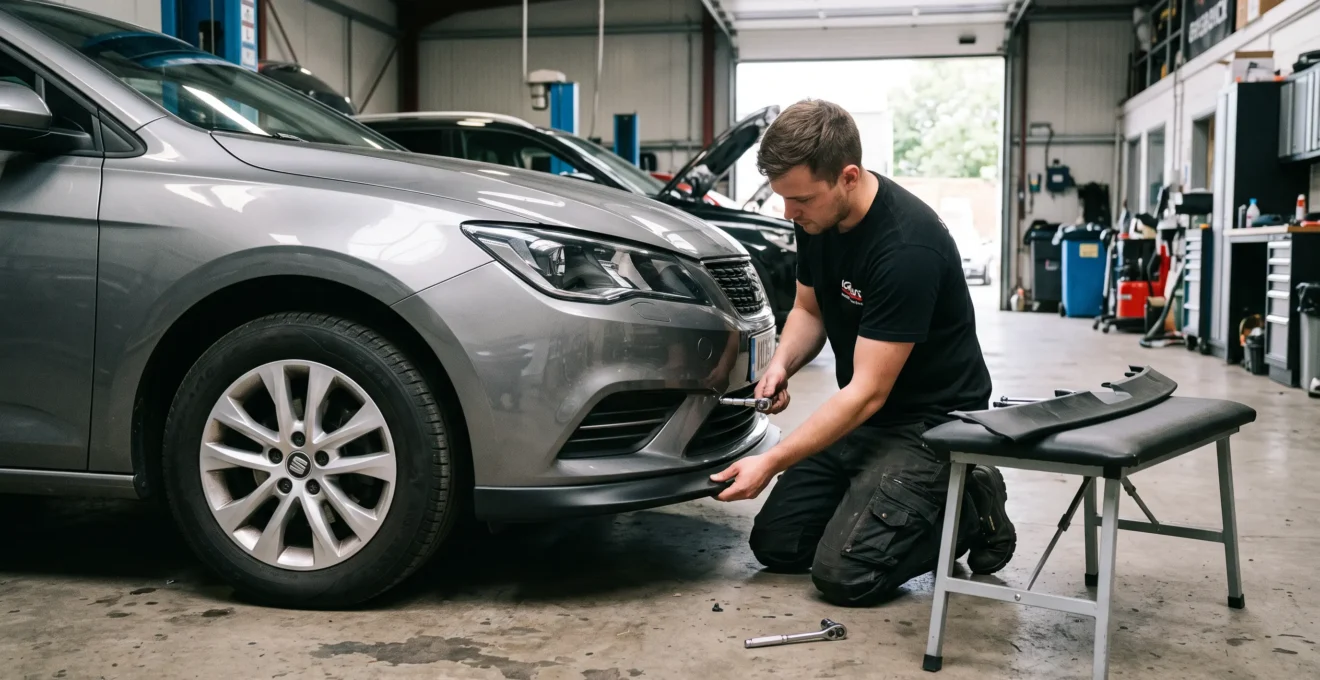
Customising a car without seriously compromising its resale value starts before the first component is installed. The most defensible approach combines a defined design brief, a controlled budget, compatible parts, qualified installation, regulatory checks and records that a future buyer can independently assess.
A distinctive exterior, upgraded cabin or personalised driving experience can make ownership more enjoyable. Yet the same modifications may become liabilities if they introduce electrical faults, permanent bodywork alterations, inconvenient ground clearance or uncertainty about the vehicle’s condition.
The key is to distinguish money spent for personal enjoyment from value a future buyer might recognise. A beautifully executed upgrade is not automatically worth its installation cost on the used-car market.
For owners considering a sale within 12 months, every decision should therefore answer two questions: will the change improve everyday ownership, and what will it take to demonstrate that the car remains safe, properly maintained and straightforward to sell? An orderly customisation project protects those options without reducing personalisation to factory-standard styling.
Car customisation without unnecessary resale risk: the essentials
- Choose modifications against a written specification covering appearance, compatibility, complete costs, reversibility and intended resale condition.
- Prioritise installation quality, daily usability and insurance or regulatory checks over dramatic changes that may introduce expensive problems.
- Keep factory parts where practical and maintain traceable service, modification and inspection records for prospective buyers.
- How to Write a Customisation Brief That Prevents Cost Overruns and Disappointment
- Subtle OEM+ or Aggressive Aero: Which Works Better if You Use Speed Bumps Daily?
- Vinyl Wrap or Respray: Which Is Safer if You Might Sell in 18 Months?
- Why Do Some Custom Interiors Start Rattling After 6 Weeks?
- The Mod-Stacking Mistake That Triggers Warning Lights After 2 Installs
- When Should You Document Car Mods to Avoid Insurance and Resale Headaches?
- Why Do Buyers Walk Away When Service History Looks ‘Mostly Fine’?
- The Service Record Detail That Could Add £500 at Resale—And the One That Causes Doubts
How to Write a Customisation Brief That Prevents Cost Overruns and Disappointment
A successful car customisation brief defines what the finished vehicle should look or feel like, how much the owner can spend in total, and what condition it should be in when offered for resale. It also specifies acceptable installation methods, component compatibility and approval procedures, preventing attractive design ideas from becoming uncontrolled expenditure or irreversible alterations.
Start with three measurable outcomes: the desired visual or driving experience, a maximum all-in budget, and the target condition of the vehicle after 12 months. Specify whether it should retain factory paint, original interior components and standard electronic functionality. Record which changes are essential and which can be cancelled if costs increase.
The brief should distinguish personal enjoyment from recoverable resale value. An expensive bespoke interior may be exactly what its owner wants, but a mainstream buyer may prefer original trim. Conversely, restrained factory-style enhancements may appeal to a broader audience without commanding a higher price.
Use a decision matrix before authorising purchases. The following qualitative example shows how to compare proposals; the assessments must be confirmed for the specific vehicle and components.
| Decision criterion | Factory-style trim upgrade | Custom body kit requiring cutting |
|---|---|---|
| Installation cost | Quote parts, fitting and removal | Include fitting, bodywork and finishing |
| Daily usability | Check fitment and clearance | Assess clearance and damage exposure |
| System compatibility | Confirm mounting and sensor clearance | Check sensors, lighting and structural interfaces |
| Reversibility | Potentially straightforward with original parts retained | May require replacement panels or repairs |
| Likely buyer appeal | Potentially broader if discreet and well executed | More dependent on specialist preferences |
Translate design preferences into installation requirements. Specify material samples, colour references, finish tolerances, component part numbers, acceptable panel gaps and whether drilling or trimming is permitted. Identify where original parts will be stored and who is responsible for any damage.
Ask for a staged quotation that separates parts, labour, diagnostics, corrective work and potential restoration. Set a contingency appropriate to the uncertainty of the project rather than treating the first quote as a guaranteed final price. Any substitution, extra labour or irreversible work should require written approval before proceeding.
Five actions to complete before approving a customisation project
- Define the desired appearance and driving experience; produce a one-page design brief with reference images and measurable requirements.
- Set an authorised all-in spending limit; obtain an itemised quotation and separate contingency allowance.
- Check each proposed component against the vehicle’s specification; request a written compatibility assessment.
- Identify permanent alterations and removable factory parts; obtain an installation and restoration plan.
- Agree quality checks, completion criteria and approval checkpoints; retain a signed work specification.
A disciplined brief does not restrict creativity. It gives the installer a defined result to deliver and the owner a practical way to reject changes that exceed the agreed scope. The next challenge is ensuring that the chosen styling works outside the workshop.
Subtle OEM+ or Aggressive Aero: Which Works Better if You Use Speed Bumps Daily?
Subtle OEM+ styling generally offers a more practical starting point for cars that regularly encounter speed bumps, steep driveways and parking ramps. Aggressive aerodynamic accessories can reduce usable clearance and increase damage exposure, particularly when combined with lowered suspension. The right choice depends on vehicle-specific geometry, mounting methods, typical routes and the owner’s willingness to accept additional repair costs.
OEM+ customisation aims to retain a factory-like appearance and everyday usability while introducing restrained visual improvements. Aggressive aero packages prioritise a more distinctive appearance, often incorporating deeper front splitters, extended side skirts or prominent rear components.
The distinction matters because advertised ride height alone cannot establish obstacle clearance. Front overhang, wheelbase, approach and departure angles, tyre dimensions and suspension compression all affect how a car moves across uneven surfaces.
A splitter positioned far ahead of the front axle may contact a ramp even when another vehicle with similar minimum ground clearance passes without damage. Extra passengers or luggage can also change the available margin.
Before fitting aero components, ask the installer to assess the proposed configuration against the steepest obstacles encountered on normal journeys. Measurements should account for the vehicle’s realistic loaded position and leave an appropriate clearance margin rather than assuming that a component clearing an obstacle while stationary will always do so in motion.
Mounting methods also affect resale flexibility. Compatible accessories secured through existing factory mounting points may be removable without visible bodywork damage. Parts requiring additional holes, bumper cutting or permanent reshaping can create restoration costs even if the accessories themselves are later removed.
Low-mounted painted surfaces are exposed to scraping and cosmetic damage. Carbon-fibre components may require specialist repair or replacement depending on their construction and the damage sustained. Before choosing either material, consider repairability, replacement availability and the intended use of the vehicle.
A dedicated enthusiast buyer may appreciate aggressive aero work, particularly when fitment and quality are documented. Mainstream buyers, however, may regard reduced ground clearance and permanent alterations as inconvenient.
The practical specification should preserve access to everyday roads and parking facilities while minimising visible mounting damage. Once the external styling direction is settled, paint and colour changes present another important reversibility decision.
Vinyl Wrap or Respray: Which Is Safer if You Might Sell in 18 Months?
A professionally installed vinyl wrap can be the more reversible option when a car has sound original paint and may be sold within 18 months. A respray may be more appropriate when damaged paint already needs restoration. Neither guarantees better resale value: the safer choice depends on paint condition, workmanship, removal requirements, total cost and future buyers’ preferences.
For a vehicle expected to be sold after 12 months, preserving factory paint may be particularly valuable if the desired colour is unconventional. An 18-month ownership scenario raises similar questions, but neither timeframe establishes a universal limit for wrap durability or removability.
The most important preliminary step is a documented paint-condition assessment. Previous repairs, poorly adhered coatings, peeling clearcoat or existing paint damage can change the risks of application and removal.
A wrap should not be treated as an unconditional protective layer. The 3M Series 2080 vehicle wrap maintenance FAQ recommends professional removal, acknowledges that adhesive residue can remain and makes its statement about avoiding factory paint damage conditional on the relevant application, maintenance, removal and warranty requirements.
In practice, unsuitable removal methods or unstable underlying paint may complicate restoration. Poor preparation, lifting edges and application defects can also affect appearance during ownership. The selected material’s technical instructions should guide maintenance rather than assumptions about wraps in general.
A respray offers a different proposition. It may be reasonable when the original finish already requires professional repair, but changing sound factory paint purely for personal taste can introduce questions about previous accident damage, colour consistency and the quality of preparation.
Compare both options using the entire ownership period, not installation quotes alone.
| Criterion | Vinyl wrap | Respray |
|---|---|---|
| Preparation | Paint assessment, cleaning and surface preparation | Surface repair, preparation and refinishing requirements |
| Maintenance | Film-specific cleaning and care | Finish-appropriate paint maintenance |
| Return to factory appearance | Professional removal, residue treatment and possible correction | Potentially extensive refinishing or panel replacement |
| Resale considerations | Underlying paint condition and removal evidence | Refinishing quality, originality and repair documentation |
The ownership-period calculation is straightforward: add preparation, installation, maintenance, removal and any reinstatement work. Compare the resulting totals at both 12 and 18 months using actual quotations. Neither choice should be assumed to recover its cost at resale.
Colour changes can also carry administrative responsibilities. In Great Britain, DVLA guidance on updating V5C vehicle details identifies colour as a change that must be recorded. Owners considering a full-colour wrap or respray should check the applicable registration requirements and notify their insurer as required.
Elsewhere, including the United States, Canada and Australia, registration and notification rules depend on the relevant jurisdiction. An accepted registration update is not proof that a vehicle is roadworthy or that its altered appearance will attract buyers.
For a short ownership horizon, the ability to verify and preserve original paint may outweigh the appeal of a permanent colour change. That same preference for careful, inspectable workmanship applies inside the cabin.
Why Do Some Custom Interiors Start Rattling After 6 Weeks?
Custom interiors can develop rattles when trim panels, fasteners or wiring are not secured correctly during installation. Damaged retaining clips, inadequate anti-rattle materials and contact between replacement components and factory surfaces are common mechanical possibilities. Six weeks is only an illustrative period when a defect might become noticeable, not a recognised failure threshold for aftermarket interiors.
Cabin customisation often involves removing factory panels that were engineered to fit together using particular clips, locating features and fastener specifications. Reusing damaged clips or applying incorrect torque can leave panels loose or place them under stress.
Other problems arise when wiring is routed without sufficient restraint, replacement trim interferes with adjacent components, or suitable isolation materials are omitted. Temperature changes and road vibration can make intermittent contact more noticeable.
An attractive finish therefore does not establish sound mechanical or electrical installation. A quality specialist should use vehicle-specific dismantling procedures, compatible replacement clips and adhesives, controlled cable routing and appropriate protection for connectors.
Extra care is essential around airbags, seatbelt equipment, seat mechanisms and safety-related wiring. Alterations involving those systems should be assessed by appropriately qualified specialists, with applicable manufacturer procedures followed.
Before work begins, record existing cabin noises and the conditions under which they occur. This establishes a comparison point and helps prevent an unrelated pre-existing sound being mistaken for a new defect.
Installation acceptance should include several checks:
- Inspect panel gaps, trim alignment and fastener security.
- Apply controlled pressure to accessible cosmetic trim to identify unwanted movement or contact.
- Verify operation of switches, seat adjustments and affected vehicle functions.
- Check that fitted wiring and accessories do not interfere with safety-related equipment.
- Conduct a road test over different appropriate surfaces and compare results with the pre-installation record.
If a new rattle appears, record its approximate location, vehicle speed, road surface and cabin temperature. Arrange a targeted inspection instead of repeatedly dismantling unrelated panels. A noise associated with seatbelt equipment, airbags or another safety-critical system requires specialist attention rather than a cosmetic adjustment.
Keep the original installation invoice, inspection notes and any rectification record. A documented repair demonstrates how the problem was addressed; a claim that the work was completed to a premium standard cannot establish the same thing.
A quiet cabin depends on the integrity of concealed fittings as much as the visible finish. Electrical accessories introduce an additional concern: individually compatible modifications may not work correctly when combined.
The Mod-Stacking Mistake That Triggers Warning Lights After 2 Installs
Installing two aftermarket accessories without checking their combined electrical and software requirements can produce warning lights, diagnostic faults or intermittent equipment failures. The number of installations is not itself the cause. Problems arise when modifications share circuits, interfere with control modules, disrupt sensors or introduce incompatible communication and power-management behaviour.
Consider an infotainment upgrade followed by additional lighting or parking equipment. Each product may be advertised as compatible with the vehicle, but the combined installation might affect shared wiring, power demand, communication interfaces or existing control functions.
The central mistake is treating individual product compatibility as proof of combined system compatibility. A physically fitting accessory does not necessarily integrate correctly with every existing modification.
Before installation, create a compatibility map identifying affected electrical circuits, control modules, connection points, software requirements and mounting locations. Include previously installed accessories and assess how the next upgrade changes the complete configuration.
It is also useful to record the vehicle’s diagnostic condition before work begins. A vehicle-wide baseline scan can help distinguish faults already present from those identified after an upgrade.
A staged installation process makes faults easier to isolate. Complete one upgrade, test the affected functions, perform appropriate diagnostic checks and record the outcome before installing the next component.
Diagnostic trouble codes also require interpretation. Historic codes may describe previously recorded conditions, whereas active faults can indicate problems currently affecting the vehicle. Simply clearing a warning light without investigating its cause may hide an unresolved defect.
If a warning appears after multiple upgrades, stop further installations. Record the circumstances, dashboard indication, affected functions and fault codes. Ask an appropriately qualified technician to examine the most recently altered systems and their interactions.
Responsibility can become difficult to establish when different workshops install separate accessories. Written specifications, before-and-after diagnostic reports and itemised installation records make the sequence of work easier to reconstruct.
Unresolved faults may affect roadworthiness, warranty discussions and buyer confidence. Potentially safety-critical warnings should be assessed before the vehicle is driven further, according to their severity and the manufacturer’s guidance.
Even a fault-free installation can become difficult to explain during resale if its history is missing. Recording modifications as they happen is considerably more reliable than trying to reconstruct the work months later.
When Should You Document Car Mods to Avoid Insurance and Resale Headaches?
Car modifications should be documented before work is authorised, during installation, immediately after completion and again before resale. The records should establish what changed, who performed the work, whether applicable requirements were checked and how the vehicle was tested. This creates evidence for insurance discussions, future maintenance, fault diagnosis and buyer inspections.
Start before installation by photographing the original vehicle condition and recording the proposed components, part numbers, specifications and quotation. Contact the insurer before proceeding where required, and retain its response rather than relying on a verbal assumption about acceptable modifications.
Three distinct questions need separate answers: is the modification legally permitted, must registration details be updated, and does the insurance policy accept and cover it? Approval or compliance in one area does not automatically establish the others.
The Financial Ombudsman Service guidance on car modifications and insurance discusses disputes involving disclosure and policy cover. Its examples include owners who declared modifications and paid additional premiums but subsequently discovered that the replacement value of the added equipment was not covered.
This illustrates why an insurer’s acceptance of a modification should not be confused with an agreement to reimburse its full cost. Cover depends on the policy wording, information disclosed and circumstances of a claim. UK complaint examples should not be treated as universal rules for every English-speaking market.
During installation, retain photographs of relevant mounting points, wiring routes and alterations before concealed areas are closed. Collect parts invoices, installation records and any applicable approval or certification information.
After completion, obtain inspection results, diagnostic records where appropriate and evidence of corrective work. Keep original components if they can be stored safely and may be useful for restoration.
A structured modification register turns these materials into a traceable vehicle history.
| Register field | Evidence to retain |
|---|---|
| Modification and installation date | Precise description and dated invoice |
| Supplier and component | Installer details, manufacturer and part number |
| Compatibility and compliance | Relevant checks, approvals and supporting documents |
| Insurance position | Correspondence and applicable cover confirmation |
| Installation quality | Photographs, inspection findings and diagnostic results |
| Reversal arrangements | Original parts retained and reinstatement requirements |
For lighting, glazing, emissions, structural components and safety equipment, verify the rules applying where the vehicle is registered and used. UK requirements, US state regulations and rules in Canada, Australia or other jurisdictions cannot be assumed equivalent. A manufacturer’s claim that a product is road legal may not cover every location or vehicle configuration.
Before advertising the car, reconcile the register with current condition, service records and any outstanding problems. Identify missing evidence rather than implying that an incomplete folder proves full compliance.
Documentation is most useful when it accurately describes the vehicle rather than merely making the sales folder look complete. Prospective buyers will also examine whether the ordinary maintenance history supports the condition being claimed.
Why Do Buyers Walk Away When Service History Looks ‘Mostly Fine’?
Buyers may hesitate when service history looks mostly complete but cannot be independently reconstructed. Missing mileage readings, unexplained gaps, vague invoices and inconsistent maintenance descriptions create uncertainty about what was actually done. A modified car presents an additional question: even a reliable routine servicing record does not prove that aftermarket components were fitted correctly.
There is an important difference between a vehicle that appears regularly maintained and one with a verifiable maintenance chronology. Dates, recorded mileage, identifiable service providers and descriptions of completed work allow buyers to check whether maintenance broadly followed the applicable schedule and specifications.
A generic stamp offers less detail than an invoice identifying the work performed and relevant parts or fluids. Digital manufacturer or workshop records may also provide useful evidence, provided they can be retrieved and attributed to the vehicle.
Buyers can become concerned when several minor uncertainties appear together. Consider a hypothetical car with an unexplained servicing gap, a recently installed infotainment system and an active dashboard warning. None of those facts alone proves careless ownership, accident damage or an incorrectly fitted accessory. Together, however, they create questions that require investigation.
Separate maintenance from modifications during due diligence. Routine service records should be reviewed against the manufacturer’s requirements, while aftermarket components need their own installation and functional checks. A current independent inspection can help assess the vehicle’s condition, although it cannot reconstruct every undocumented event from its past.
Before listing a car with incomplete records, identify precisely which events are missing. Request available duplicate invoices or digital entries from service providers, compare mileage readings against existing documents and consider an independent condition inspection.
Disclose gaps that cannot be resolved. A statement that a particular service record is unavailable, accompanied by a current inspection report, is more defensible than an unsupported assertion that every maintenance requirement has been completed.
Buyers should not infer aggressive driving or hidden damage merely because a vehicle has been customised. They can reasonably request evidence that its standard systems and aftermarket components function as intended.
A clear maintenance record reduces ambiguity, but its effect on the eventual selling price must still be tested against real market offers. The final resale decision involves both the evidence available and the cost of keeping or removing modifications.
What matters before you decide how to sell
- Compare actual offers for equivalent vehicles rather than assuming modification expenditure or complete records create a fixed resale premium.
- Assess restoration costs against likely buyer preferences before removing professionally installed upgrades.
- Prepare records that connect servicing, modifications, rectification work and present vehicle condition into one credible history.
The Service Record Detail That Could Add £500 at Resale—And the One That Causes Doubts
A detailed, traceable service entry can strengthen buyer confidence, while an unexplained stamp or generic invoice may raise doubts about what maintenance was actually performed. A £500 resale uplift is a hypothetical possibility, not an established average premium. Whether better documentation changes the selling price depends on the vehicle, competing listings, buyer expectations and actual offers.
The strongest service records identify the provider, date, mileage, work completed and relevant parts or fluid specifications. Where applicable, they should also show that scheduled maintenance requirements were followed.
By contrast, a stamp or invoice marked only as a full service may leave important questions unanswered. It can establish that a workshop recorded a visit without demonstrating the full scope of work claimed.
Consistency matters as much as completeness. The maintenance chronology should be compatible with available mileage readings, inspection records and documented repairs. A £500 resale uplift is a hypothetical possibility, not an established average premium. A credible record should make discrepancies visible rather than conceal them.
The AA Cars advice on service history and vehicle documents recommends checking dated maintenance information, mileage consistency and detailed receipts. It also distinguishes documentary checks from assessment of the vehicle’s actual mechanical condition.
Documentation alone does not establish a specific resale premium. To test whether a £500 difference is achievable, compare valuations for vehicles of the same model, age, mileage, specification and condition, then request offers that account for the available maintenance evidence.
The same approach applies when deciding whether to reverse modifications before selling.
| Option | Relevant costs and considerations | Potential buyer audience |
|---|---|---|
| Sell as customised | Inspection, outstanding rectification, presentation and selling expenses | Buyers comfortable with the installed modifications |
| Restore selected factory components | Professional removal, original parts, repairs, diagnostics and reinstatement | Potentially broader factory-specification market |
| Sell to an enthusiast buyer | Specialist marketing, condition evidence and any remaining defects | Buyers actively interested in the specific upgrades |
For each option, calculate the expected net proceeds using grounded offers rather than an assumed modification premium. Deduct restoration and selling expenses from the corresponding expected sale price. Restoration makes financial sense only when the anticipated benefit justifies its complete cost and uncertainty.
Hypothetical resale decision: testing a £500 difference
Suppose a vehicle owner wants to determine whether complete servicing documentation could improve an offer by £500. The owner obtains comparable valuations using the same vehicle specification, condition and mileage, clearly distinguishing offers made with verified records from those made with identified documentation gaps.
The £500 figure serves solely as the decision threshold being tested. If actual offers do not support that difference, it should not be included as an assumed benefit. The owner also compares any costs of recovering records or obtaining inspections with the practical value of reducing buyer uncertainty.
Before presenting the car for sale, complete a 12-month resale-readiness audit. Reconcile the service chronology with the modification register, verify any outstanding corrective work, review applicable compliance and insurance records, and obtain current-condition evidence where useful.
Prepare an accessible handover package containing service invoices, available digital records, component details, installer information, diagnostic results and relevant documentation about original parts. Make clear which modifications remain fitted and which have been removed.
Provide records in a form that allows the buyer to assess the claims independently, with unnecessary personal information removed where appropriate. An inspection should remain an available part of the transaction because historical paperwork cannot guarantee the vehicle’s present condition.
Before approving the next upgrade, compare its genuine ownership benefit with its complete installation and potential reversal costs. Obtain a written specification, confirm the relevant compliance and insurance position, and agree how the work will be verified and recorded. That approach allows personalisation to remain an informed choice rather than an avoidable obstacle when the time comes to sell.
Can a modified car sell for more than an unmodified equivalent?
Yes, some buyers may pay more for particular modifications, but an increase is not guaranteed. The result depends on vehicle condition, modification quality, buyer preferences and competing offers. Compare equivalent cars and obtain actual valuations rather than assuming that installation costs will be recovered.
Should I keep the original parts after customising my car?
Keeping undamaged factory components is often useful when storage is practical and safe. Original trim, wheels or other removable parts may support future restoration, provided they remain serviceable and compatible. Record their condition and storage location, and obtain a professional assessment before reinstalling safety-related components.
Does declaring a modification mean my insurer will pay to replace it?
Not necessarily. Acceptance of a modification and insurance coverage for its replacement value are different matters. Confirm both with the insurer and retain the response. The applicable policy terms and rules vary by insurer and jurisdiction.
Can I sell a customised car if some installation paperwork is missing?
Missing installation paperwork does not automatically prevent a sale, but it can create uncertainty. Request duplicate records where possible, identify the installed components, obtain relevant condition or safety checks and disclose unresolved gaps. Any legal obligations concerning disclosure and vehicle compliance must still be met.
Is returning a car to factory specification always better before resale?
No. Returning to factory specification may make a vehicle more attractive to some buyers, but removal and restoration can be expensive or introduce new defects. Compare realistic offers for the modified vehicle with the net proceeds achievable after professional reinstatement, including parts, labour, repairs and selling costs.