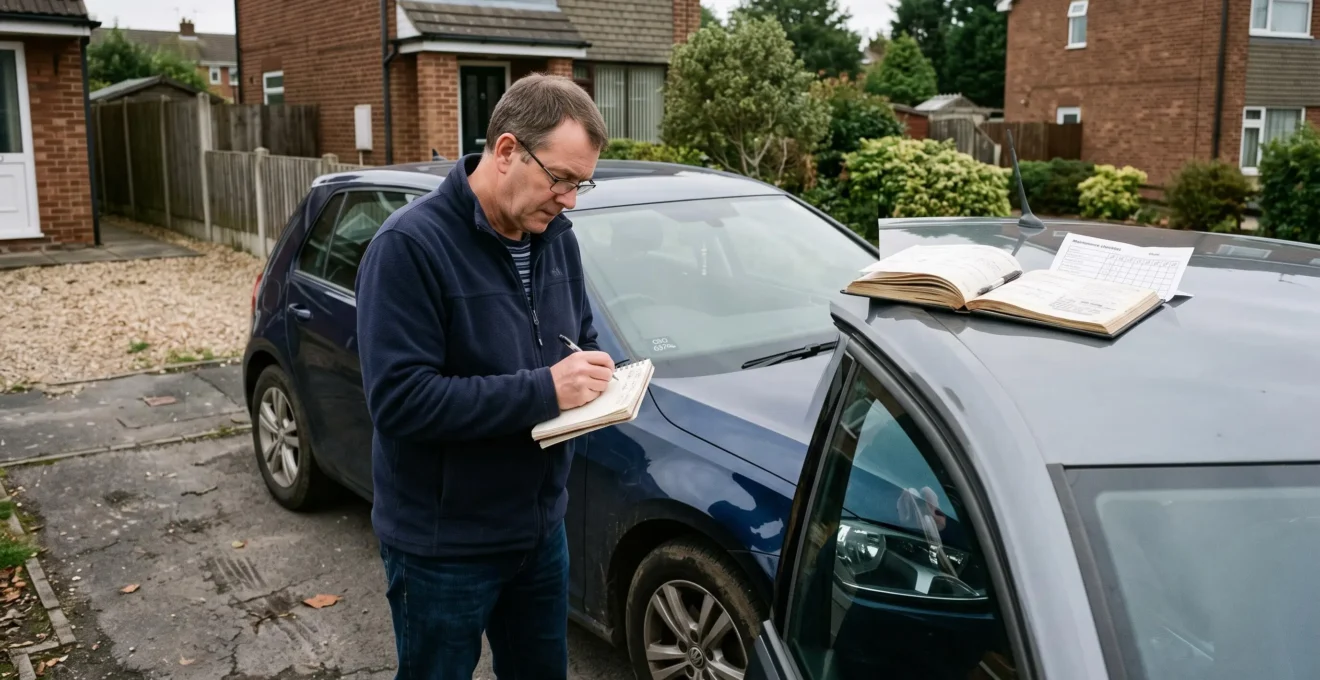
A missed maintenance interval rarely feels urgent until something fails. An oil change gets postponed, an unfamiliar warning light is ignored, or nobody remembers when the timing belt was last replaced. What began as a routine maintenance task can eventually become a repair bill approaching £900—or considerably more, depending on the vehicle and failure.
The solution is not another collection of calendar alerts. Effective maintenance tracking connects service requirements to actual mileage, elapsed time, operating conditions and documented work. It provides a reliable answer to three questions: what needs attention, when is it due, and what evidence confirms the previous service?
For an individual owner, a notebook or basic spreadsheet can provide that structure. For a household with several cars or a small business fleet, the same principles work in a shared register. The essential habit is updating the record whenever mileage changes significantly, maintenance is completed or a defect is discovered.
A useful tracking system does not promise that breakdowns will disappear. It makes predictable maintenance harder to overlook and gives owners a better basis for deciding when professional attention is needed.
Maintenance tracking: the essentials
- Track both mileage and elapsed time, using whichever manufacturer-specified maintenance limit arrives first.
- Keep one record showing each maintenance task, its next trigger and the evidence of completed work.
- Review the record regularly, investigate missing service history and update it immediately after repairs or inspections.
- Why Calendar Reminders Fail: The Root Cause of the £900 “I Forgot” Repair
- How to Set Up Maintenance Tracking in 20 Minutes Without Buying Any Software
- Mileage-Based or Time-Based Tracking: Which Prevents More Problems for Low-Mileage Cars?
- The Tracking Blind Spot That Leads to Sudden Breakdowns
- Buying a Used Car? How to Rebuild the Maintenance Schedule From Day One
- Scaling Up: Building a Fleet Reliability Checklist in 60 Minutes Without New Software
- Organising Service Documents Year-Round So Selling Is Never a Scramble
- The Service Record Detail That Adds Value at Resale—And the One That Raises Doubts
Why Calendar Reminders Fail: The Root Cause of the £900 “I Forgot” Repair
Calendar reminders fail when they represent a date rather than the vehicle’s actual maintenance needs. A car driven intensively may reach its mileage limit months before a reminder appears, while another vehicle may need time-based servicing despite covering few miles. Without updated mileage and completed-work records, reminders become increasingly unreliable.
The problem is particularly noticeable when driving patterns change. A vehicle previously used for occasional weekend trips might begin commuting daily. Its existing calendar alerts remain unchanged even as its accumulated mileage increases much faster.
Driving conditions also matter. Hyundai’s 2025 Tucson scheduled maintenance guidance identifies repeated short journeys, extensive idling, heavy traffic and frequent stop-and-go driving among conditions that require the model’s severe-usage maintenance schedule.
For this specific vehicle, repeated journeys shorter than 5 miles in normal temperatures qualify as severe usage. The corresponding threshold in freezing temperatures is 10 miles. These are manufacturer-specific criteria, not universal rules for every car.
Another failure occurs when one missed service disrupts the maintenance record. If an owner postpones an oil change but continues assuming the original schedule is accurate, later estimates may become misleading. The uncertainty increases when multiple drivers or different garages are involved.
Human memory is especially unreliable for components that show few obvious symptoms before intervention becomes necessary. Timing belts, brake fluid and scheduled filter replacements may receive less attention than visibly worn tyres or noisy brakes.
Hypothetical example: the £900 forgotten repair
Consider a car whose owner repeatedly postpones scheduled maintenance and eventually faces a £900 repair. The bill might involve a damaged turbocharger or another mechanical component requiring labour and replacement parts.
The amount is illustrative, not an established average. Actual costs depend on the vehicle, fault, labour rates and extent of damage. A neglected service can contribute to mechanical deterioration, but a particular failure cannot automatically be attributed to missed maintenance without diagnosis.
The objective is therefore not simply to remember an appointment. It is to maintain an accurate record that makes upcoming work visible even when driving habits, garages or drivers change.
The next step is turning that information into a tracking method simple enough to maintain without specialist software.
How to Set Up Maintenance Tracking in 20 Minutes Without Buying Any Software
You can build a basic maintenance tracking system in approximately 20 minutes using a notebook, phone notes or spreadsheet. Start with the manufacturer’s service schedule, record the last verified date and mileage for each task, and calculate the next applicable due point. The result should be one accessible record that you update after every service.
Begin with the owner’s manual rather than a generic servicing checklist. Identify the recurring maintenance tasks applicable to the vehicle, including oil, filters, brake fluid, coolant, spark plugs and timing-belt servicing where specified. Include periodic inspections of safety-related components.
For many vehicles, this produces roughly 8–12 initial entries, although the actual number depends on the model, engine and maintenance requirements.
Check whether the manufacturer provides separate schedules for normal and severe operating conditions. Urban congestion, frequent short journeys, towing or dusty conditions may change the applicable requirements. Do not assume that low annual mileage automatically qualifies as normal usage.
The working table can remain deliberately small. Three columns are sufficient for the initial tracking view, with the last verified service information recorded in the trigger field or a linked service log.
| Maintenance task | Trigger threshold | Estimated next due point |
|---|---|---|
| Engine oil and filter | Manufacturer mileage or date limit; last completed service recorded | Earlier applicable limit |
| Brake fluid | Manufacturer time or mileage requirement | Next specified service date or mileage |
| Timing belt, if fitted | Engine-specific replacement requirement | Verified replacement deadline |
| Tyres and brakes | Inspection requirements, condition and observed defects | Next inspection or earlier action if needed |
A straightforward trigger rule is whichever manufacturer-specified limit comes first: mileage or time. For a task with both limits, neither can safely be ignored.
As a practical planning buffer, consider setting an advance reminder approximately 10% before a scheduled interval where appropriate. This is an organisational choice, not a manufacturer-approved tolerance or permission to exceed the actual deadline. Adjust the lead time to appointment availability and the task’s urgency.
Finally, create a folder for supporting evidence. Save a photograph or digital copy of each invoice together with the service date, odometer reading and completed work. This turns the tracking system into a useful maintenance history rather than another reminder list.
Your five-step maintenance tracking setup checklist
- Find the vehicle’s official maintenance schedule and save the relevant pages or document reference.
- List the applicable recurring maintenance tasks and produce a completed first column.
- Enter the last verified service date, mileage and applicable limits, marking unknown information clearly.
- Calculate each next due point and create advance reminders, leaving a completed tracking table.
- Create a dedicated service-record folder and save the available invoices and mileage evidence.
The system is ready when every listed task has a clear next action, including those whose previous service cannot be verified.
A working table is only the starting point. Its accuracy depends on choosing the correct mileage and time triggers, especially for vehicles that are rarely driven.
Mileage-Based or Time-Based Tracking: Which Prevents More Problems for Low-Mileage Cars?
For low-mileage cars, time-based tracking often catches maintenance needs that mileage-only reminders miss. Fluids, rubber components and batteries can deteriorate while a vehicle remains parked. However, mileage remains relevant to mechanical wear, and some tasks depend on both. The safest approach is to follow the manufacturer’s applicable limits and act when either becomes due.
Mileage-based intervals are useful because many components experience wear through operation. Engine servicing, certain filters and other scheduled items may depend partly on accumulated distance, although driving conditions also affect their maintenance requirements.
Time-based intervals capture different risks. Brake fluid can absorb moisture, rubber components age, and batteries may lose charge or deteriorate during prolonged inactivity. A vehicle does not need to accumulate substantial mileage for these issues to develop.
This distinction makes low-mileage ownership deceptively demanding. A car that remains below its mileage service threshold can still become overdue for maintenance specified by elapsed time.
The comparison below helps prioritise what to monitor without replacing the vehicle-specific service manual.
| Component or task | Mileage-related consideration | Time or condition-related consideration |
|---|---|---|
| Engine oil and filter | Operating distance and usage conditions | Elapsed service interval and short-trip operation |
| Air and cabin filters | Accumulated exposure during use | Dust, contamination and specified inspection requirements |
| Brake fluid | Follow any applicable manufacturer distance limit | Age, moisture absorption and specified replacement intervals |
| Battery | Usage pattern and charging opportunities | Age, state of charge and measured condition |
| Timing belt, if fitted | Engine-specific mileage limit | Engine-specific age limit, where specified |
| Tyres | Tread wear and accumulated use | Age, cracks, damage and physical condition |
Some components have no fixed replacement interval. Battery testing, tyre condition checks and other inspections therefore remain important even when the tracking table shows no scheduled replacement.
Repeated short journeys create another problem. A vehicle may cover little distance while experiencing frequent cold starts and limited time at normal operating temperature. Neither its total mileage nor its age alone fully describes these conditions.
Drivers following this pattern should check their manufacturer’s severe-usage provisions and maintain an appropriate inspection routine.
Even a correctly configured dual-trigger system can overlook problems if its starting information is inaccurate or certain components are never inspected.
The Tracking Blind Spot That Leads to Sudden Breakdowns
The most dangerous maintenance tracking blind spot is unreliable input data. A schedule calculated from an estimated service date or unverified mileage may appear organised while giving the wrong next deadline. Components without fixed replacement intervals create another gap: they require condition checks, not merely scheduled reminders.
Consider a tracking entry stating that a timing belt was replaced at a particular mileage. If that information comes only from an unverified seller’s claim, the calculated replacement deadline rests on an assumption rather than confirmed maintenance.
Unknown maintenance history must remain visibly unknown. Entering an estimated date as though it were verified can make the entire system less useful than a clearly marked gap.
There is also a difference between tracking a scheduled service and monitoring the actual condition of a vehicle. Exhaust components, wheel bearings, hoses and batteries may deteriorate without a universal replacement deadline. Unusual noises, leaks, vibration, visible damage and poor starting performance require attention independently of the next scheduled service.
Unplanned repairs can introduce further discrepancies. If a component is replaced between scheduled services, its new installation date and mileage must be recorded. Otherwise, the tracking system may continue referring to the previous component’s history.
Not every replacement restarts the manufacturer’s maintenance schedule for an entire system. The correct future interval depends on the component, the work performed and applicable technical guidance.
A practical cross-check every six months helps uncover administrative errors. Compare the tracking register with the current odometer, vehicle age, invoices and any completed repairs.
- Verified: A dated service record supports the recorded work and mileage.
- Unverified: A claimed service lacks sufficient supporting evidence.
- Inspection required: The component’s condition or service status needs professional assessment.
- Overdue: The applicable maintenance deadline has passed and action is required.
For safety-critical concerns, do not postpone an inspection until the next six-month review. Arrange an appropriate professional assessment promptly, and do not use a vehicle known to be unsafe.
When an important task has no reliable completion evidence, ask a qualified technician whether it should be inspected, verified through records or performed again. Automatically repeating every unknown task is not always necessary, but assuming it was completed is equally unsound.
This distinction between documented and assumed maintenance becomes especially important when acquiring a used vehicle whose earlier servicing was controlled by someone else.
Buying a Used Car? How to Rebuild the Maintenance Schedule From Day One
Rebuild a used car’s maintenance schedule from its documented service history, not its purchase date. Check the service book, invoices and available digital records, then establish which major tasks have actually been completed. Where evidence is missing, obtain professional advice and price the outstanding maintenance before treating the vehicle as up to date.
The day of purchase marks a change of ownership, not a reset of the engine’s wear, fluid age or component replacement intervals. Starting every maintenance task from that date can therefore produce dangerously misleading deadlines.
A reliable reconstruction uses three complementary sources.
- Service documentation: Review the maintenance booklet, dated invoices and recorded odometer readings. Look for specific work descriptions rather than generic service stamps alone.
- Digital and third-party records: Request available manufacturer or garage servicing records and check official inspection histories where accessible.
- Physical inspection: Ask a qualified technician to assess components, fluid condition, leaks, wear and visible evidence of previous work.
Physical inspection is valuable, but it has limits. Clean oil does not prove when the previous oil change occurred, and a visually acceptable timing belt does not establish that its age or replacement history is satisfactory.
In the UK, the GOV.UK vehicle MOT history service provides available past inspection results, recorded test mileages and MOT due dates. These records help identify inconsistencies, but they do not establish that oil changes, timing-belt replacements or other mechanical servicing took place.
With a complete, credible maintenance history, preserve the existing service timeline. Calculate upcoming requirements from the last verified work and the manufacturer’s applicable intervals.
With an incomplete history, create a prioritised list of uncertainties. Engine-specific timing-belt or timing-chain requirements deserve particular attention, alongside overdue fluid servicing and safety-related defects. Clutch condition and other components without fixed replacement intervals should be assessed rather than assigned arbitrary deadlines.
Before purchasing, request estimates for potentially outstanding work. These provide a more defensible negotiation basis than simply describing the history as incomplete.
A missing invoice does not prove neglect, and an apparently complete record does not guarantee mechanical condition. The objective is to understand the remaining risk and decide whether the purchase price reflects it.
For small fleet operators, this same reconstruction should become part of the procedure for adding every vehicle to a shared maintenance register.
Scaling Up: Building a Fleet Reliability Checklist in 60 Minutes Without New Software
A small fleet can start using a shared maintenance checklist in approximately 60 minutes without purchasing software. Create one vehicle register, assign responsibility for mileage and defect reporting, and identify upcoming service dates. A brief monthly scheduling review helps coordinate work, provided it supplements rather than replaces required daily checks, inspections and repairs.
Multiple vehicles create a coordination problem that individual owners rarely encounter. Service deadlines occur at different times, mileage accumulates unevenly, and drivers may assume someone else has reported a problem.
The solution is a single shared register containing every vehicle and its important maintenance responsibilities. A spreadsheet is sufficient for an initial system.
Each vehicle should have an identifiable row or record containing its registration or fleet identifier, current mileage, last mileage update, assigned driver or responsible person, upcoming maintenance requirements and outstanding defects.
Organise the work into three operational categories.
| Priority | Typical items | Required response |
|---|---|---|
| Safety | Brakes, tyres, steering, lights and reported defects | Act according to the defect’s severity; unsafe vehicles must not be used |
| Reliability | Engine servicing, filters, cooling system and scheduled maintenance | Arrange work before applicable deadlines and address developing faults |
| Administrative compliance | Insurance, required inspections, vehicle tax and relevant operating documents | Monitor applicable legal deadlines and prevent non-compliant operation |
For van operators in England, Scotland and Wales, DVSA guidance for running a fleet of vans recommends daily walkaround checks, recording defects, appropriate servicing and maintaining records of maintenance and repairs.
The guidance also recommends keeping relevant maintenance records for at least 15 months as part of an effective system. That recommendation should not be confused with a universal legal retention rule for every vehicle or operator.
During an initial setup session, an operator can establish the register, import available records, identify overdue items and assign reporting responsibilities. The full process may require longer when records are incomplete or the fleet is larger.
After setup, use a monthly 15-minute administrative review as a starting habit. Check upcoming service deadlines, mileage changes, outstanding bookings and unresolved document gaps. More complex fleets may need additional review time.
This monthly review must not substitute for daily vehicle checks, required inspections or immediate defect escalation. A safety problem identified today cannot safely wait for the next monthly meeting.
Vehicles entering the fleet with uncertain maintenance history should undergo a documented onboarding assessment before their schedules are treated as reliable. Record the missing evidence, obtain professional advice and arrange necessary work.
Once those responsibilities are established, consistent document handling becomes the next operational advantage: it reduces repeated record searches and preserves evidence for inspections, repairs and eventual resale.
Organising Service Documents Year-Round So Selling Is Never a Scramble
Service documents should be organised immediately after every completed maintenance task, not when a vehicle is advertised for sale. Save the invoice with its date, mileage, vehicle identification and work description, then update the maintenance tracker. This creates a continuously maintained record that potential buyers can review without requiring a last-minute search.
A reliable document archive needs three clearly identifiable groups.
- Maintenance evidence: Itemised invoices, repair receipts, replacement-part information and records of completed servicing.
- Official history: Service book entries, available manufacturer records and relevant vehicle inspection documents.
- Supporting mileage records: Dated odometer photographs or readings captured during major services and other significant events.
These groups can exist as folders in ordinary cloud storage, on a computer or in a physical binder. A digital backup is useful because paper can be misplaced and individual devices may fail.
Use consistent filenames that identify the vehicle, service date and type of work. The aim is to make each record findable without opening dozens of files.
A receipt that lacks mileage or vehicle identification may still be useful, but it can be harder to connect conclusively to the relevant maintenance event. Where possible, ask the service provider for an itemised record containing these details.
The RAC advice on finding a car’s service history recommends retaining service documents together and obtaining itemised receipts showing the work performed, service date, mileage, provider and replacement parts.
Scattered documentation undermines an otherwise sensible tracking system. An invoice in an email inbox, a service-book photograph on an old phone and a repair receipt in the glovebox may describe genuine work, yet collectively provide a difficult history to verify.
Before placing a vehicle on the market, review the archive and create a buyer-ready collection. Check whether the recorded mileage sequence is coherent, major maintenance can be identified and any gaps have reasonable explanations.
The most useful moment to prepare this collection is before the advertisement goes live. A prospective buyer may request supporting documents during an inspection or test drive, and missing evidence can delay a decision.
Organising the evidence is only part of the job. Its credibility also depends on whether the dates, mileage readings and descriptions tell a consistent story.
Key takeaways before selling a vehicle
- A complete folder is useful only when the documents can be connected to the correct vehicle and maintenance work.
- Consistent mileage records help buyers evaluate the history, but they do not independently authenticate every invoice.
- Unexplained gaps deserve investigation before advertising, especially when they concern major scheduled maintenance.
The Service Record Detail That Adds Value at Resale—And the One That Raises Doubts
A consistent sequence of dated, mileage-linked service records can strengthen buyer confidence and support a vehicle’s resale value. The critical detail is traceability: each important maintenance claim should connect to credible evidence. Unexplained gaps, inconsistent mileage or repairs documented only immediately before sale may instead raise questions about the vehicle’s earlier care.
Buyers are not simply paying for the total amount spent on servicing. They are assessing the likelihood of inheriting expensive problems.
Evidence that major scheduled work was completed can reduce uncertainty about future maintenance expenses. Timing-belt replacement, where applicable, is one example: a credible invoice may help a buyer distinguish completed work from a potentially imminent expense.
However, a higher resale price is not guaranteed. The effect depends on the vehicle’s condition, market demand, age, mileage and the credibility of the documentation. A £500 premium may serve as an illustrative negotiation scenario, but the available evidence does not establish it as a typical or predictable result.
Mileage continuity is particularly valuable. A series of invoices showing plausible odometer progression gives a prospective buyer a way to assess whether the chronology makes sense.
Official inspection records can provide an additional comparison point where available. They should be used alongside service invoices rather than mistaken for proof of mechanical servicing.
Warning signs include unusually long unexplained gaps, conflicting dates, missing vehicle identifiers and major maintenance claims supported only by vague descriptions.
A cluster of repairs immediately before sale is not necessarily suspicious. Owners may legitimately address faults before advertising. The issue is whether those recent repairs are presented as evidence of consistent maintenance throughout the vehicle’s life.
Before selling, review the documents from a cautious buyer’s perspective. Where a vehicle was stored or unused for a prolonged period, explain the gap accurately and retain supporting evidence if available. If a garage invoice is missing, request a replacement record rather than creating an unsupported service entry.
Authentic but incomplete records are preferable to a polished history containing uncertain claims. Buyers can then assess the remaining risk with appropriate inspections and questions.
Start with the next maintenance task: record its actual completion date and odometer reading, save the invoice and calculate the next applicable deadline. Repeat that process consistently, and the maintenance history becomes easier to trust, easier to manage and more useful when the vehicle changes hands.
How often should I update my car maintenance tracker?
Update the tracker whenever maintenance is completed, a repair changes a component’s history or a significant defect is identified. Record mileage regularly enough to anticipate distance-based deadlines. A monthly administrative review is a practical starting point, but urgent defects and manufacturer maintenance requirements must be addressed when they arise.
Can I track maintenance for several cars in one spreadsheet?
Yes. Give every vehicle a unique identifier and maintain separate service dates, mileage readings and maintenance requirements within a shared register. A consolidated view can show upcoming work across the vehicles. For business fleets, assign responsibility for updates and retain any additional inspection or compliance records required by the operating circumstances.
What should I do if I cannot find an old service invoice?
Contact the garage, dealership or manufacturer to ask whether a replacement record is available. If the work cannot be verified, mark the maintenance event as uncertain. For important safety-related or major mechanical tasks, seek a qualified technician’s assessment rather than assuming the service took place.
Does a dashboard service reminder replace a maintenance log?
No. A dashboard reminder may help identify scheduled servicing, but its operation and coverage depend on the vehicle. A separate maintenance log can retain invoices, record unscheduled repairs, track condition-based inspections and document work completed outside the manufacturer’s reminder system. Use both in accordance with the vehicle’s maintenance instructions.
Should maintenance records be kept after a vehicle is sold?
Keeping appropriate copies can be useful for resolving later questions about completed work or a transaction. Retention responsibilities vary by country, business activity and record type. Before sharing records with a buyer, remove unnecessary personal information and provide the vehicle-related evidence needed to understand its maintenance history.