Advanced automotive technologies
Cars have changed more in the last decade than in the previous fifty. What used to be purely mechanical machines are now rolling computers, equipped with sensors, software, and electric powertrains that would have sounded like science fiction to a mechanic from the 1990s. If you find all of this overwhelming, you are not alone. This category page is designed to break down advanced automotive technologies in plain language, so you can understand what is happening under the hood, behind the windshield, and inside the software of the vehicles on American roads today.
Whether you are shopping for your next car, trying to make sense of a dealer’s pitch, or simply curious about where the industry is heading, the sections below connect the dots between the major innovations: safety systems, electrification, connectivity, autonomy, and the software that ties it all together.
What Are Advanced Automotive Technologies?
Advanced automotive technologies cover every system that uses electronics, sensors, software, or alternative energy to improve how a vehicle drives, protects its occupants, or communicates with the world around it. Think of them as layers built on top of the traditional car: the engine, wheels, and brakes are still there, but they are now supervised, assisted, and sometimes replaced by digital systems.
A helpful way to picture it is to compare a modern car to a smartphone on wheels. Just as your phone combines hardware (the camera, the screen) with software (apps, updates), a modern vehicle combines mechanical parts with electronic control units, software platforms, and over-the-air updates. The average new car today contains dozens of computers and millions of lines of code, more than some early spacecraft.
Advanced Driver Assistance Systems: The Safety Revolution
The most immediately visible advanced technology for most drivers is the family of features known as ADAS, or Advanced Driver Assistance Systems. These are the features that watch the road with you, warn you of danger, and in some cases intervene to prevent a collision. Many of them are now standard equipment on new vehicles sold in the United States, driven partly by consumer demand and partly by safety ratings from organizations like the IIHS and NHTSA.
The Most Common ADAS Features
- Automatic emergency braking (AEB): applies the brakes automatically when a collision with a vehicle, pedestrian, or cyclist appears imminent.
- Adaptive cruise control: maintains a set speed while automatically adjusting to the traffic ahead.
- Lane keeping and lane centering: gently steers the car back if it drifts out of its lane, or keeps it centered during highway driving.
- Blind spot monitoring: warns you when a vehicle is hiding in an area your mirrors cannot show.
- Rear cross-traffic alert and automatic parking: useful aids for the everyday challenges of parking lots and tight garages.
- Driver monitoring systems: cameras or sensors that detect drowsiness or distraction and prompt you to stay focused.
A practical point worth remembering: these systems are assistants, not replacements. A lane keeping system, for instance, typically works best on clearly marked highways and may struggle in heavy rain, snow, or on worn rural roads. Treat ADAS as a skilled co-pilot who still expects you, the driver, to remain in command.
Electrification: From Hybrids to Full Battery Electric Vehicles
The second pillar of modern automotive technology is electrification. It exists on a spectrum, and understanding that spectrum helps cut through a lot of marketing confusion.
- Mild hybrids: a small electric motor assists the gasoline engine, improving fuel economy slightly, but the car never runs on electricity alone.
- Full hybrids: familiar from models like the Toyota Prius, these can drive short distances on electric power and recharge themselves through braking, with no plug required.
- Plug-in hybrids (PHEVs): offer a meaningful electric range, often enough for a daily commute, with a gasoline engine as backup for longer trips.
- Battery electric vehicles (BEVs): fully electric, with no gasoline engine at all, charged at home or at public stations.
For American drivers, the charging network and home charging capability are often the deciding factors. If you own a home with a driveway, installing a Level 2 charger can make daily electric driving nearly effortless. If you rely on street parking or regularly take long road trips through areas with sparse charging infrastructure, a hybrid or plug-in hybrid may be the more reassuring choice. Range anxiety is real but shrinking: modern electric vehicles commonly offer 250 miles or more per charge, and fast-charging corridors along interstate highways continue to expand.
Why Electrification Matters Beyond Fuel
Electric powertrains do more than replace gasoline. They enable features that are difficult or impossible with combustion engines, such as regenerative braking (recovering energy every time you slow down), instant torque for brisk acceleration, and frunks (front trunks) that add cargo space by eliminating the engine bay. They also change maintenance: no oil changes, fewer moving parts, and brake pads that last longer thanks to regenerative braking.
Connectivity and Over-the-Air Updates
A connected car is one that communicates with the outside world through embedded cellular modems, Wi-Fi, and Bluetooth. This connectivity powers familiar conveniences, but its deeper significance is how it changes vehicle ownership over time.
- Over-the-air (OTA) updates: manufacturers can fix bugs, add features, and improve performance remotely, the way your phone receives updates. A car you buy can genuinely get better while you own it.
- Remote services: locking doors, pre-conditioning the cabin on a hot Texas afternoon or a cold Minnesota morning, and checking charge status from an app.
- Real-time navigation and traffic: maps that adapt to live road conditions rather than relying on static data.
- Vehicle diagnostics: alerts when tire pressure is low or maintenance is due, sometimes before you would have noticed yourself.
Connectivity does raise fair questions about privacy and data. Modern vehicles collect a surprising amount of information, from driving habits to location history. It is wise to review your manufacturer’s privacy settings and data policies, a small step that gives you more control over your digital footprint on the road.
The Road Toward Autonomous Driving
Fully self-driving cars remain a work in progress, but the levels of automation are worth understanding because they are often cited in advertising. The industry uses a scale from Level 0 (no automation) to Level 5 (full autonomy anywhere, anytime).
- Levels 1 and 2: driver assistance. The car can steer, brake, or accelerate to support you, but you must supervise constantly. Most ADAS-equipped cars on American roads are here.
- Level 3: conditional automation. The car can handle certain driving tasks in limited conditions, with the driver ready to take over when requested.
- Levels 4 and 5: high and full automation, where the vehicle handles driving without human intervention, currently limited to specific areas or still in development.
The gap between Level 2 and Level 3 is where most public confusion lives. A car that steers and brakes for you on the highway is not a self-driving car; it is a very capable assistant that requires your full attention. Keeping this distinction clear is one of the most important safety habits a modern driver can develop.
Sensors: The Eyes and Ears of the Modern Car
None of the technologies above would work without the sensor suite that lets a car perceive its surroundings. Three main families of sensors dominate:
- Cameras: read lane markings, traffic signs, and detect objects, much like human vision.
- Radar: measures distance and speed reliably in rain, fog, and darkness, forming the backbone of adaptive cruise control.
- LiDAR: laser-based sensing that builds a precise 3D map of the environment, common in advanced autonomy programs and increasingly in premium consumer vehicles.
Most automakers use a combination of these, on the principle that sensors complement one another: a camera may struggle with glare, but radar does not care about sunshine. This redundancy is what makes safety systems trustworthy enough for daily use.
Software-Defined Vehicles and the Future of Car Ownership
The newest shift in the industry is the rise of the software-defined vehicle, a car whose core functions are controlled and improved by software rather than fixed hardware. In practice, this means features can be activated, upgraded, or even offered as subscriptions after purchase, from enhanced performance modes to advanced parking functions.
For consumers, this brings both opportunity and things to watch. On the positive side, cars can improve with age and issues can be fixed without a dealership visit. On the cautious side, it is worth understanding which features in a vehicle you are considering are one-time purchases versus ongoing subscriptions, so there are no surprises down the road.
Practical Advice for Navigating These Technologies
- Prioritize safety features over gadgets. AEB and blind spot monitoring deliver more real-world value than most infotainment extras.
- Test the technology during a test drive, not just the seats and steering. Ask the dealer to demonstrate ADAS, voice controls, and charging features.
- Match the powertrain to your life. Assess your daily mileage, home charging options, and road trip habits before choosing between hybrid, plug-in, and fully electric.
- Keep software updated. If your car supports OTA updates, enable them; many improvements arrive that way.
- Stay the driver in charge. Learn what each assistance system does and, just as importantly, what it does not do.
Where It All Goes From Here
Advanced automotive technologies are converging: electric platforms provide the stable power and instant responsiveness that sensors and computers need, connectivity delivers the data, and software turns it all into a safer, smoother driving experience. For drivers, the practical outcome is vehicles that crash less, cost less to run, and improve over time. For anyone buying a car in today’s market, a basic understanding of these systems is no longer optional, it is the difference between being sold a feature list and genuinely knowing what your vehicle can do. The articles in this category dig deeper into each of these topics, always with the same goal: making complex automotive technology clear, useful, and relevant to your everyday driving.
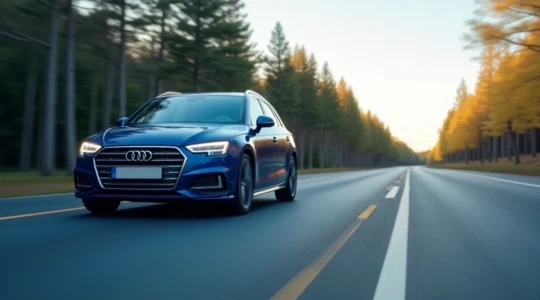
How do assisted driving features enhance overall road safety?
As automotive technology continues to advance at a rapid pace, assisted driving features have emerged as a pivotal factor in enhancing overall road safety. These innovative systems are designed to support drivers, reduce human error, and ultimately prevent accidents. By…
Lire la suite
Modern infotainment systems deliver unparalleled in-car entertainment
The automotive industry has undergone a remarkable transformation in recent years, with in-car entertainment evolving from simple radio systems to sophisticated infotainment platforms. Today’s vehicles are equipped with cutting-edge technology that rivals home entertainment systems, offering drivers and passengers an…
Lire la suite
Why are autonomous cars poised to redefine urban mobility?
Autonomous vehicles (AVs) are on the cusp of revolutionizing urban transportation. As artificial intelligence and sensor technologies advance, self-driving cars are becoming increasingly capable of navigating complex city environments. This technological leap promises to reshape our cities, altering everything from…
Lire la suiteBluetooth connectivity enhances convenience and connectivity on the go
In today’s fast-paced digital landscape, seamless connectivity has become an essential aspect of our daily lives. Bluetooth technology stands at the forefront of this wireless revolution, offering unparalleled convenience and versatility for a wide range of devices. From smartphones and…
Lire la suite