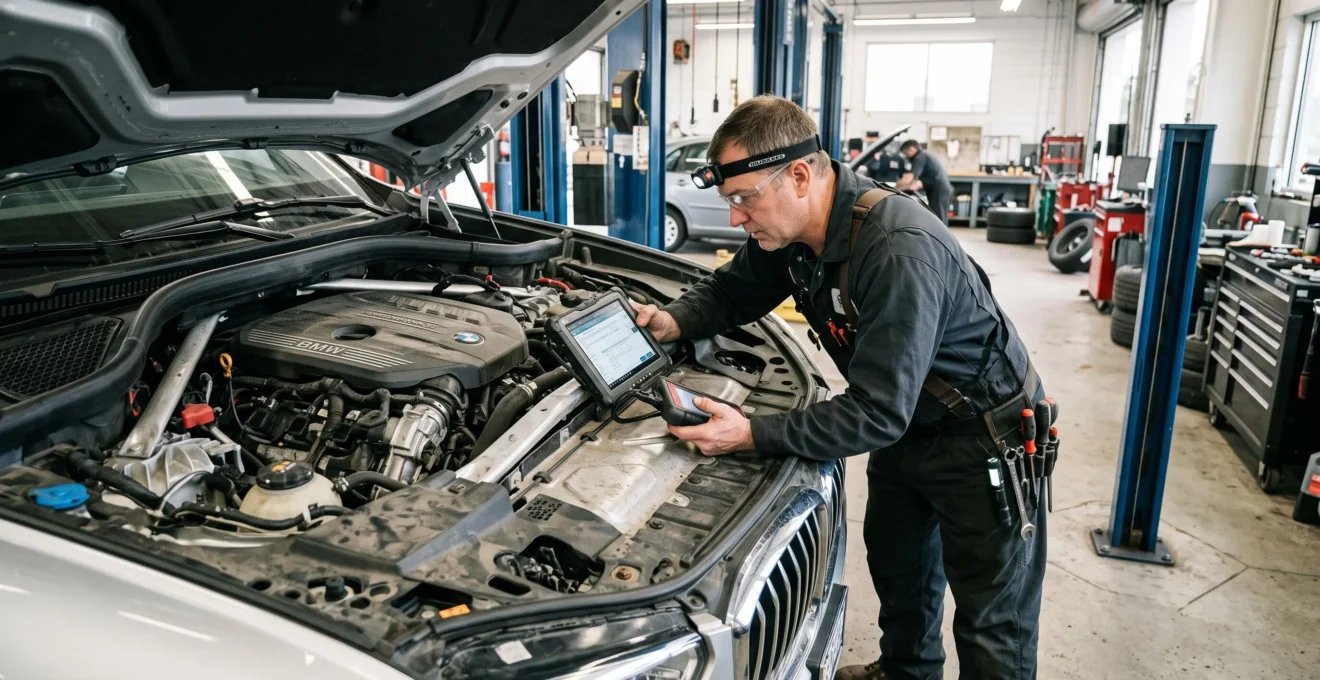
A £1,200 repair estimate can leave a vehicle owner facing three uncomfortable possibilities: approve the work, replace the car, or seek another opinion. Without a clear assessment of the vehicle’s overall condition, each option involves uncertainty. The quoted repair might be justified, but it could also address a symptom rather than its underlying cause.
A comprehensive vehicle inspection helps establish what is wrong, what is wearing out, and which risks deserve attention before committing more money. Depending on its scope, it can examine mechanical components, structural condition, visible leaks, road-test behaviour and electronic systems. It does not guarantee that every hidden fault will be found.
The useful outcome is not simply a pass or fail. It is a documented understanding of whether the car remains worth buying, maintaining or repairing. For an owner considering a substantial bill, that distinction can change both the immediate decision and the longer-term maintenance budget.
What to know before committing to a major vehicle repair
- A comprehensive inspection identifies observable mechanical, structural and safety concerns, but specialist diagnostics must be requested separately where necessary.
- Before approving a £1,200 repair, establish the cause of the problem, obtain an itemised estimate and consider the vehicle’s remaining condition and value.
- Use inspection findings to prioritise urgent work, negotiate a used-car purchase or decide whether further spending is economically sensible.
- Why Do Hidden Defects Only Show Up in a Comprehensive Inspection?
- How to Use an Inspection Report to Negotiate Without Sounding Aggressive
- Pre-Purchase or Annual Inspection: Which Gives Better Value for Your Situation?
- The « Cheap Inspection » Trap That Misses the One Thing You Needed Checked
- When Should You Book a Comprehensive Inspection to Avoid Paying for the Wrong Repair?
- Why Do « Inspected » Used Cars Still Develop the Same Fault in 2 Weeks?
- Safety Check or Full Condition Inspection: Which Do You Need Before a Long Trip?
- What a Proper Vehicle Inspection Protocol Catches Before It Becomes a Breakdown
Why Do Hidden Defects Only Show Up in a Comprehensive Inspection?
Hidden defects often escape ordinary viewings because a short test drive and visual walk-around reveal only a fraction of a vehicle’s mechanical condition. A comprehensive inspection follows a structured checking process that can expose wear, structural damage and developing faults in less accessible areas. However, its effectiveness depends on the tests actually included and the conditions under which the car is examined.
A polished exterior tells little about the condition of suspension mounting points, underbody corrosion or a cooling system that behaves differently once fully warm. Even an apparently smooth test drive may fail to expose a problem that occurs only during sustained acceleration or repeated gear changes.
The distinction is especially important when a seller has recently cleaned the engine compartment or carried out minor repairs. Such work may be entirely legitimate, but a clean surface cannot establish whether an underlying mechanical concern has been resolved. Likewise, an absence of dashboard warnings does not prove that the electronic systems are fault-free.
A structured inspection can improve the chances of identifying problems in several areas:
- Underbody and structure: corrosion, damaged mounting points, impact repairs and fluid leakage.
- Steering and suspension: deteriorated bushes, excessive joint movement, damaged springs and uneven component wear.
- Engine and transmission: abnormal noises, visible leaks, poor operation and symptoms that emerge during suitable road testing.
- Electronic systems: stored diagnostic trouble codes and module-related warnings, where scanning is included.
- Fluids and internal engine condition: contamination indicators or compression abnormalities, when appropriate specialist tests are separately commissioned.
Inspection package names can be misleading. According to The AA‘s vehicle inspection options and exclusions, its Comprehensive inspection coverage covers up to 214 points and an extended road test of up to 10 miles, while its Advanced package adds brake-fluid analysis, a digital battery test and a diagnostic system overview. Cylinder compression testing is excluded from its standard non-invasive inspection services.
Intermittent faults present another limitation. A cooling issue may only appear on a prolonged climb, while transmission slipping may depend on operating temperature and load. A road test helps, but a test lasting several miles cannot reproduce every driving condition. Suspected problems may require targeted diagnosis or additional testing.
The engineering question is not whether the car looks satisfactory, but whether the available evidence adequately addresses its principal risks. Once those risks are documented, the same information becomes useful in negotiating a purchase.
How to Use an Inspection Report to Negotiate Without Sounding Aggressive
An inspection report supports calm negotiation when findings are presented as documented costs and practical decisions rather than accusations against the seller. Start with the identified defect, obtain an independent repair estimate and ask how the issue should be reflected in the purchase terms. Safety concerns require a different response from cosmetic imperfections or normal maintenance.
A professional approach begins by separating the vehicle’s condition from the seller’s intentions. Finding a worn suspension component does not establish that anyone deliberately concealed it. It establishes that a component needs further assessment or replacement.
Instead of saying that the seller has misrepresented the car, a buyer can ask: « The inspection identifies play in a suspension joint. A repairer has quoted for replacement. Would you prefer to arrange the work or discuss an adjustment to the price? »
The most effective discussions separate inspection findings into three categories.
| Finding category | Recommended approach | Decision priority |
|---|---|---|
| Safety-critical defects | Request appropriate rectification and verification before use, or withdraw from the purchase. | Safety takes priority over a discount. |
| Cosmetic defects | Discuss a reasonable price adjustment using condition and repair estimates. | Negotiable according to preference. |
| Routine wear items | Estimate likely replacement costs and incorporate them into the ownership budget. | Consider age, mileage and price. |
A written quotation is more useful than an unsupported claim that a repair will be expensive. It should describe the condition requiring attention, proposed parts and anticipated labour. Buyers should also establish whether additional diagnostic work is needed before the quotation can be treated as reliable.
Where the seller disputes a finding, request clarification from the inspector or a suitably qualified repairer. Some findings, such as a developing noise or suspected leak, are observations requiring investigation rather than confirmed diagnoses.
Refusal to permit a reasonable independent inspection is a material decision factor. It does not prove dishonesty, but it leaves the buyer accepting greater uncertainty. When serious risks cannot be assessed, withdrawing may be more economical than negotiating an apparently attractive discount.
The value of a report therefore extends beyond finding defects. It helps distinguish which costs a buyer should challenge, which are predictable ownership expenses and which risks make the purchase unsuitable.
Pre-Purchase or Annual Inspection: Which Gives Better Value for Your Situation?
A pre-purchase inspection usually provides greater immediate value when considering an unfamiliar used vehicle because it reveals risks before ownership and financial commitment. An annual condition inspection is more useful for monitoring a car already owned and planning future maintenance. The right choice depends on purchase timing, service history, mileage and the consequences of an unexpected repair.
These inspections answer different financial questions. A pre-purchase assessment asks whether the prospective vehicle is worth acquiring. An annual assessment asks whether the existing vehicle remains economical and dependable enough to retain.
Neither approach guarantees freedom from breakdowns, and an annual comprehensive inspection is not a universal manufacturer requirement.
| Decision factor | Pre-purchase inspection | Annual condition inspection |
|---|---|---|
| Main objective | Assess risk before committing to an unfamiliar vehicle. | Monitor deterioration and organise future spending. |
| Best timing | Before agreeing to an unconditional purchase. | At a suitable maintenance review or ownership milestone. |
| Information needed | Condition, evidence of damage, immediate defects and significant future risks. | Wear progression, developing faults and maintenance priorities. |
| Financial application | Negotiate, request repairs or reject the purchase. | Repair, monitor, budget or consider replacement. |
| Principal limitation | Cannot predict every future failure. | Cannot reverse an earlier poor purchase decision. |
For a high-mileage used vehicle with incomplete records, the buyer has limited knowledge of previous maintenance, operating conditions and repairs. A pre-purchase inspection can help narrow that information gap. It should be supplemented by appropriate history, mileage and finance checks, because a mechanical inspection does not necessarily establish those facts.
For an owner with extensive maintenance records, repeated condition assessments can reveal whether particular components are deteriorating. Comparing findings over time may make repair budgeting more predictable, provided the earlier assessments are sufficiently detailed and comparable.
Consider a hypothetical owner facing a £1,200 repair. If an independent assessment confirms the underlying fault and finds that the remaining major systems are in satisfactory observable condition, repairing the existing car may be reasonable. If it also identifies substantial corrosion, other urgent repairs and significant unresolved mechanical risks, replacement deserves closer consideration.
The financial comparison must include more than the quoted repair: current vehicle value, expected additional maintenance, replacement costs, transaction expenses and uncertainty about the replacement vehicle all matter.
A vehicle approaching the end of warranty coverage or a major service milestone may justify an earlier condition assessment, particularly where an emerging symptom needs documenting. The actual coverage terms and manufacturer schedule should determine the timing.
If a buyer skipped the pre-purchase inspection, the first comprehensive assessment after purchase can still establish a useful condition baseline. It cannot retrospectively eliminate purchase risk, but it can improve subsequent maintenance decisions.
Inspection value depends less on how frequently a report is purchased than on whether it arrives before a consequential financial decision. That makes the inspection’s scope at least as important as its timing.
The « Cheap Inspection » Trap That Misses the One Thing You Needed Checked
A low-cost inspection can become poor value when its exclusions cover the precise risk the buyer needs assessed. Basic checks may identify visible wear and obvious safety concerns without investigating internal engine condition, intermittent electronic faults or structural areas requiring specialist access. The correct comparison is therefore between scope and potential consequences, not simply between advertised inspection fees.
Inspection packages vary substantially. Some include underbody checks and road testing; others focus on easily accessible components. Diagnostic scanning, compression tests, detailed corrosion investigation and fluid analysis should never be assumed to be included merely because a service is described as comprehensive.
Before booking, identify the vehicle-specific concern. For example, a suspected timing-chain problem may require investigation of engine noises, timing-related data and the relevant manufacturer’s diagnostic procedure. A general inspection may identify warning signs but cannot necessarily confirm internal chain condition.
Similarly, assessing diesel particulate filter performance may require vehicle-specific diagnostic information and driving conditions. Suspected flood damage may call for additional checks of electrical connections, corrosion and evidence of water ingress.
Hypothetical example: the inspection that could not answer the question
A buyer suspects a recurring automatic transmission fault. A budget inspection includes a brief road test but excludes transmission-specific diagnostics. The car behaves normally during the test, and no fault is confirmed.
The buyer has not received evidence that the transmission is fault-free. The inspection has established only that the particular checks performed did not reveal the suspected problem. A targeted diagnostic assessment is still needed before the buyer can make an informed decision.
The inspection fee should be viewed alongside the financial exposure. Saving money on a limited assessment offers little benefit if it leaves a potentially expensive fault unresolved. Conversely, paying for every available test on a vehicle with no relevant symptoms or risk indicators may not be justified.
For independence, consider who commissions and pays the inspector, whether the inspector also benefits from the sale, and whether the findings are communicated directly to the prospective buyer. An inspector associated with a seller is not automatically unreliable, but the arrangement should be transparent.
Request the complete scope and exclusions in writing. Where a provider cannot explain whether the relevant system will be examined, consider a different provider or specialist diagnosis.
An inexpensive assessment can still be appropriate for a narrow, clearly defined purpose. The problem arises when limited information is mistaken for a comprehensive evaluation of mechanical risk.
When Should You Book a Comprehensive Inspection to Avoid Paying for the Wrong Repair?
Book an independent inspection before authorising expensive work when the diagnosis is uncertain, when a symptom returns after repair, or when the vehicle’s overall condition could change the decision to keep it. Inspections are also useful before buying an unfamiliar car and before relevant warranty coverage expires. Immediate safety hazards, however, require prompt attention rather than continued driving while awaiting an appointment.
A £1,200 quotation should identify more than the proposed replacement parts. The essential question is whether the recommended work addresses a confirmed defect and offers an economically reasonable solution.
Replacing one component after another without adequate diagnostic evidence is sometimes called a « parts-cannon » approach. It creates the risk of paying for parts that do not resolve the original problem. A general inspection may identify related deterioration, but targeted fault diagnosis is often necessary to establish the actual cause.
The FTC‘s Auto Repair Basics consumer advice recommends considering a second opinion for expensive or complicated repairs. It also recommends obtaining a written estimate identifying the repair condition, required parts and anticipated labour charges, while checking any applicable diagnostic fees.
« If you need expensive or complicated repairs, or if you have questions about recommended work, consider getting a second opinion. »
A useful inspection request should therefore begin with the existing symptoms, previous work and the current quotation. Ask the engineer to distinguish between findings actually verified, probable causes requiring further testing and unrelated maintenance concerns.
For a recurring problem, preserve the earlier invoice, diagnostic records and warranty information. The recurrence could involve an incorrect original diagnosis, another component producing similar symptoms or a problem with the replacement part. A fresh independent assessment can help distinguish these possibilities, although it may not establish responsibility without further investigation.
Five actions before approving a £1,200 repair
- Record the symptoms: note warning lights, driving conditions, frequency and when the problem began. Deliverable: a dated symptom log.
- Request diagnostic evidence: ask the repairer which tests support the proposed repair. Deliverable: a written explanation of the suspected or confirmed cause.
- Obtain an itemised quotation: request parts, labour, diagnostic charges and any conditions requiring further authorisation. Deliverable: a written repair estimate.
- Commission additional assessment where justified: specify the unresolved concern and the inspection or specialist tests required. Deliverable: a report identifying confirmed findings and remaining uncertainties.
- Compare the alternatives: weigh necessary repairs, other identified defects and replacement costs. Deliverable: a documented repair-versus-replacement decision.
If a vehicle has a safety-critical fault, the safe course may be recovery or immobilisation until the defect is addressed. An inspection should not delay action needed to prevent an immediate hazard.
The purpose is not to avoid necessary repairs. It is to ensure that the proposed work has a defensible technical basis and that the vehicle remains worth the investment.
Why Do « Inspected » Used Cars Still Develop the Same Fault in 2 Weeks?
An inspected used car can develop a fault within two weeks because an inspection records observable condition at a particular moment rather than guaranteeing future reliability. Some faults are intermittent, concealed or outside the inspection scope. In other cases, warning signs were already documented but not fully explained to the buyer. The report, its exclusions and the circumstances of the sale determine what can reasonably be concluded.
The first distinction is between « inspected » and « passed ». A report may document component wear, minor leaks or recommendations for further investigation without declaring the vehicle unfit for purchase. Buyers who receive only a brief verbal reassurance can miss important qualifications.
A proper review should establish what the inspector actually checked, what was observed and whether the report described any limitations. A clean diagnostic scan, for example, does not exclude every mechanical problem or intermittent electrical issue.
Fault behaviour also matters. A problem may depend on cold starting, operating temperature, prolonged motorway driving or electrical load. Conditions encountered during normal ownership may differ substantially from those reproduced during a short pre-purchase examination.
When a problem appears shortly after purchase, collect dated evidence rather than assuming the inspection was defective. Record the symptoms, driving conditions, diagnostic findings and correspondence. Preserve the original report and sales documentation.
Then separate two questions: did the inspection provider fail to perform an agreed check, and did the seller supply a vehicle that meets the applicable legal and contractual requirements? These are different matters, with different evidence and potential remedies.
For used cars purchased in England, Citizens Advice guidance on problems with a used car explains that remedies may be available when a vehicle is defective, damaged or does not match its description. The circumstances matter, including disclosed problems, normal wear and how the car was purchased.
These rules should not be assumed to apply identically across the United Kingdom, the United States or other English-speaking countries. Inspection-provider liability also depends on the agreed service and applicable law, rather than automatically following from a subsequent breakdown.
During the first two weeks, observe the vehicle under normal intended operating conditions: cold starts, typical journeys and, when appropriate, motorway use. Do not deliberately stress-test a car with suspected safety or mechanical hazards. Report developing symptoms promptly and arrange qualified assessment where necessary.
A fault appearing quickly is a reason to investigate, not proof that someone acted negligently. Understanding that distinction helps protect both the buyer’s position and the quality of any subsequent repair decision.
Safety Check or Full Condition Inspection: Which Do You Need Before a Long Trip?
A safety check assesses whether essential systems appear fit for current road use, while a full condition inspection considers a broader range of mechanical weaknesses that could affect a demanding journey. A recently serviced, well-maintained vehicle may need only appropriate routine checks before a straightforward trip. An ageing vehicle, heavy towing or remote travel can justify more detailed inspection and targeted testing.
Brakes, tyres, lights, visibility and accessible fluid levels are fundamental safety considerations. A full condition assessment additionally examines areas such as cooling-system condition, suspension wear, transmission behaviour and developing mechanical concerns, depending on the agreed inspection scope.
The distinction is important because a vehicle may be legally roadworthy yet still have a developing reliability issue. In the UK, government guidance states that a current MOT certificate does not necessarily mean a car remains safe to drive.
According to UK government guidance on vehicle roadworthiness checks, drivers should monitor brakes, lights, visibility and tyre condition, while using the vehicle handbook for relevant fluid and maintenance checks.
1.6 mm
The stated UK minimum tyre tread depth for cars and light vans, measured across the central three-quarters of the tread and around the entire circumference. This is a legal minimum, not a guarantee of suitable performance in every road or weather condition.
GOV.UK, Check your vehicle is safe to drive
Long journeys introduce sustained operating demands that a brief local drive may not reproduce. An engine cooling system may behave differently during prolonged climbing or towing. Tyres face continuous motorway-speed operation, while a weak battery may become problematic after repeated starts or significant electrical demand.
For an older vehicle or one with uncertain maintenance history, request particular attention to:
- Cooling-system leaks, hose condition, coolant level and evidence of overheating.
- Tyre condition, age-related deterioration, inflation and suitability for the planned load.
- Battery condition, charging-system operation and any starting difficulties.
- Auxiliary belts and accessible drive components, following vehicle-specific maintenance requirements.
- Braking and suspension condition, especially where passengers, luggage or trailers increase demands.
Inspection findings must be interpreted alongside the intended journey. Towing, mountainous routes, extreme temperatures and limited roadside assistance can increase the consequences of an otherwise manageable mechanical issue.
Even a full inspection cannot eliminate all roadside breakdown risks. Appropriate breakdown cover, a suitable spare-wheel or tyre-repair arrangement, vehicle documentation and practical emergency supplies remain important.
The best preparation combines mechanical evidence with contingency planning. That principle also explains why a credible inspection protocol needs more than a long checklist of components.
Key takeaways before reviewing an inspection protocol
- Require the inspection report to distinguish confirmed defects, developing risks and issues that need specialist testing.
- Prioritise safety and underlying fault diagnosis before comparing repair costs with the economics of replacing the car.
- Retain written inspection findings as a condition baseline for purchase negotiations, maintenance planning and future comparisons.
What a Proper Vehicle Inspection Protocol Catches Before It Becomes a Breakdown
A credible vehicle inspection protocol brings together documented history, structured mechanical checks, appropriate diagnostic testing, road-test observations and a written assessment of condition. It can identify early signs of deterioration before they become more serious, but the protocol must match the vehicle and suspected faults. Its most valuable output is a prioritised record that supports buying, maintaining or replacing the car.
The inspection begins before a tool is connected. Service records, previous repairs, manufacturer maintenance requirements and known symptoms provide the context needed to interpret physical findings. An isolated observation is less useful than one evaluated against mileage, vehicle design and maintenance history.
A practical protocol should follow a clear sequence, adapted to the vehicle and the service commissioned.
- Documentation and history review: examine available servicing and repair records, previous inspection findings and reported symptoms. Complete separate provenance, mileage and finance checks where relevant.
- Initial condition and cold-start checks: observe warning lights, starting behaviour, unusual noises, smoke and visible leaks where the vehicle can safely be assessed from cold.
- Electronic diagnostic checks: examine relevant fault codes and available operating data if scanning forms part of the agreed service. Interpret the results rather than treating codes as definitive proof of a failed component.
- Structural and underbody examination: inspect accessible corrosion-prone locations, suspension components, steering connections, fluid leakage and signs of previous damage using suitable access and equipment.
- Road testing where appropriate: assess engine response, transmission operation, braking, steering and abnormal noises under safe, permitted driving conditions.
- Written condition report: record observations, test limitations, required investigations and the relative urgency of identified issues.
Early detection depends on recognising patterns. Uneven tyre wear can indicate alignment or suspension concerns. Excessive movement in a joint can reveal deterioration before complete failure. Fluid contamination may suggest internal problems requiring further investigation. None of these observations automatically confirms a single cause.
Where an inspector identifies a potential defect, the next step depends on the strength of the evidence. Some problems can be verified by direct examination; others require pressure testing, specialist diagnostics, fluid analysis or disassembly that falls outside an ordinary non-invasive inspection.
The report becomes significantly more useful when its findings are organised by action priority.
| Priority | Meaning | Recommended decision |
|---|---|---|
| Immediate | A safety-critical defect or condition requiring urgent attention. | Arrange appropriate rectification; avoid driving if the vehicle is unsafe. |
| Near-term | Confirmed deterioration or a developing fault needing planned attention. | Obtain estimates, schedule work and check whether further diagnosis is necessary. |
| Monitor | A non-urgent observation that should be reviewed for progression. | Record the finding and set a suitable follow-up based on professional advice. |
| Further investigation | An uncertain finding that cannot be resolved within the inspection scope. | Commission targeted testing before approving consequential repairs or purchases. |
This is a practical prioritisation framework, not a universal reporting standard. Different inspection providers may use different terminology, and the appropriate response depends on the nature of the defect.
For someone facing a £1,200 quotation, the completed report should support three possible decisions. A prospective buyer can proceed under revised terms if the known risks are acceptable. An existing owner can retain the vehicle with a realistic maintenance plan. Where repairs, wider deterioration and uncertainty make ownership unattractive, selling or replacing the car may be preferable.
The price of another vehicle must still be weighed against its unknown condition. Replacing a familiar car does not automatically remove repair risk, particularly when the replacement is also used.
Before committing to the quoted £1,200, request the written inspection findings, clarify any unresolved diagnosis and compare the cost of essential work against the vehicle’s wider condition and realistic replacement alternatives. A properly scoped inspection cannot decide for the owner, but it can make that decision substantially better informed.
Does a comprehensive inspection include an OBD-II diagnostic scan?
Not necessarily. Diagnostic scanning depends on the provider and inspection package. Some services reserve electronic diagnostic checks for higher-tier packages or specialist investigations. Ask which systems will be scanned, whether stored codes and live data are included, and whether the inspector will investigate identified faults or merely report them.
Can an inspection confirm that a £1,200 repair is necessary?
An inspection can identify relevant defects and support a second opinion, but confirming a proposed repair may require targeted diagnosis. Ask for evidence connecting the symptoms to the component being replaced, an itemised quotation and an explanation of any remaining uncertainty before authorising work.
Should a car be inspected if it has a recent MOT certificate?
A recent UK MOT does not guarantee current roadworthiness or establish overall mechanical reliability. A separate condition inspection can provide additional information before a purchase, major repair or demanding journey. The need for one depends on the vehicle’s history, symptoms and intended use.
Who should receive and retain the vehicle inspection report?
The person commissioning the assessment should confirm who will receive the complete written findings and under what terms. Buyers and owners should retain the report, its stated exclusions, relevant photographs, diagnostic records and subsequent repair estimates. These documents help establish what was known at the time and support later comparisons or discussions.
Is an inspection report a warranty against future mechanical problems?
No. A condition inspection generally describes findings reasonably apparent during the agreed checks at the inspection date. It does not guarantee that components will not fail later. Any separate warranty, guarantee or contractual protection must be assessed according to its written terms and the laws applicable to the transaction.