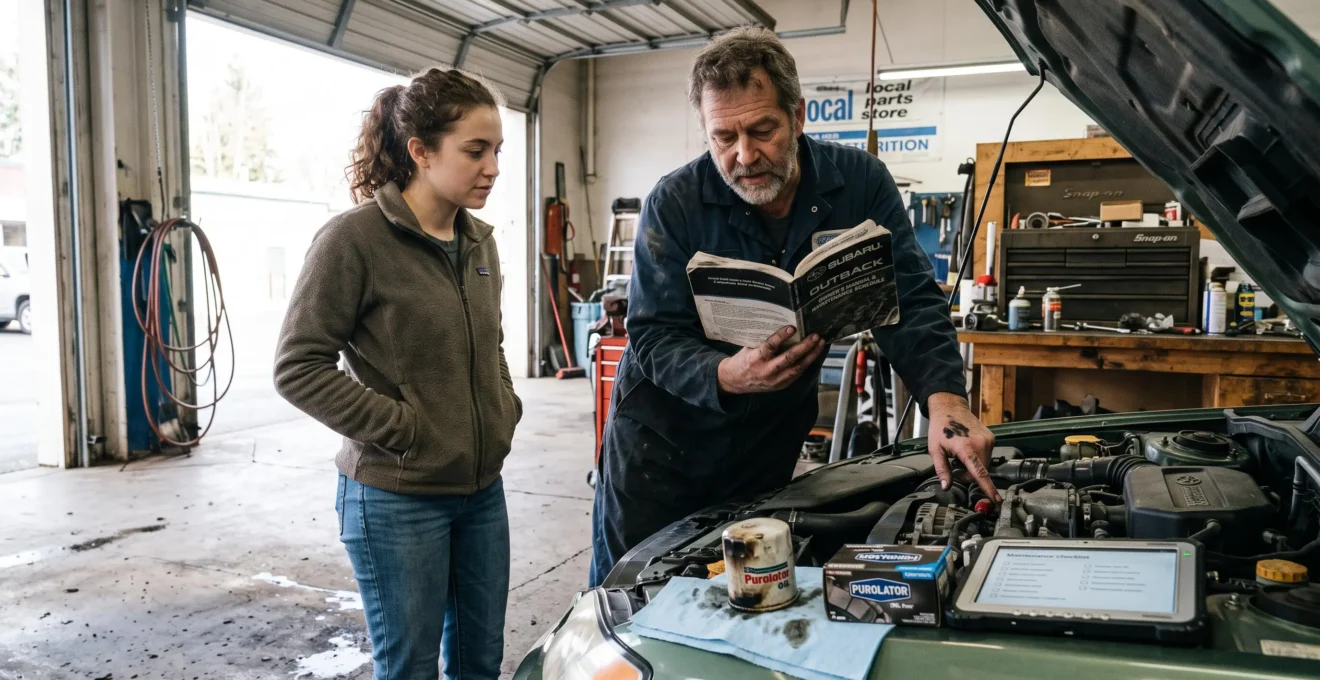
Reaching 30,000 miles and reaching 90,000 miles are two very different maintenance milestones. At 30,000 miles, most vehicles need routine servicing, inspections and attention to consumables. At 90,000 miles, the priority shifts towards checking long-interval components, verifying previous maintenance and identifying parts that may be approaching the end of their recommended service life.
However, mileage alone does not determine what a car needs. Its make, model, engine, age, driving conditions and maintenance history all influence the correct service list. A vehicle that spends its life in stop-and-go traffic may need attention sooner than one covering similar mileage on motorways.
The most reliable way to assess a service menu is to compare every proposed task with the manufacturer’s maintenance schedule, then check whether the work has already been completed. This helps separate essential replacements from inspections, condition-dependent repairs and optional extras. The objective is straightforward: protect the vehicle without paying for services that have no demonstrated benefit.
30,000 vs. 90,000-Mile Maintenance: The Essentials
- At 30,000 miles: Prioritise scheduled oil and filter servicing, routine inspections, tyre and brake checks, and any manufacturer-specified fluid or filter replacements.
- At 90,000 miles: Check long-interval requirements such as spark plugs, transmission fluid, coolant and timing components, depending on the vehicle.
- At both milestones: Follow the manufacturer’s time-and-mileage intervals, verify service records and question add-ons that are not supported by a maintenance requirement or diagnosed problem.
- Why Does the Same Car Need Different Maintenance if You Do Mostly City Driving?
- How to Build a Maintenance List Based on How You Actually Drive?
- Minor Service or Major Service: Which Is Smarter if You Can Only Do One This Year?
- The Service Add-On That Looks Useful but Does Nothing for Your Car’s Biggest Risk
- When Should You Do Catch-Up Maintenance After Buying a Used Car to Avoid Surprises?
- How to Calculate Whether a Maintenance Package Breaks Even at 10,000 Miles a Year?
- Mileage-Based or Time-Based Tracking: Which Prevents More Problems for Low-Mileage Cars?
- How Maintenance Tracking Prevents the « I Forgot » Repair That Costs £900
Why Does the Same Car Need Different Maintenance if You Do Mostly City Driving?
The same car can need different maintenance depending on whether it spends most of its time in city traffic or on open roads. Frequent cold starts, short journeys and repeated braking place different demands on its engine, brakes and battery than steady motorway driving. This is why some manufacturers distinguish between normal and severe operating conditions in their maintenance schedules.
Short journeys are particularly relevant to engine oil. When an engine does not consistently reach its normal operating temperature, moisture and unburned fuel can contaminate the oil. Repeated cold starts and short trips may therefore justify more frequent oil changes than mileage alone suggests. AAA identifies journeys of five miles or less as one example of a potentially severe driving condition, alongside sustained stop-and-go traffic, extreme temperatures, dusty environments and towing.
City driving also changes the way other components wear. Frequent stopping increases brake use, while prolonged idling and repeated starting can place additional demands on the battery. These effects do not translate into one universal replacement interval: actual brake condition, battery performance and manufacturer recommendations still determine the work required.
To identify the appropriate maintenance schedule, consider whether most journeys are long enough for the engine to reach operating temperature, how often traffic forces repeated stops, whether the vehicle carries heavy loads and what climate it operates in.
AAA’s explanation of normal and severe oil-change schedules provides useful context for understanding why operating conditions can change maintenance intervals. Its examples should not replace the specific instructions for an individual vehicle.
A practical classification is:
- Mostly normal driving: Regular longer journeys, relatively consistent operating temperatures and limited stop-and-go traffic.
- Potentially severe driving: Frequent short trips, heavy congestion, repeated cold starts, extreme temperatures, dusty roads or towing.
- Mixed driving: A combination of motorway and urban use that should be assessed against the manufacturer’s actual severe-service criteria.
The important distinction is that severe driving does not automatically mean every component needs replacing sooner. It means the manufacturer’s relevant service intervals and inspection requirements deserve closer attention. Once the correct schedule is established, the next step is turning it into a practical maintenance list.
How to Build a Maintenance List Based on How You Actually Drive?
The best maintenance list is built from the manufacturer’s normal and severe-service schedules, adjusted for the vehicle’s actual mileage, age and service history. Rather than accepting a dealership’s complete 30,000- or 90,000-mile package, identify each task, its mileage or calendar trigger and whether it has already been completed.
Start with the owner’s manual or the manufacturer’s official maintenance information. Some vehicles provide separate schedules for normal and severe conditions; others use a condition-based monitoring system or a single schedule with additional instructions. Extract the applicable requirements instead of assuming that every car follows the same service pattern.
Next, divide the maintenance tasks into three categories. This makes it easier to distinguish routine spending from work that is genuinely tied to a particular mileage milestone.
| Category | Typical examples | What to establish |
|---|---|---|
| Consumables | Engine oil, oil filter, air filter and wiper blades | Whether replacement is due by mileage, time or condition. |
| Wear items | Brake pads, discs, tyres and belts | Whether inspection identifies measurable wear or deterioration. |
| Interval-specific services | Spark plugs, transmission fluid and coolant | Whether the manufacturer’s specified interval has arrived. |
At 30,000 miles, the list may contain routine oil and filter changes, inspections and specific filter or fluid replacements. At 90,000 miles, it may include more substantial interval services. However, neither milestone guarantees that every item in a typical dealership package is due.
For example, a 90,000-mile package may advertise spark plug replacement, transmission servicing and coolant replacement. If the manufacturer requires these tasks at different intervals, or the vehicle’s records show that they were recently completed, repeating them without justification may be unnecessary.
The Federal Trade Commission recommends comparing repair-shop maintenance recommendations with the manufacturer’s schedule and asking for explanations when additional work is proposed. This is particularly useful when a service adviser presents a large package as a single mandatory purchase.
Build Your Own Maintenance Checklist
- Find the manufacturer’s maintenance schedule and save the normal and severe-service requirements applicable to your vehicle.
- Record the current odometer reading and the vehicle’s age, creating a dated mileage reference.
- Separate the listed tasks into consumables, wear-item inspections and interval-specific services.
- Compare each task with the available service history and mark completed, due, overdue or unverified items.
- Request an itemised workshop estimate showing the reason, parts and labour for every proposed additional task.
This process also makes it easier to compare minor and major servicing. Once the actual requirements are visible, the decision becomes about which work is due now rather than which package sounds more comprehensive.
Minor Service or Major Service: Which Is Smarter if You Can Only Do One This Year?
If only one service is affordable this year, choose the work that addresses the manufacturer’s actual maintenance requirements and the vehicle’s current condition. A minor service may be sufficient when routine oil, filters and inspections are the main priorities. A major service becomes more important when a significant scheduled replacement, such as a timing belt or specified fluid service, is due.
The labels minor and major are not universal technical standards. One garage may include an oil change, oil filter and basic inspections in a minor service, while another may include additional filters or checks. Major services often add more extensive fluid replacements and component inspections, but the contents depend on the workshop and vehicle.
The sensible comparison is therefore between individual tasks, not package names.
| Situation | More appropriate approach | Reason |
|---|---|---|
| Oil and routine inspections are due | Minor service plus any specifically due items | Covers the immediate scheduled essentials. |
| Spark plugs or long-life fluids are due | Major service or targeted replacements | Prevents important interval work from being overlooked. |
| Timing belt replacement is due | Prioritise the specified belt service | Deferring critical timing maintenance can expose the engine to serious damage. |
| Most major-service items were recently completed | Targeted minor servicing and inspections | A complete package could repeat work unnecessarily. |
When money is limited, not all tasks have equal consequences. A cabin filter or worn wiper blade may be less urgent than a time-expired brake fluid service or an overdue timing belt. However, even apparently minor components can affect visibility, safety or comfort, so their condition should not be ignored.
Timing belt requirements deserve particular attention. Some engines use timing chains rather than belts, while others have manufacturer-defined belt replacement intervals. On interference engines, a failed timing belt can cause severe internal engine damage. A timing belt approaching its specified replacement interval should not be casually postponed to pay for less important cosmetic or convenience work.
Ask the garage to separate its recommendations into safety-critical defects, manufacturer-scheduled replacements, routine maintenance and optional services. If an expensive repair is recommended without a clear explanation, a second opinion can help establish whether the work is justified.
A smaller service can be a sensible financial decision, but only when it does not leave important scheduled work overdue. The next step is checking whether optional add-ons are diverting money away from those essential tasks.
The Service Add-On That Looks Useful but Does Nothing for Your Car’s Biggest Risk
An engine flush or high-mileage chemical treatment can look attractive on a service menu, particularly when presented as protection against expensive engine problems. However, these products should not be confused with manufacturer-required maintenance. They do not replace overdue fluid changes, timing belt servicing, cooling-system maintenance or repairs to worn components.
Dealerships and quick-lube workshops may offer engine flushes, fuel-system treatments and chemical cleaning packages alongside routine servicing. Some products may have legitimate applications in particular circumstances, but their presence on a service menu does not establish that a specific vehicle needs them.
The most important question is whether the proposed treatment addresses an identified problem or a documented manufacturer requirement. If an engine has a diagnosed deposit issue, for example, a suitable treatment might be recommended as part of a repair strategy. That is different from automatically adding the same product to every vehicle approaching 90,000 miles.
Apply three checks before agreeing to an add-on:
- Schedule check: Does the manufacturer’s maintenance information specify this service or treatment?
- Problem check: Has the technician identified a condition that makes the treatment appropriate?
- Evidence check: Can the workshop explain the expected benefit, limitations and cost in relation to the actual vehicle?
The absence of a treatment from the maintenance schedule does not automatically prove that it is useless or that the workshop is acting improperly. Diagnostic findings, manufacturer technical communications and vehicle-specific conditions can justify additional work. The important distinction is between a supported recommendation and a routine sales add-on with no clear explanation.
The Federal Trade Commission advises consumers to question recommendations that go beyond the manufacturer’s schedule and obtain an explanation before authorising repairs. Its guidance also recommends written estimates that identify the condition being addressed, necessary parts and expected labour charges.
At higher mileage, money may be better directed towards checking overdue maintenance, inspecting cooling-system hoses, verifying timing component requirements and servicing fluids when the manufacturer specifies. These tasks address identifiable maintenance needs rather than relying on a chemical package to protect against every possible failure.
The same principle applies to vehicles purchased second-hand. When the maintenance history is incomplete, establishing what has already been done is often more valuable than buying a large package of unspecified preventative treatments.
When Should You Do Catch-Up Maintenance After Buying a Used Car to Avoid Surprises?
Catch-up maintenance should begin soon after purchasing a used car when its service history is incomplete or cannot be verified. The first priority is establishing a reliable baseline: inspect safety-critical components, confirm which routine services are due and investigate long-interval items that may already be overdue. Do not automatically replace everything without checking the vehicle’s condition and records.
A used car can have a clean appearance and a reasonable odometer reading while still carrying maintenance gaps. The previous owner may have performed servicing independently, used a workshop that does not report to vehicle history databases or failed to keep receipts. Conversely, an incomplete history does not prove that the car was neglected.
AAA explains that vehicle history reports may omit DIY work, maintenance performed by non-reporting businesses and recently completed repairs. A report should therefore be treated as one source of information, not definitive proof of the vehicle’s entire maintenance history.
Start with a qualified mechanical inspection. Check the tyres, braking system, visible fluid leaks, battery condition and other safety-related items. Review the available paperwork and compare recorded mileage and service dates with the manufacturer’s requirements.
For an uncertain history, organise outstanding work into three priority groups:
- Immediate safety and condition issues: Defective brakes, unsafe tyres, significant leaks, damaged hoses and other diagnosed problems.
- Routine maintenance with an unknown or overdue history: Engine oil, filters and time-dependent fluid services, assessed against the correct specification and schedule.
- Major interval work requiring verification: Timing belt replacement, transmission servicing, spark plugs and coolant replacement where applicable.
Do not assume that every fluid must be changed immediately. For example, transmission servicing can depend on the transmission design, fluid specification and manufacturer instructions. Incorrect fluid or an unsuitable service procedure may create additional problems. Establish what the vehicle requires before authorising the work.
The first 90 days of ownership can be a useful planning window, not a universal manufacturer deadline. Address urgent safety issues immediately, arrange routine catch-up work according to its due status and obtain professional advice on expensive items when records remain uncertain.
For major interval services, ask the previous owner for dated invoices, workshop records or service-book entries. If proof is unavailable, have the workshop determine whether the component’s condition and manufacturer requirements justify replacement rather than relying solely on an assumption about its age.
Once the outstanding work is identified, the next question is whether prepaying for future maintenance makes financial sense. A package can offer budgeting convenience, but its value depends on the actual services included and the likelihood of using them.
How to Calculate Whether a Maintenance Package Breaks Even at 10,000 Miles a Year?
A maintenance package breaks even when its price is no higher than the cost of the individual services the vehicle will actually require during the coverage period. At 10,000 miles a year, the calculation must account for mileage-triggered work, calendar-based servicing, exclusions and any restrictions on where the work can be performed.
Begin by obtaining the complete package terms and identifying every included service. A package described as covering three years of maintenance may not include every fluid, wear item or repair that becomes necessary during that period. The headline description is not enough to establish its value.
Next, obtain the individual prices for the scheduled services from the relevant workshop or dealer. Add only the work that the vehicle is expected to need during the package period. If an item is not due within that window, it should not be counted as a financial saving.
Hypothetical Maintenance Package Break-Even Example
Imagine a vehicle expected to cover 10,000 miles each year. Its owner receives a prepaid maintenance offer covering a defined period. The workshop also supplies separate prices for each scheduled service, but some proposed package items fall outside the vehicle’s actual maintenance requirements during that period.
The owner lists the relevant individual service prices, removes items that will not be needed and compares the remaining total with the package price. If the package costs less than the adjusted individual total, it offers a direct financial saving. If it costs more, the difference represents the additional price paid for budgeting convenience or price certainty. This is an illustrative calculation, not an actual dealer quotation.
The calculation can be expressed as:
Adjusted individual servicing cost = Sum of genuinely due included services.
Package difference = Package price − Adjusted individual servicing cost.
A positive result means the package costs more than buying the expected services separately. A negative result means the package is cheaper on the assumptions used.
Several variables can change the result:
- Ownership period: A package may offer limited value if the vehicle is sold before all included services are used.
- Calendar triggers: A time-based service may become due even if the car does not reach the expected mileage.
- Exclusions: Tyres, brake pads, unexpected repairs and other wear items may be excluded.
- Workshop restrictions: A package limited to one dealer network may be inconvenient if the owner moves or travels.
- Price certainty: Prepayment may protect against future price increases, although that benefit is not the same as an immediate saving.
It is also important to distinguish a prepaid maintenance plan from an extended warranty or repair service contract. The former generally concerns scheduled servicing, while the latter may cover specified unexpected repairs subject to its terms. They should not be treated as interchangeable products.
A package that costs slightly more may still suit an owner who values budgeting certainty. The important point is to make that trade-off consciously rather than assuming that a bundled service is automatically cheaper.
Mileage-Based or Time-Based Tracking: Which Prevents More Problems for Low-Mileage Cars?
For low-mileage cars, time-based tracking is particularly important because several maintenance requirements depend on calendar age rather than distance travelled. Mileage-based reminders alone can miss ageing brake fluid, coolant, rubber components and engine oil. The most reliable approach records both mileage and the date of the last service, then follows whichever applicable manufacturer threshold arrives first.
Some components deteriorate even when a vehicle is rarely driven. Brake fluid can absorb moisture over time, potentially contributing to corrosion and reduced braking performance. Coolant additives can lose effectiveness, while rubber seals and hoses can deteriorate with age and environmental exposure.
Engine oil is another consideration. A car that makes repeated short journeys may experience contamination associated with incomplete warm-up cycles, even if it covers relatively few miles annually. Conversely, a vehicle used for occasional longer journeys may experience a different operating pattern. The owner’s manual remains the reference for determining the appropriate interval.
AAA has also highlighted the risk of overlooking brake fluid maintenance because some dashboard reminders do not cover every time-based service. Its 2014 research release reported that surveyed repair shops said drivers frequently neglected brake fluid maintenance in 2014, 88 % of surveyed repair shops reported. This figure describes the repair shops’ observations, not the percentage of all vehicles with neglected brake fluid.
The practical solution is to maintain two records for every scheduled task:
| Tracking field | What to record | Why it matters |
|---|---|---|
| Mileage | Odometer reading at the last completed service | Identifies distance-based replacement intervals. |
| Service date | Actual date the work was completed | Identifies calendar-based maintenance requirements. |
| Next due point | Manufacturer’s next mileage and time thresholds | Shows when the task becomes due. |
| Evidence | Invoice, receipt or service-book entry | Provides proof that the work was completed. |
For example, consider a hypothetical vehicle covering 5,000 miles annually. If a particular maintenance item has a manufacturer-defined time interval that arrives before its mileage threshold, the calendar trigger determines when it needs attention. The owner should not wait for the odometer to reach the next mileage milestone.
This approach is especially useful for vehicles that spend long periods parked, are used mainly for short local journeys or have irregular annual mileage. It also helps owners distinguish between genuine ageing-related maintenance and services that remain comfortably within their scheduled interval.
Maintaining these records does not require complicated software. Even a simple spreadsheet can prevent long-interval tasks from being forgotten, especially when the next major service is several years away.
Key Decisions Before Your Next Service
- At 30,000 miles, concentrate on routine servicing, inspections and any specifically scheduled replacements rather than buying a generic major-service package.
- At 90,000 miles, verify long-interval components and previous service records before approving expensive replacements or assuming every listed item is overdue.
- For vehicles with incomplete records or low annual mileage, combine documented service history with calendar-based tracking to identify maintenance gaps.
How Maintenance Tracking Prevents the « I Forgot » Repair That Costs £900
Maintenance tracking prevents expensive surprises by making infrequent but important service requirements visible before they become urgent repairs. A timing belt, brake fluid service or coolant replacement can be easy to overlook because these tasks may be separated by years or tens of thousands of miles. Recording their next due dates reduces the risk of relying on memory alone.
The financial difference between preventative maintenance and a failure-related repair can be substantial, although the exact cost depends on the vehicle, component and damage involved. A scheduled timing belt replacement is a planned maintenance expense. If a belt fails on an interference engine, the resulting internal damage can turn that scheduled task into a much more expensive engine repair.
The same principle applies to other systems. Neglected brake fluid can contribute to corrosion and braking problems. Deteriorated cooling-system components or neglected coolant maintenance can contribute to overheating risks. In severe cases, overheating may damage the engine, potentially requiring extensive repairs.
The £900 figure in this section title is illustrative, not a verified average repair cost. Actual workshop prices vary significantly by vehicle, location, parts and labour. The useful lesson is the cost asymmetry: a relatively predictable scheduled service may help avoid a much larger repair bill when a critical component fails.
Maintenance records also have value beyond preventing breakdowns. A documented service history gives a future buyer evidence of completed work, helps a mechanic identify recurring issues and reduces uncertainty when deciding what needs attention next.
There are three practical ways to keep records:
- Spreadsheet or phone note: Useful for recording mileage, service dates, next due points and costs in one accessible place.
- Maintenance tracking application: Can provide reminders and organised service records, depending on the features offered.
- Stamped service book and invoices: Provides documentary evidence that can be useful when selling the vehicle or discussing its history with a workshop.
Whichever method is selected, every entry should include the date, odometer reading, work completed and supporting documentation where available. Keep invoices and receipts rather than relying exclusively on a handwritten note or dashboard reminder.
A short annual review is often enough to identify upcoming requirements. Compare the current odometer reading with the last recorded service, check calendar-based intervals and flag tasks approaching their next scheduled threshold. Pay particular attention to items that only appear at major milestones, such as a 90,000-mile service or a replacement interval measured in years.
For owners who want a simple system, a single maintenance spreadsheet can contain these columns: component or service, last completed date, last mileage, next due date, next due mileage, estimated cost and evidence location. This provides a practical record without requiring a dedicated subscription or complicated tracking software.
The most effective maintenance strategy is not the longest service menu or the most expensive package. It is a documented, vehicle-specific plan that identifies what is due, explains why it is necessary and preserves evidence of completed work. Before the next workshop visit, compare the proposed service list with the owner’s manual, check the records and authorise only work supported by the vehicle’s schedule or actual condition.
What is usually included in a 30,000-mile car service?
A 30,000-mile service commonly involves scheduled engine oil and filter servicing, routine inspections and checks of tyres, brakes, fluids and other wear items. Depending on the vehicle, the manufacturer may also specify air-filter, cabin-filter, transmission-fluid or other maintenance. The owner’s manual determines which replacements are actually due.
Is a 90,000-mile service more important than a 30,000-mile service?
Not necessarily. Both milestones can be important, but they address different maintenance requirements. A 90,000-mile service may include long-interval replacements such as spark plugs, coolant or timing components, depending on the vehicle. A 30,000-mile service may focus more heavily on routine servicing and inspections. The correct priority depends on the manufacturer’s schedule and service history.
Can a car skip its 90,000-mile major service if it runs perfectly?
Noisy operation, warning lights and visible problems are not the only indicators of maintenance needs. Some components require scheduled replacement before symptoms appear. Owners should check the manufacturer’s requirements and previous service records rather than using apparently normal driving performance as proof that every major service item can be postponed.
Should transmission fluid be changed at 30,000 or 90,000 miles?
There is no universal transmission-fluid replacement interval. Requirements vary according to transmission design, vehicle model, fluid specification and operating conditions. Some manufacturers specify replacement intervals, while others provide different inspection or servicing instructions. Always consult the vehicle-specific maintenance information before authorising transmission work.
How can I tell whether a mechanic is recommending unnecessary maintenance?
Ask the mechanic to identify the manufacturer requirement or diagnosed condition behind each recommendation. Request an itemised estimate showing the parts, labour and reason for the work. Compare it with the service history and owner’s manual. If an expensive recommendation remains unclear, consider obtaining a second opinion before authorising it.