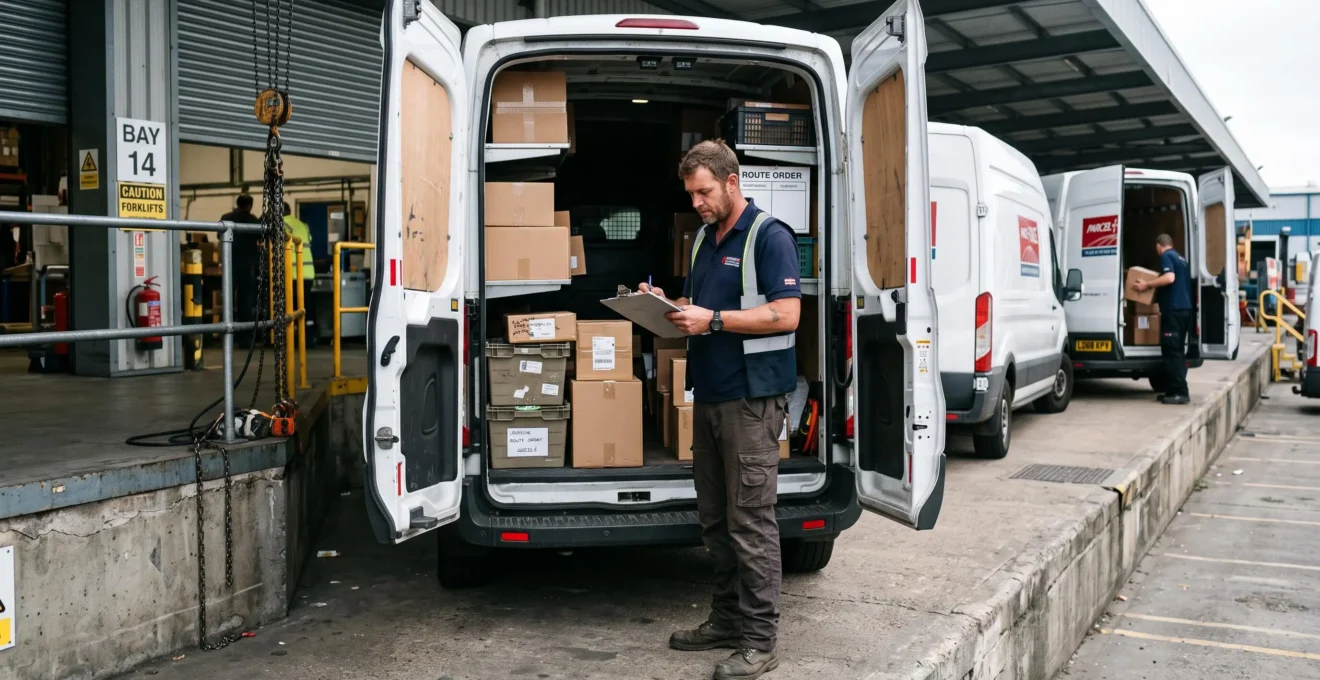
A delivery van can look perfectly suited to a business on the day it is purchased, yet become a source of delays within its first month. The cargo area fills sooner than expected, parking takes longer, loading becomes uncomfortable, and an unexpected repair disrupts several customer appointments.
The problem is rarely solved by buying the biggest van available. The right delivery van setup combines sufficient usable payload, cargo dimensions suited to the work, manageable exterior dimensions and a maintenance routine that fits the route. A smaller vehicle with organised loading may complete an urban delivery schedule more reliably than a larger one that struggles to access every stop.
For couriers, tradespeople and small businesses moving from cars into commercial vans, the first 30 days are an opportunity to test assumptions. Actual cargo weight, loading time, parking access, driver fatigue and operating costs reveal whether the vehicle supports the business or creates additional work.
What makes a delivery van work after 30 days?
- Choose dimensions around real routes: measure cargo, loading openings and parking restrictions before deciding on wheelbase or roof height.
- Protect usable capacity: account for occupants, fuel, equipment and vehicle fittings when checking payload and load security.
- Prevent avoidable downtime: train drivers on vehicle dimensions, inspect safety-critical components daily and maintain a realistic recovery plan.
- Why Do New Van Drivers Get More Scrapes and Delays in the First 30 Days?
- How to Choose Van Wheelbase and Roof Height Without Regretting It Later?
- Panel Van or Pickup: Which Works Better if You Carry Tools and 1 Passenger Daily?
- The Van Access Mistake That Causes Back Strain by the Second Week
- When Should A High-Mileage Van Be Serviced to Avoid Mid-Route Breakdowns?
- Why Can a Single Van Breakdown Trigger 3 Late Deliveries in One Day?
- How to Calculate Real Payload in 5 Minutes Including Driver and Fuel Weight?
- How to Match Payload and Route Demands Without Buying the Wrong Vehicle Class
Why Do New Van Drivers Get More Scrapes and Delays in the First 30 Days?
New van drivers can experience more scrapes and delays during their first month because they are adjusting to a larger vehicle while learning unfamiliar delivery routes. Wider blind spots, different turning behaviour, restricted parking and unknown loading-bay access all increase workload. A structured introduction to the vehicle and its regular stops can reduce avoidable mistakes.
A driver accustomed to a passenger car may underestimate the space needed to turn into a narrow street or position a van beside a loading bay. A longer wheelbase changes the turning path, while a taller body introduces overhead clearance risks that may never have mattered in a car.
Rear visibility also changes substantially. An enclosed cargo compartment may prevent direct rearward vision, making mirrors, approved reversing cameras and deliberate observation especially important. These systems assist the driver but do not eliminate blind spots or replace checking the surroundings.
Route uncertainty compounds the adjustment. A driver who discovers a height restriction, prohibited stopping area or inaccessible entrance at the destination must find an alternative while maintaining the rest of the delivery schedule.
Consider a hypothetical route with tightly spaced appointments. If the driver spends additional time finding an authorised unloading position at the first stop, subsequent deliveries may begin late even though loading and driving times were estimated correctly.
The first week should therefore include a route audit. Record where the vehicle can legally stop, which entrances accept deliveries, whether reversing is unavoidable and how long unloading takes under realistic conditions. A supervised familiarisation drive can expose difficult locations before a full route is assigned.
Five checks for the first 30 days of van operation
- Confirm vehicle dimensions: record overall height, width and length from the vehicle specification and fitted equipment in a driver reference sheet.
- Calibrate visibility: adjust mirrors, review camera coverage and practise safe positioning in an authorised training area; produce a completed familiarisation record.
- Map delivery access: identify unloading entrances, parking restrictions and clearance limits; save a route-access register.
- Audit a representative route: record actual driving, parking and unloading times; produce a route timing sheet with identified delays.
- Review the first month: log scrapes, near misses, access problems and late stops, then document corrective actions in a 30-day review.
The purpose is not to assume that every driver needs exactly 30 days to adapt. Experience, vehicle dimensions and route complexity all affect the learning period.
If the same access problems continue after familiarisation, the vehicle itself may be unsuitable for the route. Wheelbase and roof height are the next decisions to examine.
How to Choose Van Wheelbase and Roof Height Without Regretting It Later?
Choose van wheelbase according to the floor length needed for actual cargo, and roof height according to loading clearance, working posture and route restrictions. A longer or taller van is useful only when that additional space supports daily operations. Otherwise, its dimensions may create parking, access and operating disadvantages without delivering enough extra capacity.
Wheelbase affects how a van turns and positions itself, although overall length, steering geometry and overhangs also matter. Roof height affects internal clearance and access to locations with overhead restrictions. Neither dimension should be selected from a vehicle category name alone.
The most useful comparison starts with the items the business regularly carries, not the largest load it might occasionally transport.
| Configuration | Suitable operating profile | Main compromise to verify |
|---|---|---|
| Short wheelbase, low roof | Compact parcels, smaller tools and frequent urban stops | Limited load length and internal working height |
| Short wheelbase, high roof | Bulky but relatively light cargo on routes with accessible unloading points | Overhead restrictions despite relatively compact floor dimensions |
| Long wheelbase, low roof | Long equipment or cargo requiring floor area rather than standing height | Turning, parking and loading-bay access |
| Long wheelbase, high roof | Large-volume deliveries and loads that require substantial internal clearance | Greater external dimensions, access limitations and potentially higher operating costs |
These are operating profiles rather than universal vehicle specifications. Two vans described as long-wheelbase models may have different usable load lengths, turning circles, door openings and payload ratings.
Measure the load before comparing vans. Record the longest item, the widest item that must pass through a door, the required stacking height and the dimensions of any pallet, trolley or handling equipment used regularly.
Then check the manufacturer’s actual load-length, load-height, door-aperture and wheel-arch dimensions for the exact variant. Confirm whether the intended pallet or equipment can pass through the opening, not merely fit inside the advertised cargo volume.
Route restrictions deserve equal attention. A high-roof van may improve movement inside the cargo area but become unusable at a frequently visited underground car park. A long vehicle may accommodate additional equipment yet require difficult manoeuvres at an otherwise convenient loading dock.
Review the normal delivery destinations and record their known clearance restrictions before committing to a configuration. Verify the finished vehicle’s overall height, including any fitted roof equipment, rather than relying only on the base model’s published figure.
A larger body may also affect fuel consumption and running costs, but the difference depends on engine or drivetrain, load, aerodynamics and driving conditions. Compare representative operating costs rather than assuming one fixed penalty.
Once those dimensions are established, the choice between an enclosed van and an open-load vehicle becomes more straightforward.
Panel Van or Pickup: Which Works Better if You Carry Tools and 1 Passenger Daily?
A panel van is generally more practical for one driver, one passenger and valuable tools that need enclosed, weather-protected storage. A pickup becomes attractive when equipment is unusually bulky, dirty or regularly loaded from above. The deciding factors are cargo access, load security, usable payload and how frequently the vehicle is left unattended.
Both vehicle types can accommodate a driver and one passenger when fitted with suitable seating. The significant difference is how the tools are carried, protected and retrieved throughout the day.
A panel van offers a roofed load compartment, often with side and rear access. Racking, internal lighting and a suitable bulkhead can help keep frequently used items organised without occupying passenger seats.
A pickup provides an open load bed that may simplify handling some awkward items. However, protecting tools from weather and unauthorised access may require a canopy, lockable storage boxes or other equipment. Those additions occupy space and contribute to the vehicle’s weight.
| Daily requirement | Panel van | Pickup |
|---|---|---|
| Weather protection | Enclosed cargo compartment | Additional cover usually needed for exposed loads |
| Tool security | Lockable load area, subject to vehicle security and storage arrangements | Secure storage generally requires suitable boxes or an enclosure |
| Bulky or dirty equipment | Limited by door openings and enclosed load space | Open bed can simplify some loading operations |
| Tool organisation | Internal racking and multiple access doors may be available | Bed drawers, boxes or fitted systems may be required |
| Usable payload | Reduced by racking and other fitted equipment | Reduced by canopy, boxes and other fitted equipment |
Do not confuse enclosed storage with properly restrained cargo. Tools and equipment can move dangerously during braking even inside a panel van.
The DVSA guidance on loading different goods vehicles explains that vehicle bodies can help contain loads but do not remove the need for suitable restraint. It recommends positioning loads against a bulkhead where possible, grouping smaller items and securing larger or heavier cargo.
Theft exposure is a separate consideration. A lockable van is not automatically theft-proof, and a properly fitted pickup storage system can provide meaningful protection. Check the security requirements, vehicle-use conditions and any relevant insurance terms before purchasing.
For a hypothetical mobile maintenance business carrying compact power tools, replacement parts and a colleague every day, a panel van with secure racking is a sensible starting point. For a business regularly transporting muddy, oversized items that need overhead loading, a pickup may be more convenient if loads can be protected and secured appropriately.
Whichever body type is chosen, storage and access need to support repeated safe handling, not simply accommodate everything at the start of the route.
The Van Access Mistake That Causes Back Strain by the Second Week
The access mistake is choosing a van with a load floor or roof height that forces repeated awkward lifting. A high floor can require excessive stepping and lifting, while a low roof can make drivers stoop or twist when retrieving cargo. Strain may develop as repeated handling accumulates, although there is no established rule that symptoms begin specifically in week two.
A van can appear comfortable during a short inspection yet become difficult to work with after a full day of deliveries. Loading several parcels at a dealership is not equivalent to entering, reaching, lifting and unloading repeatedly throughout a route.
When drivers must climb into a cargo area for every item, the number of entries becomes part of the physical workload. If heavy cargo is positioned deep inside the compartment, reaching or dragging it forward can add unnecessary exertion.
The UK’s HSE manual handling guidance identifies repeated handling and awkward postures as musculoskeletal risk factors. In its vehicle-related guidance, it recommends low, level load floors and suitable handling aids where appropriate.
Although this guidance includes motor vehicle repair and related handling activities, its ergonomic principles are useful for assessing delivery vehicle access. It does not establish a universal safe floor height for every driver or load.
Test the loading cycle rather than only the driving position. Before committing to a van, use representative cargo to assess the physical movements required during normal work, in a suitable and controlled environment.
- Check how easily the driver can enter and leave the load compartment using the fitted steps and handholds.
- Assess whether frequently handled items can be reached without unnecessary twisting or bending.
- Keep heavy items in stable, accessible positions, low in the vehicle where appropriate, without compromising safe restraint or weight distribution.
- Check whether internal lighting makes labels, floor edges and securing points easy to see.
- Consider suitable trolleys, ramps or other handling aids when manual carrying would otherwise be excessive.
Storage layout matters as much as the vehicle body. Frequently used equipment should not be buried behind occasional-use items, and securing points should allow cargo to be released without dragging other loads out of position.
Where staff differ in height, strength or mobility, a layout that works for one driver may be unsuitable for another. A proper assessment considers the people, tasks, loads and operating conditions together.
Comfortable access supports consistent loading throughout the day, but dependable delivery also depends on whether the vehicle remains mechanically available for its assigned routes.
When Should A High-Mileage Van Be Serviced to Avoid Mid-Route Breakdowns?
A high-mileage delivery van should be serviced according to the manufacturer’s applicable time and distance requirements, with additional attention to severe operating conditions and emerging defects. Frequent short trips, stop-start driving, heavy loads and long daily operating periods may justify more demanding maintenance arrangements. Daily checks help identify problems before scheduled servicing is due.
Odometer mileage alone does not describe the full workload. A vehicle travelling longer uninterrupted journeys may experience different operating stresses from a van completing repeated short delivery stops.
The relevant maintenance schedule depends on the model, engine or drivetrain, age, service history and operating conditions. Manufacturer instructions should remain the starting point, including any requirements for severe-duty operation.
Prioritise systems that affect safety and vehicle availability. Tyres, brakes, steering, lights and visibility equipment need regular attention. Starting and charging systems, cooling components and fluid-related warning signs also deserve prompt investigation because relevant failures can interrupt a route.
The HSE vehicle inspection and maintenance guidance
A practical inspection routine should be short enough to perform consistently but thorough enough to flag visible defects and warning signs. Drivers should receive suitable instructions and know how to report problems without being expected to diagnose mechanical faults themselves.
Before departure, inspect visible tyre condition, check lights and indicators, review dashboard warnings and look for obvious fluid leakage. Follow the vehicle handbook for fluid checks and use appropriate equipment when measuring tyre pressure or tread depth.
Any safety-critical defect or warning that makes the vehicle unsafe to operate requires appropriate action before continuing. Unusual starting behaviour, repeated warning messages or changes in braking and handling should be recorded and assessed rather than ignored until the next scheduled service.
Maintenance records become especially useful when vehicles are shared between drivers. Record the mileage, reported symptoms, inspection findings, repairs and next service requirement so recurring problems are visible.
From a business perspective, planned maintenance offers scheduling control. A workshop visit can be arranged around delivery commitments, whereas an unexpected roadside failure may require recovery, customer communication and replacement transport.
This does not establish that every preventive repair costs less than every breakdown. It means operators should compare maintenance expenditure with the broader operational risk of vehicle unavailability.
Even a well-maintained van can fail unexpectedly, so the delivery schedule also needs a way to absorb the consequences.
Why Can a Single Van Breakdown Trigger 3 Late Deliveries in One Day?
A single van breakdown can cause three or more late deliveries when appointments depend on the same vehicle completing consecutive stops with little spare time. Immobilisation interrupts the current journey and reduces capacity for every remaining appointment. The actual number of affected deliveries depends on timing, route structure, recovery arrangements and available replacement capacity.
Delivery routes often work as connected sequences. Each completed stop releases the vehicle for the next collection or delivery. When the vehicle stops unexpectedly, the schedule loses more than the time required to investigate the fault.
Consider an explicitly hypothetical route with three remaining customer appointments. The van breaks down before the first. Recovery takes longer than the available scheduling buffer, and no replacement vehicle is immediately available. The driver misses the first appointment, cannot reach the second within its agreed window and also arrives too late for the third.
Three late deliveries have resulted from one incident, but this is a scheduling illustration rather than an observed breakdown statistic.
The duration of vehicle unavailability determines much of the disruption. A tyre problem resolved safely with suitable assistance may cause a limited delay. A failure requiring recovery and workshop diagnosis can remove the vehicle from service for substantially longer.
The direct repair bill is only one component of the operational loss. Depending on the business and its customer agreements, other consequences may include:
- Recovery and alternative transport arrangements.
- Staff time spent reorganising routes and communicating delays.
- Additional journeys to complete missed deliveries.
- Customer dissatisfaction or contractual consequences where applicable.
- Reduced availability for already scheduled work.
Route planning should therefore include a reasonable allowance for access problems and operational interruptions. The appropriate buffer is not a universal number of minutes; it depends on service commitments, route density, past performance and vehicle condition.
For higher-risk operations, identify a fallback vehicle or hire arrangement before it is needed. A contingency plan should record who can authorise replacement transport, how cargo can be transferred safely and how customers will be contacted.
Where delivery priorities differ, scheduling important time-sensitive commitments earlier can sometimes protect them from later disruption. This is not always possible when customer opening hours or collection times control the sequence.
Recovery planning protects service continuity, but it cannot compensate for a vehicle that routinely operates too close to its weight limits. The next check is its real carrying capacity.
How to Calculate Real Payload in 5 Minutes Including Driver and Fuel Weight?
Calculate a van’s available payload by subtracting its actual operating weight from its permitted gross vehicle weight. The operating weight must account for the vehicle, occupants, fuel, fittings and equipment already on board. Because published kerb-weight definitions differ, first confirm which items the manufacturer’s figure includes to avoid double-counting or overlooking weight.
Permitted gross vehicle weight is the maximum authorised loaded weight specified for the vehicle under the applicable rules. It is not the same as the cargo weight the operator can safely add.
The basic calculation is:
Remaining cargo allowance = permitted gross vehicle weight − vehicle weight in ready-to-operate condition before cargo is added.
If using a published kerb weight rather than an actual measurement, identify the manufacturer’s definition and adjust only for equipment, occupants, fuel or other items not already included.
A first estimate can be completed quickly when the relevant weight information is available.
- Find the permitted gross weight. Read the vehicle identification or weight plate and confirm the applicable vehicle documentation.
- Check the kerb-weight definition. Determine whether the published figure includes fuel, the driver or particular factory equipment.
- Add missing operating weight. Account for occupants, fuel and permanent additions such as shelving, toolboxes, canopies and cargo-handling equipment, without counting any item twice.
- Subtract from the gross-weight limit. The result is an estimated remaining allowance for cargo and any other items not included.
- Verify the vehicle on a weighbridge. Measure its actual weight in a representative operating condition and check axle loading as well as total weight.
For a fuel tank that has not been accounted for in the starting weight, fuel mass can be estimated from the fuel volume and the appropriate density. Density varies with fuel type and conditions, so an estimated tank weight should not be treated as a substitute for weighing the vehicle.
Hypothetical payload calculation
Suppose a van has a permitted gross weight of 3,500 kg and a stated kerb weight of 2,300 kg. For this example only, assume the kerb figure includes the vehicle and its fuel but excludes the driver, passenger and aftermarket fittings.
The driver weighs 85 kg, the passenger 75 kg and the installed racking 90 kg. The calculated remaining allowance is 3,500 − 2,300 − 85 − 75 − 90 = 950 kg.
This is an illustrative arithmetic result, not a verified payload for any particular van. Actual loading remains subject to the vehicle’s weight limits, including individual axle limits, and the stated kerb-weight definition must be confirmed.
Two apparently identical vans can have different remaining payload capacities when fitted with different equipment. Racking, bulkheads, additional seats and specialist conversions may reduce the allowance available for commercial cargo.
The vehicle’s axle limits matter independently of its total gross weight. A load concentrated toward the rear may exceed a rear axle limit even when total vehicle weight remains below the maximum permitted figure.
Operators in Great Britain can consult the DVSA guidance on driving a van linked earlier in this article. It explains that gross weight includes the vehicle, fuel, occupants and cargo, and that operators can check actual weight at a public weighbridge.
Excess weight can impair vehicle handling, braking and tyre performance and create roadworthiness or enforcement problems. Exact requirements differ between countries, so operators in other English-speaking markets should check their local vehicle registration and weight rules.
Once the cargo allowance is established, it can be compared with route requirements to determine the appropriate vehicle class.
Key takeaways before choosing a vehicle class
- Compare your heaviest representative operating load with verified remaining payload and axle limits, not just the maximum load-volume figure.
- Measure the operational cost of capacity: loading time, access difficulties, journey patterns and any additional trips matter alongside vehicle size.
- Evaluate the complete operating setup, including secure storage, driver access, preventive maintenance and a realistic breakdown response.
How to Match Payload and Route Demands Without Buying the Wrong Vehicle Class
Match the vehicle class to the heaviest realistic daily load and the physical demands of the route, rather than buying the largest affordable van. A smaller vehicle may suit frequent urban deliveries, while a larger model may suit consolidated heavy or bulky loads. The final choice must satisfy payload, axle limits, cargo dimensions, access restrictions and operating requirements together.
Choosing a delivery van is a balance between capacity and productivity. Additional load space is valuable when it prevents repeated journeys or accommodates equipment that cannot otherwise fit. It becomes less useful when the vehicle regularly travels partly empty yet struggles to reach its delivery locations.
Start by separating two requirements that are often confused: load volume and load mass. Large, lightweight parcels may fill the cargo compartment before the van reaches its weight limit. Compact, dense products may reach the permitted payload much sooner.
A suitable van must handle whichever constraint is reached first, without compromising safe loading or vehicle operation.
| Route profile | Likely vehicle priority | Trade-off to test |
|---|---|---|
| Dense urban multi-drop | Manageable dimensions, practical door access and efficient unloading | Whether smaller capacity creates too many additional journeys |
| Suburban mixed deliveries | Balanced cargo area, sufficient payload and accessible loading | Whether the configuration handles both typical and larger loads |
| Longer-distance consolidated deliveries | Appropriate carrying capacity, route efficiency and driver comfort | Operating costs and access at destination sites |
| Heavy tools and equipment | Verified payload, axle capacity, secure storage and suitable loading arrangements | Weight consumed by fittings and equipment |
| Bulky, lightweight goods | Usable cargo volume, door dimensions and appropriate restraint | Whether larger external dimensions restrict access unnecessarily |
For an urban courier, a compact van may reduce positioning difficulties and make frequent stops easier. However, if its smaller cargo area forces an additional depot journey every day, the resulting driving and loading time could offset those advantages.
Conversely, a business completing fewer deliveries with substantial loads may benefit from a larger vehicle if the load can be carried legally and safely and the route provides suitable access.
Vehicle classification introduces another layer of requirements. Driving licence categories, speed limits, parking rules and commercial vehicle obligations vary by country and sometimes by vehicle specification.
For example, in Great Britain, a standard category B licence generally allows a conventional van up to 3,500 kg maximum authorised mass, subject to applicable licence and vehicle rules. That threshold must not be assumed to apply unchanged across the United States, Canada, Australia, New Zealand or other markets.
Operating costs also need to reflect real usage. Consider energy or fuel consumption, servicing, tyres, insurance, suitable parking, financing or depreciation, as well as the number of journeys needed to complete the workload. No single body size guarantees the lowest cost per delivery.
For the final comparison, place shortlisted vehicles against the same operating evidence:
- Representative maximum cargo weight and required load dimensions.
- Verified carrying capacity after occupants, fuel and fitted equipment are accounted for.
- Turning, parking and height restrictions on regular routes.
- Safe loading and unloading requirements for the people performing the work.
- Expected maintenance demands, service access and replacement-vehicle arrangements.
- Estimated total operating cost relative to the work completed.
A useful evaluation also includes a trial using representative cargo and typical delivery stops, where practical. Observe whether loading remains organised, access is manageable and the expected schedule is achievable without unsafe shortcuts.
Build a shortlist of suitable vehicle configurations, check their actual weight and dimensional specifications, then trial the strongest candidate on a representative route before committing. The most effective setup is the one that can carry the work safely, reach the customers consistently and remain economically maintainable beyond the first 30 days.
Should a small business buy a new van or a used van for deliveries?
Compare the total operating cost, not only the purchase price. A used van may require a smaller initial investment but should be assessed for service history, existing faults, wear, payload, suitability and likely repair expenditure. A newer vehicle may offer different warranty or maintenance arrangements, depending on its terms. Neither option guarantees lower downtime, so condition and operating suitability should guide the decision.
Is a reversing camera enough for a new van driver?
No. A reversing camera is a useful visibility aid, but its field of view can be limited or obstructed. Drivers still need correctly adjusted mirrors, observation of their surroundings and an understanding of vehicle dimensions. Where visibility is inadequate, the manoeuvre should be reassessed and appropriate safe procedures used rather than relying solely on camera images.
Can a van carry its maximum payload on every delivery route?
Only when the complete loaded vehicle remains within its permitted gross and axle weights and the cargo is properly distributed and secured. Published payload figures may not account for the precise occupants, fuel condition or installed equipment of an individual vehicle. Actual weighing is the more reliable way to establish a baseline, while load distribution must be checked separately.
How can a business compare the running costs of two different vans?
Use a common operating period and comparable route assumptions. Include fuel or electricity, maintenance, tyres, insurance, vehicle financing or depreciation, parking and any additional journeys required by capacity differences. Dividing the estimated operating expenditure by the deliveries or jobs completed can help compare productivity, provided the assumptions and service requirements are consistent.
What should an operator do if a van repeatedly returns from routes overloaded or completely full?
First distinguish a weight problem from a space problem. Verify loaded vehicle weight and axle limits, then measure the actual cargo volume, loading arrangement and route demands. If safe limits are being exceeded, reduce or redistribute the load through an appropriate operating arrangement before using the vehicle. If the issue is insufficient volume, review storage layout, delivery consolidation, vehicle configuration or route allocation. Repeated overloading should never be treated as normal operation.