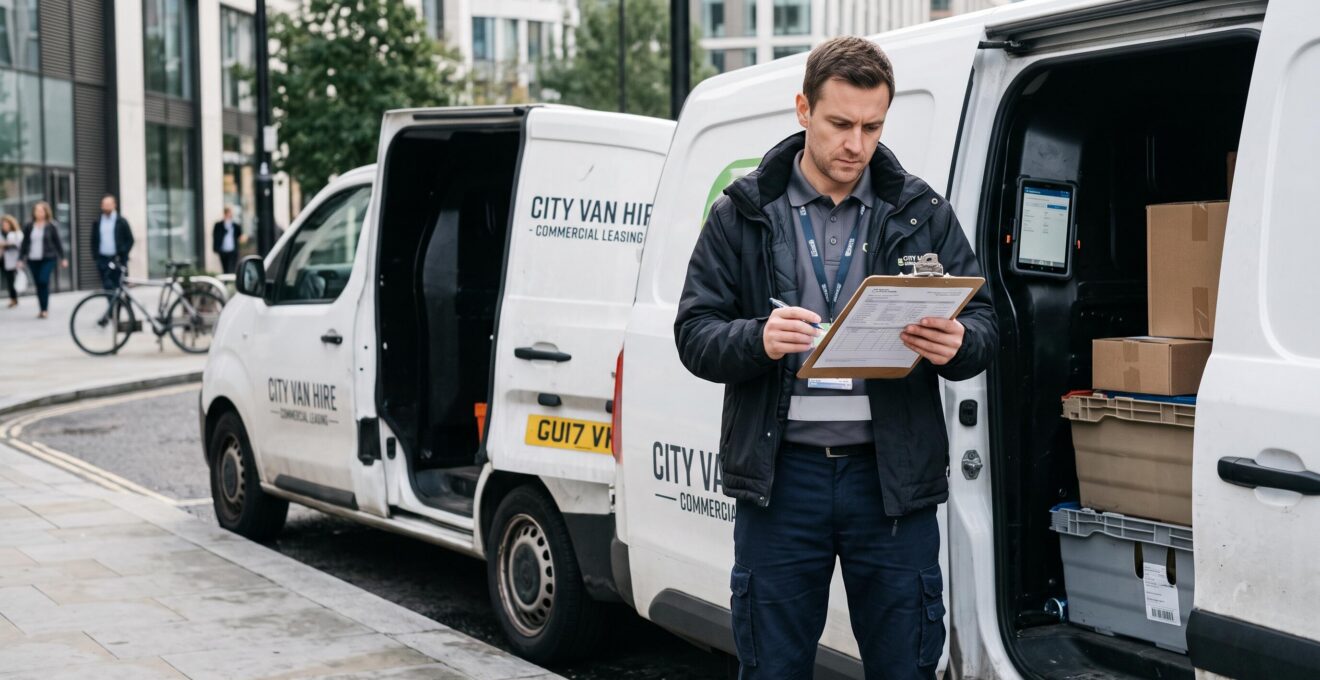
A 14-day delivery car rental can solve an immediate transport problem without tying a courier or small business to a long-term vehicle commitment. But a cheap rental becomes expensive when the contract excludes paid deliveries, the mileage allowance falls short, or a disputed scratch consumes the security deposit.
The safest approach is to choose the vehicle and insurance together. Before paying, confirm that the rental company permits the exact delivery activity, identify who provides the motor insurance, and obtain the applicable exclusions in writing. Then calculate the full cost of the rental, including delivery-use charges, mileage, fuel, damage excess and any protection products.
Insurance terminology and rental obligations vary across the UK, US, Canada, Australia and other English-speaking markets. UK industry guidance provides useful examples, but it does not override local law or a specific rental agreement. In particular, a standard damage waiver is not proof that commercial deliveries are insured.
The goal is straightforward: secure a vehicle that can complete the planned routes, preserve enough cash for operating expenses and avoid taking on financial risks that the rental price conceals.
14-day delivery rental: the essential checks
- Get written permission for paid courier or food delivery work, and verify that the applicable insurance covers that activity.
- Compare complete 14-day quotations, not advertised daily rates. Include commercial-use fees, mileage, fuel, protection and potential excess charges.
- Document vehicle condition at collection and return, and choose a vehicle based on parcel volume, route density and reload frequency.
- Why Can a Rental Company Refuse Coverage After a Delivery Shift?
- How to Book a Rental for Delivery Work Without Breaching the Contract Terms?
- Small Car or Van for Deliveries: Which Works Better After 40 Drops a Day?
- The Damage Charge Trap That Can Take Your Entire Deposit After 1 Week
- When Does a Weekly Rental Beat Daily Rates for Delivery Work by 25%?
- Panel Van or Pickup: Which Works Better if You Carry Tools and 1 Passenger Daily?
- GAP Insurance or Key Cover: Which Matters More in the First 24 Months?
- When Flexible Rentals Beat Leasing by 3 Months for Seasonal Delivery Work
Why Can a Rental Company Refuse Coverage After a Delivery Shift?
A rental company can reject or restrict a damage claim when a driver uses the vehicle for deliveries that the rental agreement or insurance policy excludes. Private-use insurance does not automatically cover paid parcel or food transportation. The outcome depends on the precise policy wording, the circumstances of the incident and applicable law, rather than delivery work automatically cancelling every form of protection.
Motor insurance is priced according to the risks the insurer agrees to accept. Carrying goods for payment creates a different exposure from occasional personal driving, particularly when the vehicle makes frequent stops, operates under delivery deadlines or travels extensively each day.
In the UK, the Association of British Insurers’ motor insurance guidance identifies business use outside a policy’s permitted activities as a potential exclusion. Drivers performing paid deliveries should establish whether they need cover specifically authorizing carriage of goods for hire or reward.
The terminology differs between jurisdictions. Some policies distinguish ordinary business driving from courier or delivery-for-payment activities. Others use separate commercial vehicle endorsements or delivery-specific insurance products. Permission to use a rental for business does not necessarily authorize paid deliveries.
A coverage dispute can emerge only after an accident. During claim assessment, an insurer may examine the journey’s purpose and determine whether the delivery activity falls within the insured use. Depending on the contract and governing law, the renter may face repair costs, loss-of-use charges or other liabilities that would otherwise have been limited.
However, an exclusion does not necessarily eliminate legally required third-party protection. Some jurisdictions require insurers to compensate eligible third parties while retaining potential recovery rights against the renter. The specific financial consequences require separate assessment.
Another distinction concerns who actually provides the protection. A rental company operating a delivery-authorized fleet may include suitable insurance in a higher rental quotation. A booking platform or third-party provider may instead sell separate coverage that excludes commercial use or reimburses only certain expenses.
For example, a collision damage waiver may limit eligible vehicle-damage charges under the rental agreement without providing standalone commercial motor insurance. It should never be treated as an automatic replacement for the underlying policy.
Drivers must also examine cargo-specific restrictions. A contract may allow certain light commercial activities while restricting food delivery, alcohol transportation, hazardous materials or particular goods. Such restrictions are contract-specific, not universal exclusions.
The decisive document is the applicable written policy and rental agreement, not the name of a protection package. Once permitted use is clear, the next task is booking the rental without creating contradictory records.
How to Book a Rental for Delivery Work Without Breaching the Contract Terms?
Book a delivery rental by declaring the intended courier activity before paying, obtaining written acceptance from the rental provider and checking the insurance documents against the actual job. Verify who may drive, what goods may be transported, where the vehicle may operate and how mileage is charged. Keep the confirmation and signed agreement throughout the rental.
Start with a precise description of the work. A useful booking request identifies whether the vehicle will carry parcels, prepared food, groceries or tools; whether deliveries are paid; the expected daily mileage; and whether the driver works through a gig platform or directly for customers.
Ask the rental company to confirm that the specific activity is permitted under both the rental contract and applicable insurance. An informal conversation at the counter is not a reliable substitute for contractual documentation. An email identifying the reservation and permitted activity creates a clearer evidence trail, although its legal effect depends on the agreement and applicable law.
Review the following clauses before signing:
- Permitted use: Does the contract explicitly allow the planned courier or delivery-for-payment activity?
- Authorized drivers: Is protection restricted to named drivers, or can another approved employee drive?
- Mileage: Is the allowance daily, weekly or cumulative, and what happens when it is exceeded?
- Parking and security: Are overnight parking locations, vehicle security or storage arrangements restricted?
- Platforms and third parties: Are app-based deliveries permitted, and does any proposed sub-rental or vehicle sharing require separate authorization?
- Cargo and territory: Are there restrictions on transported goods, operating areas or cross-border driving?
Do not assume a gig platform’s insurance fills every gap. Platform protection may apply only during particular delivery stages or may provide limited third-party liability without covering the rental vehicle itself.
Ask the platform or insurer whether its policy is primary, excess or secondary; when protection begins and ends; and whether rented vehicles are eligible. Compare those answers against the rental company’s requirements.
Five documents to secure before the first delivery
- Declare the exact commercial activity and obtain an email or agreement clause confirming the permitted use.
- Request the insurance schedule and relevant exclusions; save copies identifying the insurer, insured drivers and covered delivery activity.
- Record the mileage allowance, excess-mileage rate and expected 14-day distance in a dated cost worksheet.
- Photograph the vehicle and save the signed collection inspection report, including any existing damage.
- Create a rental evidence folder containing the agreement, permitted-use confirmation, mileage readings and relevant platform insurance documents.
During the rental, maintain a daily mileage log and condition photographs, particularly after any incident. Keep delivery records sufficient to establish the nature and timing of the work when necessary, while protecting customers’ personal information.
These records do not change excluded use into insured use, but they help establish what was agreed and what actually happened. The BVRLA rental advice and inspection recommendations emphasize reading rental terms and documenting vehicle condition before departure.
A compliant booking creates the foundation for a safer rental. Vehicle size is the next decision because the wrong capacity can erase apparent savings through lost time and repeated loading.
Small Car or Van for Deliveries: Which Works Better After 40 Drops a Day?
A small car generally suits dense urban routes with compact parcels, easy loading and limited parking. A compact van becomes more useful when larger packages, frequent reorganization or additional collection trips consume working time. Forty daily stops is a planning scenario, not a universal threshold: the better vehicle depends on actual cargo volume, stop spacing and access conditions.
Start by calculating how much freight must be carried between collection points. A vehicle that holds an entire delivery round can outperform a cheaper model if the smaller vehicle repeatedly returns to a depot.
For a 40-drop route, estimate the peak number of parcels onboard rather than simply counting daily deliveries. Record the approximate size of the largest packages, whether items can be stacked safely and how often the load changes during the shift.
The following comparison shows the operational trade-offs without assuming a particular rental rate or fuel price.
| Decision factor | Small car | Compact van |
|---|---|---|
| Dense city parking | Usually easier to position in tight spaces | Requires more clearance and suitable loading access |
| Fuel consumption | Often lower for comparable driving conditions | Depends on vehicle size, engine and load |
| Parcel organization | Limited dedicated load space | More room for sorting and securing freight |
| Reload frequency | Can increase with bulky or numerous parcels | May reduce depot returns |
| Vehicle security | Enclosed storage, but limited cargo separation | Dedicated enclosed cargo area on suitable models |
| Insurance and damage costs | Dependent on class, permitted use and contract | May carry different excesses and commercial-use charges |
For a practical capacity test, group the expected parcels by dimensions and handling requirements. Estimate how many fit securely while preserving driver visibility and remaining within the vehicle’s authorized payload.
Next, estimate the time spent driving, parking, delivering and reloading. The calculation should use the driver’s own route data, since 40 short urban stops differ substantially from 40 widely separated rural deliveries.
A simple comparison is:
Operational time = driving time + stop-handling time + loading and reloading time.
If the smaller vehicle requires extra depot trips, add their travel and loading time. If the van is harder to park, add the additional walking and maneuvering time instead. Compare the resulting working hours against delivery earnings, not just fuel spending.
For the 14-day cost comparison, calculate rental charges, approved courier insurance, expected fuel, excess mileage, parking and any vehicle-class-specific protection costs. Damage exposure also matters: a larger vehicle may be harder to maneuver in narrow urban loading areas, while repeated parcel movement can cause interior scuffs in either vehicle.
The right choice is the least expensive compliant vehicle that can complete the workload safely and reliably. Once capacity is settled, protecting the rental deposit becomes an equally important part of cost control.
The Damage Charge Trap That Can Take Your Entire Deposit After 1 Week
A rental deposit can be consumed by disputed damage charges when the provider attributes scratches, dents or interior wear to the renter. Repair costs, contractual administration fees and eligible loss-of-use charges may increase the bill beyond the deposit. A deposit is not necessarily a liability limit, so evidence from collection and return is essential.
Damage disputes often begin with disagreement about vehicle condition. A mark may have existed before collection but remained absent from the rental inspection report. Alternatively, the renter and provider may disagree over whether a defect qualifies as fair wear and tear.
Delivery vehicles face particular exposure around rear doors, loading floors, bumpers, wheel rims and thresholds. Repeated loading, curbside stops and frequent door opening can produce damage that a rental company may classify as chargeable rather than ordinary wear.
Before leaving the collection area, complete a continuous walk-around video and take separate detailed photographs of:
- Front and rear bumpers, including their lower edges.
- All wheels, tires and visible body panels.
- Roof, windscreen, mirrors and lights.
- Rear doors, sliding doors, hinges and loading thresholds.
- Cargo floor, seat upholstery, dashboard and interior trim.
- Fuel or charge level and the odometer reading.
Preserve the original photo files and their timestamps. Where possible, request that the rental agent records every visible defect on the collection inspection report and provides a signed or otherwise acknowledged copy.
Repeat the process at return, ideally during an attended inspection. Photograph the same areas from comparable angles, record the final mileage and fuel level, and obtain the return condition report. If the company refuses to acknowledge the report, retain a record of the request.
Unattended returns deserve particular caution. Responsibility for the vehicle may continue until the rental company formally inspects or takes possession of it, depending on the contract and local rules.
Another source of unexpected expense is the structure of damage charges. A provider may claim repair costs, administrative charges and compensation for eligible time when a damaged vehicle cannot be rented. These amounts must be supported by the applicable contractual terms and any relevant legal requirements; they are not automatically valid merely because they appear on an invoice.
Some companies deduct an amount from the deposit immediately, while others issue a damage claim after the rental has ended. Review the contractual dispute procedure, deadlines and evidence requirements, and challenge unsupported charges promptly in writing.
Request an itemized explanation of the claimed damage, supporting photographs, the relevant contract clause and the basis for any additional fees. If protection was purchased, confirm whether the charge is covered, excluded or subject to a deductible.
Good documentation cannot prevent every legitimate charge, but it reduces uncertainty over the vehicle’s starting condition. That protection belongs in the overall rental budget alongside the quoted daily or weekly price.
When Does a Weekly Rental Beat Daily Rates for Delivery Work by 25%?
A weekly rental beats seven daily bookings by 25% only when the complete, comparable weekly cost is at least one-quarter lower. The advertised weekly discount may apply solely to the base rental price, excluding courier insurance, delivery surcharges and mileage charges. For a 14-day hire, compare two seven-day bookings and one continuous rental against equivalent daily arrangements.
Request itemized quotations from providers willing to authorize the same delivery activity. Match vehicle class, authorized drivers, mileage requirements, insurance protection, excess and cancellation conditions before comparing totals.
Use the following calculation:
Total rental cost = base rental + commercial-use charges + protection products + mileage charges + required fees + expected fuel.
Then calculate:
Weekly saving percentage = (daily-booking total − weekly-booking total) ÷ daily-booking total × 100.
Hypothetical example: testing a 25% weekly saving
Assume two fully comparable seven-day options, both permitting commercial delivery work. The seven separate daily bookings cost £560 in total, while a single weekly booking costs £420, including the same required protection and mileage allowance.
The difference is £140. Dividing £140 by £560 gives a 25% saving. This is an illustrative calculation, not an observed market discount or verified rental quotation.
If the weekly contract later produces additional mileage charges or a different insurance excess, the comparison must be recalculated using the revised totals.
The structure of delivery-use charges can change the outcome. A fixed commercial-use fee charged once per rental period may favor a continuous booking. A daily delivery surcharge may reduce the difference between booking lengths.
Mileage limits are equally important. A weekly allowance that looks generous for ordinary driving may be insufficient for repeated courier rounds. Compare the total included distance with the distance you realistically expect to travel, adding any excess-mileage charges.
A second consideration is how many days will actually generate revenue. Divide the full rental cost by expected working days, not necessarily by all 14 calendar days. Then compare that cost per working day with expected delivery income after other operating expenses.
Weekly rentals may also involve advance payment, minimum rental periods or stricter cancellation terms. Where platform earnings are uncertain, a cheaper committed rate may become less attractive if demand falls or the driver stops working early.
Compare the cost of extending the rental as well. Some providers may change rates or availability at renewal, so two consecutive weeks should not automatically be assumed to cost exactly twice the first week’s quotation.
The optimal booking period is the one that minimizes realistic operating costs while preserving sufficient flexibility. Drivers carrying tools or additional passengers must also evaluate a different vehicle configuration.
Panel Van or Pickup: Which Works Better if You Carry Tools and 1 Passenger Daily?
A panel van is usually more practical for daily deliveries involving tools, parcels and one passenger because it offers an enclosed cargo area and potentially suitable passenger seating. A pickup can be more useful for oversized, awkward or outdoor equipment, but open-bed cargo needs appropriate security and weather protection. The choice depends on payload, seating configuration and the actual work performed.
Begin with seating. A panel van may offer two or three front seats, depending on model and specification. A pickup may provide a single passenger seat or additional rear seats. Check the exact rental vehicle rather than assuming its body type guarantees a particular seating arrangement.
Next, consider cargo security. An enclosed panel van can keep tools and parcels out of direct view and protect them from ordinary weather exposure when properly closed and loaded. However, a locked van does not guarantee theft coverage for its contents.
Rental motor insurance commonly requires separate consideration from insurance covering transported goods, tools or customer property. A vehicle damage waiver should not be assumed to protect equipment inside the vehicle.
Pickups offer convenient access to items that are difficult to load through van doors. That advantage may matter when deliveries are combined with site visits, bulky equipment or irregularly shaped loads.
However, tools carried in an uncovered pickup bed may be exposed to rain, theft or loss during transit. A secured canopy or suitable storage system can improve practicality, but the driver must verify whether it is included, authorized and covered under the contract.
Payload and load security are separate requirements. Check the manufacturer’s permissible payload for the actual vehicle and include passengers, tools, parcels and any fitted equipment in the load calculation. Never assume that available space means the vehicle may legally or safely carry the weight.
Insurance terms can also impose restrictions on unsecured loads, particular cargo and vehicle modifications. Review the applicable wording before transporting expensive tools or using external racks and storage equipment.
A useful decision test is to record how many working days involve ordinary multi-stop deliveries versus bulky or site-based jobs. If most days consist of parcel rounds with frequent stops, easy access to a protected cargo area may favor the van. If substantial loads regularly require open-bed access, a pickup may justify its operating costs.
Finally, obtain complete 14-day quotations. Pickup and van rental classes, commercial-use premiums, deposits and damage excesses vary by provider and location; neither body type has a universally cheaper insurance rate.
A vehicle should accommodate the real working load without requiring unsafe compromises. After selecting the vehicle, review optional protection products to avoid buying irrelevant or overlapping cover.
GAP Insurance or Key Cover: Which Matters More in the First 24 Months?
For an ordinary 14-day delivery rental, key cover is often more directly relevant than traditional GAP insurance, provided the renter is eligible and the policy covers the intended use. Key cover addresses specified costs arising from lost, stolen or damaged keys. GAP insurance generally addresses qualifying vehicle finance or lease shortfalls after a total loss, so standard products may not apply to short-term rentals at all.
Guaranteed Asset Protection, or GAP, is primarily associated with financed or leased vehicles. Where an eligible vehicle is written off or stolen, qualifying GAP policies may address a defined difference between the motor insurer’s settlement and an outstanding finance obligation or another insured valuation.
MoneyHelper’s explanation of GAP insurance distinguishes several GAP arrangements, including products connected to vehicle finance and contract hire. Its guidance does not establish that those products insure a standard 14-day courier rental.
The first 24 months may be relevant to the economics of a financed vehicle, but it is not a universal eligibility period or an automatic reason to purchase GAP insurance. A short-term renter should first determine whether any finance shortfall belongs to them under the agreement.
Key cover addresses a different financial risk. Depending on the policy, it may reimburse eligible expenses for replacement keys, programming, locks or lock-out assistance, subject to limits and exclusions.
Repeated delivery stops create opportunities for keys to be misplaced or left unsecured. However, no reliable claim-frequency comparison is established here between key loss and vehicle total loss for courier drivers. The two risks should therefore be evaluated by potential cost, contractual exposure and available coverage, rather than assumed statistical likelihood.
| Criterion | GAP insurance | Key cover |
|---|---|---|
| Primary purpose | Qualifying financial shortfall after a total loss | Specified lost-key, stolen-key or lock-out costs |
| Typical relevance | Eligible financed or leased vehicles | Rentals or owned vehicles where eligible |
| Short-term rental suitability | Often uncertain; eligibility must be confirmed | Potentially relevant if the rental permits it |
| Main limitation | Does not replace valid motor insurance | Does not cover unrelated vehicle damage |
| Overlap to check | Total-loss liability caps or existing financial protection | Rental assistance, key replacement and existing cover |
Before paying for key cover, inspect the rental company’s existing key-loss charges and protection terms. Some policies or assistance arrangements may already address part of the exposure, while others explicitly exclude lost or stolen keys.
For GAP, establish whether the driver has a qualifying financial obligation, whether the product accepts the vehicle and contract type, and whether commercial courier use is permitted. GAP insurance does not repair an underlying exclusion for unauthorized delivery work.
For longer arrangements involving high-value financed vehicles, GAP may warrant more attention. For a 14-day rental, the initial priorities remain permitted-use insurance, the vehicle-damage excess and any relevant key or roadside assistance costs.
Avoid selecting insurance by product name alone. Coverage needs to correspond to a real contractual risk, especially when considering whether to extend the rental or move into a longer-term lease.
Key takeaways before choosing a longer commitment
- Separate the vehicle’s actual working period from the total term of any finance or lease agreement.
- Include early-exit exposure, mileage charges and insurance responsibilities when comparing rental and leasing costs.
- Value flexibility according to the reliability of delivery demand and the availability of replacement vehicles, not just the advertised weekly rate.
When Flexible Rentals Beat Leasing by 3 Months for Seasonal Delivery Work
Flexible vehicle rental can beat leasing for a three-month seasonal delivery assignment when the driver needs the vehicle only during that period and the lease carries costs beyond it. Leasing may offer a lower recurring rate but can require longer commitments, mileage restrictions and early-termination payments. The better option depends on the full contractual cost, not the monthly price alone.
A courier working through a temporary peak may want a vehicle for several weeks, then return it when demand falls. Flexible rental supports that approach if the provider permits the intended commercial use and offers suitable renewal or return terms.
Leasing generally involves an agreed contract period and recurring payments. The BVRLA’s vehicle leasing guidance explains how contractual duration and expected mileage affect leasing arrangements, with excess-mileage charges and vehicle-return conditions creating potential additional costs.
For seasonal work, define the realistic demand window before requesting quotes. Use actual delivery history, confirmed customer contracts or known operating requirements where available. Avoid treating an optimistic earnings forecast as guaranteed demand.
Then compare these two calculations:
Flexible rental cost = rental charges during the working period + permitted-use insurance + expected mileage and other operating charges.
Leasing cost = payments and upfront charges owed under the agreement + required insurance + applicable mileage, maintenance and early-exit costs.
For a hypothetical three-month operating period, a driver should compare the total amount payable to access and return a rental vehicle after those three months with the total financial obligation created by signing a lease, including any cost of ending it at that point.
This is a decision framework, not evidence that three months is a universal rental-versus-leasing break-even threshold.
Leasing may become attractive when delivery income continues reliably throughout the year, the vehicle accumulates substantial mileage or a business can negotiate suitable commercial-use terms. Predictable long-term demand makes a fixed commitment easier to justify.
Rental flexibility also has costs. Delivery-compliant vehicles may be less available during busy operating periods, extensions may be repriced, and switching vehicles can require new insurance documentation or authorized-driver confirmations.
Before relying on rolling weekly rentals, ask whether the commercial-use permission continues automatically during an extension, whether the rate is guaranteed and what happens if the original vehicle becomes unavailable.
The most useful comparison includes downtime and operational disruption. A cheaper vehicle that cannot be replaced promptly after a breakdown or contract expiry may undermine delivery commitments. Confirm the provider’s maintenance responsibilities, roadside assistance and replacement-vehicle arrangements.
Request two written, like-for-like quotations for the expected working period: one for flexible rental and one for leasing with all exit obligations included. Confirm the allowed courier activity, compare the total financial exposure and select the arrangement that fits the actual demand window. For an immediate 14-day requirement, begin with a delivery-approved rental quote and a complete insurance check before paying.
Can I use my personal car insurance for a rented delivery vehicle?
Do not assume personal motor insurance covers rented vehicles used for paid deliveries. Eligibility depends on the insurer, jurisdiction, vehicle and permitted-use terms. Ask the insurer to confirm both rental-vehicle eligibility and the precise courier activity in writing. A policy covering ordinary business driving may still exclude carriage of goods for payment.
Does a rental company’s damage waiver cover goods stolen from the vehicle?
Not automatically. A collision or vehicle damage waiver generally concerns eligible damage to the rented vehicle and does not necessarily insure parcels, customer goods or work tools. Review cargo insurance, goods-in-transit cover and theft exclusions separately, including any conditions concerning vehicle locking, unattended loads and overnight storage.
What should I do if the rental vehicle breaks down during a delivery shift?
Stop using an unsafe vehicle, follow the rental provider’s breakdown instructions and contact its authorized assistance service. Record the incident and avoid commissioning repairs without required approval. Ask whether a replacement vehicle is available and confirm that its rental terms and insurance authorize the same delivery activities before resuming work.
Can I change delivery platforms halfway through a 14-day rental?
Possibly, but verify that the rental agreement and applicable insurance permit the activities performed through the new platform. Different platforms may provide different insurance arrangements, and any platform-specific protection may have eligibility conditions. If the delivery type, cargo or working arrangement changes, obtain confirmation that the existing coverage remains suitable.
How much money should I keep available beyond the rental price?
Budget separately for the security deposit, insurance excess, fuel or charging, parking, tolls and potential mileage charges. Also consider the cash-flow effect of a delayed deposit release or damage dispute. There is no universal reserve amount: calculate your exposure from the actual contract, payment terms and expected route costs rather than relying on an arbitrary figure.