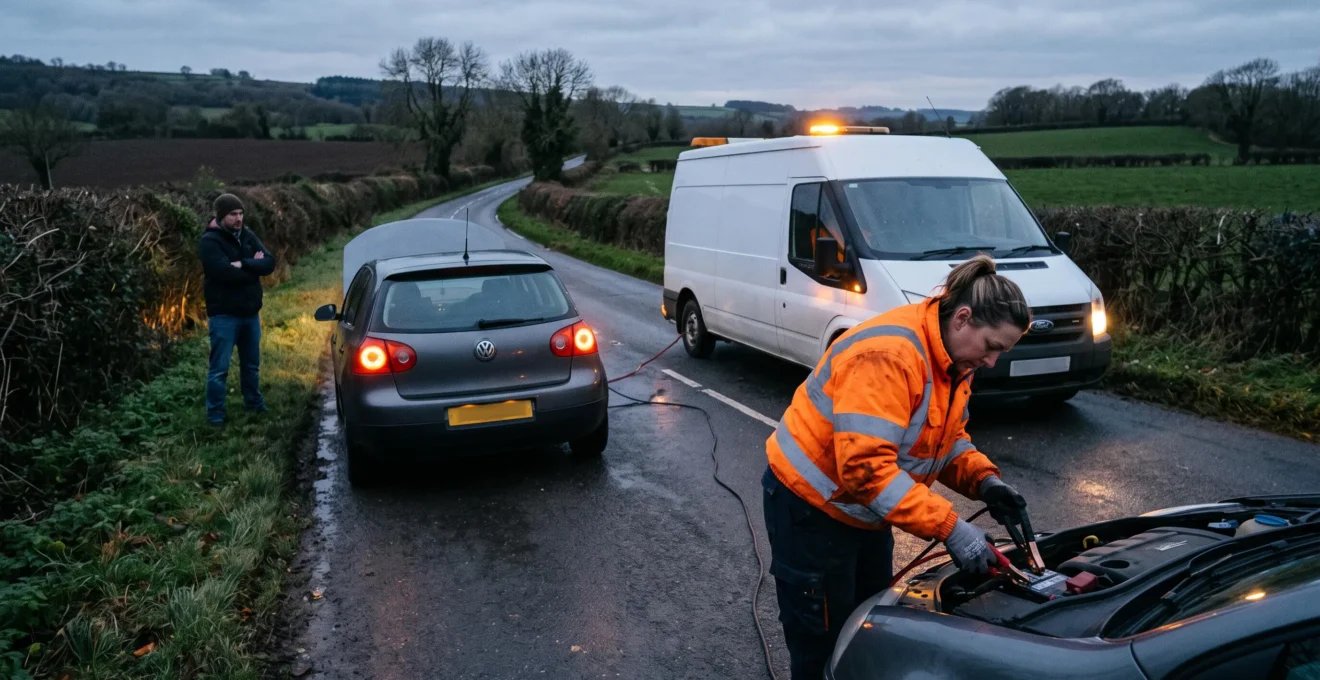
No roadside assistance policy can reliably promise complete recovery within 90 minutes unless that commitment is explicitly defined in its terms. A patrol arriving within an hour is not the same as a vehicle being repaired, loaded onto a recovery truck or delivered to a garage within that time.
For drivers stranded on a motorway, travelling late at night or facing a breakdown far from home, the difference matters. A premium membership may provide nationwide towing and onward travel without guaranteeing a faster response than basic cover. Meanwhile, a seemingly minor exclusion can leave a driver paying for assistance they thought was included.
The dependable choice is therefore not automatically the most expensive policy. It is the one combining appropriate roadside attendance, recovery destinations, vehicle eligibility and practical dispatch arrangements for the routes actually driven. Understanding those details before travelling also makes it easier to communicate a breakdown accurately, avoid unnecessary delays and challenge a refusal when justified.
Roadside assistance: what matters most
- Check what the time promise measures. Patrol attendance, roadside repair and completed recovery are separate events. A 90-minute arrival target is not necessarily a 90-minute recovery guarantee.
- Match the benefits to your journeys. Home assistance, nationwide recovery and onward travel can matter more than a premium label, especially for frequent long-distance drivers.
- Prevent dispatch and eligibility problems. Confirm your cover, report the exact location and symptoms, and check your vehicle before departure.
- Why Does Roadside Assistance Sometimes Take Hours, Even With “Premium” Cover?
- How to Call Roadside Assistance So the Right Vehicle Arrives First Time
- Manufacturer Cover or Standalone Provider: Which Works Better for Older Cars?
- The Breakdown Cover Mistakes That Get Your Call-Out Refused at the Roadside
- When Should You Upgrade Roadside Cover if You Drive Long Distances Weekly?
- The Pre-Departure Check Most Drivers Skip That Leads to Roadside Callouts
- GAP Insurance or Key Cover: Which Matters More in the First 24 Months?
- Which Protection Add-Ons Are Worth It if You Park on the Street Every Night?
Why Does Roadside Assistance Sometimes Take Hours, Even With “Premium” Cover?
Roadside assistance can take several hours because response times depend on available patrols, local recovery contractors, traffic conditions, weather and the complexity of the breakdown. Premium cover usually changes the benefits available, not necessarily your position in the dispatch queue. Even when a patrol arrives promptly, arranging a tow or completing a long-distance recovery may take considerably longer.
The first operational constraint is geography. A provider may have substantial national coverage while relying on a relatively small number of available contractors in a particular rural area. An urban breakdown near several patrols presents a different dispatch problem from an incident on a remote road at night.
Demand also changes throughout the day. Severe weather, widespread vehicle problems and simultaneous incidents can create competing calls. Dispatchers must consider safety and available resources rather than allocating vehicles solely by membership tier.
The crucial distinction is between attendance time and completed recovery time.
- Dispatch: The request is assessed and an appropriate resource is allocated.
- Attendance: The patrol or recovery vehicle reaches the breakdown location.
- Diagnosis and repair: The technician identifies the problem and determines whether the vehicle can safely continue.
- Recovery: If the car cannot be repaired, transport to an eligible destination is arranged and completed.
A provider’s advertised arrival target may concern only the second stage. For a driver whose engine has failed far from home, that distinction determines how useful the promise really is.
The AA‘s September 2026 policy documentation confirms that long-distance recovery may be completed in multiple stages. Its contractual benefits do not establish a guarantee that complete recovery will finish within 90 minutes.
“In some cases, especially for recoveries over long distances, Your recovery may need to be completed in multiple stages rather than in a single journey.”
Before buying, examine the provider’s coverage arrangements along your regular routes. Ask whether rural recoveries rely on subcontractors, whether attendance targets apply at night and what happens if the first patrol cannot complete the job. A second visit can become necessary when the initial fault description does not identify a need for specialist equipment.
The Financial Ombudsman Service also recognises that delays may raise questions about what customers were promised, whether priority was appropriate and the external circumstances affecting attendance. That does not turn every delay into a contractual breach.
A policy that sends an appropriately equipped vehicle and provides a workable recovery destination can be more useful than one advertising an attractive but narrowly defined arrival target. Getting that first dispatch right starts with the breakdown call itself.
How to Call Roadside Assistance So the Right Vehicle Arrives First Time
To get the right roadside assistance vehicle first time, give the call handler your exact location, immediate safety risks, vehicle details and observable fault symptoms. Explain whether the car can move, whether a wheel is damaged and whether specialist equipment might be needed. Accurate information helps dispatchers choose between a repair patrol, recovery truck or specialist response.
Start with safety, not the mechanical problem. If the car is on a motorway hard shoulder, in a live traffic lane or in another dangerous position, say so immediately. Report any passengers who may need additional assistance. Never exaggerate vulnerability to gain priority, but do not minimise a genuine hazard.
On a UK motorway, a driver should follow the applicable emergency safety guidance, move to a place of safety when possible and contact emergency services where there is immediate danger. Do not remain beside an exposed vehicle to inspect its engine or retrieve information.
Once safe, provide a location the dispatcher can use: road name, direction of travel, junction numbers, motorway marker post or a precise location reference such as what3words, where supported. A phone’s location sharing may help, but it should not replace confirming the correct carriageway or road access.
A useful call script is:
“My vehicle has broken down on [road and direction], near [junction or marker]. I am [in a safe location / unable to leave the vehicle safely]. It is a [make, model and fuel type]. The fault started when [symptom]. The engine [starts / cranks but does not start / will not crank]. The vehicle [can / cannot] be moved safely. Please confirm whether you are sending a patrol or a recovery vehicle and whether any additional equipment is needed.”
These details matter because dispatch is partly a resource-matching exercise. An ordinary patrol may be suitable for some battery problems but not for every immobilised vehicle, damaged wheel or specialist recovery situation.
Describe what the car actually does rather than diagnosing a component without evidence. The following distinctions are especially helpful:
- No-start: Does the starter motor turn the engine, click repeatedly or remain silent?
- Flat tyre: Is the tyre visibly deflated or damaged, and does the vehicle have a usable spare or repair kit?
- Battery issue: Are dashboard lights dim, or was there slow cranking before the failure?
- Overheating: Was there a temperature warning, steam or coolant leakage?
- Lost keys: Are the keys missing, locked inside or physically damaged? Is the vehicle fitted with a keyless system?
An inaccurate description can cause a wasted visit and another wait. Whether that visit counts against an annual call-out allowance depends on the policy, so the driver should ask rather than assume.
Five actions to prepare a breakdown call
- Record your position: Save the road, travel direction, nearest junction or exact location reference in a note.
- Identify immediate risks: Write down whether the vehicle is on a hard shoulder, obstructing traffic or safely parked, and whether anyone needs urgent assistance.
- Retrieve vehicle details: Have the registration, make, model, fuel type and relevant vehicle configuration ready.
- Describe the fault: Record the warning lights, sounds, symptoms and whether the car can move without risking further damage.
- Confirm the dispatch: Obtain the job reference, expected response type, communication method and any stated next steps.
The objective is not to tell the dispatcher how to do the job. It is to give them enough reliable information to make the right decision. That becomes particularly important when the vehicle is older or subject to specialised cover conditions.
Manufacturer Cover or Standalone Provider: Which Works Better for Older Cars?
For an older vehicle, standalone roadside assistance may offer greater flexibility over eligible vehicles and recovery destinations, while manufacturer cover can work well when the car remains within an approved warranty or servicing programme. Neither option is automatically better. Vehicle age, mileage, servicing history and garage choice should determine the decision before price or brand familiarity.
Manufacturer roadside assistance is often associated with new-car warranties, approved servicing or extended manufacturer programmes. Some arrangements require continued servicing within a specified network, while others allow different maintenance options. Eligibility must be confirmed for the exact programme and vehicle.
Standalone cover can provide an alternative for drivers using independent garages. However, acceptance of older cars is not universal: providers may impose vehicle-condition requirements, age limits, restrictions on existing faults or charges for particular vehicles.
The comparison becomes clearer when separated into practical criteria.
| Decision factor | Manufacturer cover | Standalone provider |
|---|---|---|
| Vehicle eligibility | May depend on warranty, age or programme conditions | Depends on provider acceptance and policy restrictions |
| Servicing requirements | May be linked to approved servicing | May permit independent servicing, subject to conditions |
| Recovery destination | May favour an authorised repair network | May offer local or nationwide destination choices |
| Older or modified vehicles | Programme restrictions may apply | Individual eligibility and modifications must be checked |
| Multiple vehicles | Often linked to a specified vehicle | Personal or multi-vehicle options may be available |
Recovery destination is particularly important. A manufacturer programme might direct the vehicle towards an authorised dealer, depending on its terms. For a high-mileage car regularly maintained by an independent mechanic, that destination may be less convenient than a chosen local garage.
Some standalone policies offer nationwide recovery, but basic roadside attendance should not be confused with unrestricted towing. Under the documented AA UK policy, basic assistance following an unsuccessful repair includes transport to an eligible local repairer or a qualifying local destination. National Recovery is a separate benefit allowing an eligible UK destination of the member’s choice, subject to conditions.
Before making the choice, verify:
- Maximum permitted age or mileage, if any, and when those limits are assessed.
- Requirements for roadworthiness, previous faults and maintenance history.
- Whether modifications or unusual vehicle specifications affect acceptance.
- Whether assistance continues after a change of ownership.
- Where the vehicle can be recovered if it cannot be repaired roadside.
For a car still under manufacturer warranty and serviced within its approved programme, the included assistance may be sufficient. For an older, independently serviced vehicle, compare standalone eligibility and recovery destinations before relying on either policy.
Whichever model fits, eligibility should be checked against the vehicle’s actual condition, not just its registration or age. Otherwise, the driver may discover an exclusion only after requesting assistance.
The Breakdown Cover Mistakes That Get Your Call-Out Refused at the Roadside
Roadside assistance may be refused when the breakdown falls outside the purchased benefits or breaches an explicit policy condition. Common risks include known faults existing before cover began, requesting home assistance without that benefit, repeat failures, ineligible vehicles and exhausted call-out allowances. Having a valid membership does not mean every breakdown scenario is covered.
The most consequential mistake is assuming that basic roadside assistance includes recovery to any destination. Some policies cover attendance and limited local towing without including nationwide recovery, home assistance or onward travel.
The AA’s September 2026 terms provide a concrete UK example: basic Roadside Assistance applies more than one-quarter of a mile from the member’s home, while the At Home benefit covers the home address and the surrounding quarter-mile. National Recovery and Onward Travel are separate benefits.
These distances and benefit definitions are specific to the documented AA product, not rules applying across every provider or English-speaking country.
Other refusal risks deserve the same attention:
- Pre-existing problems: Known mechanical faults before policy purchase may be excluded because the cover is not intended to fund an already identifiable breakdown.
- Repeat failures: The documented AA policy excludes a repeat breakdown involving the same fault within 28 days unless evidence of a permanent garage repair is available.
- Vehicle eligibility: Roadworthiness and applicable legal requirements, including inspection, tax and insurance obligations, can affect entitlement under policy terms.
- Usage limits: Some benefits restrict claims or call-outs. The AA’s documented Onward Travel benefit, for instance, is limited to three claims per membership year.
- Excluded services: Specialist locksmith work, certain tyre costs, misfuelling and vandalism-related expenses may not be included in ordinary breakdown assistance.
Not every restriction means that all help will be refused. A provider may offer chargeable assistance, limited recovery or a different service where the requested benefit is excluded. The distinction should be clarified before authorising any additional costs.
Before travelling, verify three things: the precise tier purchased, your vehicle’s eligibility and whether the likely breakdown location is within the policy’s geographical and home-distance conditions. Keep the applicable terms and membership confirmation accessible offline.
If a call-out is declined, request the specific policy clause and a written explanation. If immediate recovery is necessary, ask about available paid options and keep all invoices. Independently purchased recovery may be disputed later, but reimbursement is not guaranteed.
Useful complaint evidence includes call recordings or call references, the applicable policy version, messages, recovery reports, photographs and garage repair records.
The UK complaints route also has limits. According to the Financial Ombudsman Service’s vehicle breakdown cover complaints page, eligible disputes may be referred after an unsatisfactory final response or where no final response has been provided within eight weeks. However, certain roadside assistance, repair and recovery activities involving providers including the AA and RAC can fall outside its jurisdiction.
Drivers outside the UK should follow their own jurisdiction’s complaints arrangements rather than assuming UK ombudsman rules apply.
Cover should be treated as a defined service agreement rather than an unlimited rescue promise. Once those boundaries are clear, the next question is whether a higher tier is justified by the distances regularly driven.
When Should You Upgrade Roadside Cover if You Drive Long Distances Weekly?
Drivers making long-distance journeys every week should consider upgrading before that travel pattern becomes routine, particularly if their existing policy only provides roadside attendance and local recovery. Nationwide recovery and onward travel can reduce the financial and logistical consequences of a breakdown far from home. The value depends on the upgrade cost, benefit limits and actual travel needs.
A local breakdown and a breakdown several hours from home create different problems. In the second situation, a patrol may be unable to repair the vehicle, leaving the driver to organise a tow, alternative transport or accommodation.
Basic assistance may resolve the immediate roadside problem without solving how the vehicle or its passengers get home. Higher-tier benefits may include nationwide recovery, replacement transport, accommodation or a hire car, subject to policy limits.
For example, the AA’s documented National Recovery benefit allows eligible recovery of the vehicle, driver and up to seven passengers to one destination within the UK. Its Onward Travel benefit may provide qualifying transport, accommodation or a replacement hire car. The replacement vehicle benefit is subject to availability and specified conditions, with cover for up to three days.
Those benefits are alternatives governed by the policy, not an unconditional promise to provide every option simultaneously.
A practical upgrade decision compares the additional premium with the costs that the current membership would leave uncovered.
Hypothetical example: a weekly motorway commuter
A driver regularly travels between distant cities and currently has basic roadside assistance. Their policy provides limited local recovery but does not include transport home after an unsuccessful roadside repair.
The driver obtains a quotation for nationwide recovery and onward travel, then compares the additional annual premium with a separately quoted long-distance tow and the possible cost of alternative transport. The upgrade becomes worth considering when the extra benefits address a meaningful exposure at an acceptable price. The decision does not require assuming that a breakdown will occur or inventing a probability of failure.
Timing is essential. The documented AA terms impose a 24–hour waiting period for newly purchased At Home, National Recovery and Onward Travel benefits. A mid-membership upgrade not prompted by a breakdown is also subject to a 24-hour exclusion period.
Other providers may use different waiting periods or upgrade restrictions. Never assume a benefit added during an existing breakdown will apply immediately.
Households should also examine how membership is assigned. Vehicle cover protects the nominated eligible vehicle regardless of its driver, whereas personal cover follows the named member in eligible vehicles. A joint or personal arrangement may be more suitable for people regularly using several cars, provided the actual membership terms cover everyone concerned.
An upgrade should purchase specific capabilities, not reassurance alone. Even comprehensive cover cannot eliminate every breakdown, which makes basic vehicle preparation the next practical defence.
The Pre-Departure Check Most Drivers Skip That Leads to Roadside Callouts
A short pre-departure inspection can reveal tyre, battery, fluid and fuel problems before they become roadside emergencies. It cannot prevent every breakdown or replace scheduled servicing, but it can identify warning signs that drivers might otherwise overlook. Tyre condition, starting performance, fluid levels and sufficient fuel deserve attention before long journeys, particularly after extended periods of inactivity.
Battery problems are easy to miss. Repeated short journeys may provide insufficient opportunity to replenish charge, while long periods parked can leave a weak battery struggling to start the engine. Slow cranking, recurring electrical warnings or inconsistent starting warrant attention before a lengthy trip.
A battery tester can help investigate battery condition, but a single voltage reading is not a complete diagnosis. Persistent symptoms should be assessed professionally, especially where the vehicle has a complex charging system or stop-start technology.
Tyres are equally important. Check pressures against the vehicle manufacturer’s specifications, preferably when the tyres are cold. Inspect for visible damage, unusual wear and adequate tread. Verify the condition and availability of the spare wheel or manufacturer-supplied repair kit, where applicable.
The UK government’s GOV.UK guidance on checking vehicle roadworthiness establishes that drivers remain responsible for keeping vehicles safe to drive. For UK cars and light vans, the legal minimum tyre tread depth is 1.6 mm across the central three-quarters of the tread and around its full circumference. A valid MOT certificate does not remove the ongoing responsibility to maintain a roadworthy vehicle.
A five-minute visual routine can cover the essentials without attempting a full mechanical inspection:
- Observe starting behaviour and check for battery-related warnings or visible terminal problems where safely accessible.
- Inspect tyres for obvious damage or deflation and verify pressure and tread with appropriate tools.
- Check engine oil and coolant levels according to the manufacturer’s instructions, only when conditions make those checks safe.
- Confirm sufficient fuel or electric range for the route, allowing for charging or refuelling opportunities.
- Check lights, visibility, warning indicators and the availability of necessary journey equipment.
Do not open a hot cooling system or attempt an unfamiliar battery inspection. Fluid levels and tyre checks may require more than five minutes, and any suspected safety defect should be resolved before departure.
Seasonal conditions change the emphasis. In cold weather, investigate weak starting, battery condition, suitable coolant protection and visibility. In hot weather, pay particular attention to the cooling system, tyres and correct inflation pressures. Longer motorway or holiday journeys justify a more thorough inspection than a routine local commute.
Maintenance also affects claims. A known defect ignored before taking out cover may create a policy dispute, while some products treat fuel-related incidents or specialist services differently from ordinary mechanical breakdowns. The exact contractual wording determines whether an event is excluded; poor maintenance does not automatically invalidate every roadside claim.
Mechanical readiness reduces avoidable disruption, but it does not address every financial consequence of owning a car. Protection against a written-off vehicle or expensive replacement keys requires a different type of cover.
GAP Insurance or Key Cover: Which Matters More in the First 24 Months?
GAP insurance may matter more during the first 24 months when a vehicle is heavily financed and its market value could fall below the outstanding finance balance or relevant purchase-price protection. Key cover addresses a narrower risk: replacing lost, stolen or damaged keys and potentially associated locks or programming. The right choice depends on the size of the potential loss and existing insurance benefits.
GAP stands for Guaranteed Asset Protection. Following a qualifying total loss, different GAP products may cover the difference between the motor insurer’s market-value settlement and a defined finance balance or original purchase price.
Those are different benefits. Finance GAP should not be assumed to restore the car’s full purchase price, while return-to-invoice protection should not be confused with a guarantee that every finance-related charge will be paid.
The first two years deserve scrutiny because the car may depreciate while finance remains outstanding. However, the existence and size of a shortfall depend on the purchase price, finance agreement, deposit, repayment schedule and actual market value.
A large initial deposit may reduce exposure to a finance shortfall. A small deposit combined with a substantial outstanding balance can increase it. Buying outright removes the finance-balance issue, although purchase-price protection may still be considered separately.
The UK’s Financial Conduct Authority has raised concerns about the value offered by some GAP insurance products. In February 2024, firms representing a substantial portion of the UK market agreed to pause sales following regulatory intervention. Several firms were subsequently permitted to resume sales.
According to the FCA’s announcement on GAP insurance fair-value concerns, the issue was whether some products delivered fair value for consumers. The earlier suspension should not be interpreted as an ongoing blanket ban.
Key insurance works differently. Its usefulness depends on the replacement cost of the vehicle’s key system, the policy’s financial limits and what counts as an eligible claim.
| Factor | GAP insurance | Key cover |
|---|---|---|
| Main risk | Eligible financial shortfall after total loss | Eligible key replacement and related costs |
| Potential exposure | Linked to vehicle value and finance or purchase price | Linked to replacement keys, locks and programming |
| Important exclusions | Policy definitions, payout limits and qualifying total-loss conditions | Lost, stolen, damaged or locked-in keys may be treated differently |
| Existing protection to check | Motor insurance settlement and finance arrangements | Roadside, motor, home insurance and warranty benefits |
| Best initial comparison | Likely shortfall versus premium and payout cap | Replacement quotation versus premium, excess and claim limit |
Key cover should not be purchased before checking existing policies. Roadside assistance may already include limited help with locked-in or missing keys, but specialist locksmith work and replacement costs may be excluded. Motor or home insurance can also contain relevant benefits, subject to conditions.
For a heavily financed car with limited equity, calculate the possible finance shortfall first. For an outright purchase, or when keyless-entry replacement costs are the main concern, obtaining a key replacement quotation and examining existing benefits may be more useful.
Neither policy substitutes for breakdown recovery. Both are financial protection products, and their value depends on whether they address a real uninsured risk. This is especially relevant for vehicles routinely parked on public streets.
Key takeaways before choosing additional protection
- Prioritise risks not already handled by comprehensive motor insurance or existing roadside benefits; duplicate cover rarely improves the outcome.
- Compare the realistic uninsured cost of each incident with the add-on premium, excess, payout limit and possible effect of making a claim.
- Choose prevention measures alongside insurance, particularly where the main concern is theft, key security or overnight parking damage.
Which Protection Add-Ons Are Worth It if You Park on the Street Every Night?
For drivers parking on the street nightly, key cover and carefully selected excess protection may be worth investigating, depending on existing insurance and the vehicle’s security. Legal expenses cover can help with eligible disputes, while misfuelling protection addresses a different risk that street parking does not inherently increase. Check the underlying motor policy before adding protection that duplicates existing benefits.
Street parking can expose a vehicle to vandalism, accidental damage, theft-related incidents and unidentified third parties. Yet an add-on is useful only when its insured event corresponds to the actual loss.
For example, misfuelling cover does not compensate for a scraped bumper or broken window. Legal expenses protection does not automatically pay to repair vandalism damage. Key insurance generally concerns keys and related replacement services rather than every form of vehicle theft.
The following priority order is a practical decision framework, not a statistically verified ranking of street-parking claims.
| Add-on | Potential value | Main limitation to investigate |
|---|---|---|
| Key cover | Replacement of eligible lost, stolen or damaged keys | Claim limits, exclusions, excesses and existing bundled cover |
| Excess protection | Reimbursement of eligible insurance excess payments | Covered claim types, reimbursement limits and conditions |
| Legal expenses | Support with qualifying legal disputes or recovery of uninsured losses | Eligibility, exclusions and prospects-of-success requirements |
| Misfuelling protection | Help with eligible incidents involving the wrong fuel | Whether the policy covers drainage, repairs or recovery costs |
Comprehensive motor insurance may already provide protection against theft, vandalism and accidental damage. The scope depends on the insurer and the policy. Drivers should check compulsory and voluntary excesses, exclusions, claim conditions and whether particular events affect their no-claims discount.
A small claim may not always be financially worthwhile. The driver should compare the expected insurer payment after the excess with any potential impact on future premiums and no-claims benefits. Future premium changes cannot be predicted reliably from the incident alone, and protected no-claims discounts do not necessarily prevent premiums from increasing.
The same analysis applies to excess protection. An add-on that reimburses a qualifying excess can be useful, but only if the underlying loss is covered and the excess reimbursement policy accepts the claim.
Physical prevention deserves equal consideration. A suitable signal-blocking pouch may help reduce some keyless-entry relay risks when used correctly. A dashcam with a properly configured parking mode may record incidents, although it cannot guarantee identification of an offender or prevent damage. Better-lit permitted parking locations, removing valuables from view and securing keys at home can also reduce avoidable exposure.
Costs and effectiveness vary, so compare these measures with the relevant insurance premiums rather than treating any device as a guaranteed theft deterrent.
The next sensible action is a single review of your roadside membership, motor insurance schedule and optional add-ons. Mark each meaningful risk as covered, excluded or uncertain; obtain written clarification for uncertain benefits; and purchase additional protection only where the remaining exposure justifies its cost.
Does roadside assistance guarantee a recovery within 90 minutes?
Not automatically. A published response-time target may refer to patrol attendance rather than a completed repair or tow. Check whether the provider makes a contractual commitment, what event stops the clock and which exclusions apply. The documented AA terms do not establish a guarantee of complete recovery within 90 minutes.
What should you do if a breakdown leaves you in immediate danger?
Prioritise safety over the assistance claim. Follow the road authority’s emergency guidance, reach a safe location when possible and contact emergency services where there is immediate danger. Give responders your exact location and explain whether the vehicle is obstructing traffic. Do not attempt roadside repairs in an unsafe position.
Can you use roadside assistance immediately after buying a policy?
It depends on the provider and benefit. The AA’s September 2026 conditions specify a 24-hour waiting period for newly purchased At Home, National Recovery and Onward Travel benefits, with defined restrictions on mid-membership upgrades. Other policies may differ. Check the effective start date and whether an existing breakdown or known fault is excluded.
Will roadside assistance recover an electric or hybrid vehicle?
Recovery eligibility depends on the policy and the vehicle’s requirements. Tell the dispatcher whether the vehicle is fully electric, hybrid or plug-in hybrid, along with the symptoms and whether it can be moved safely. Ask whether suitable recovery equipment is available. Do not assume a conventional tow or roadside jump-start procedure is appropriate for every electrified vehicle.
What evidence should you keep after a delayed or refused recovery?
Keep the membership details, policy version, incident and job references, relevant communications, stated arrival estimates, photographs where safely obtainable, garage reports and receipts. Request the reason for refusal or delay in writing. Complain to the provider first, then investigate the applicable external dispute procedure. In the UK, Financial Ombudsman Service jurisdiction depends on the activity and provider involved.