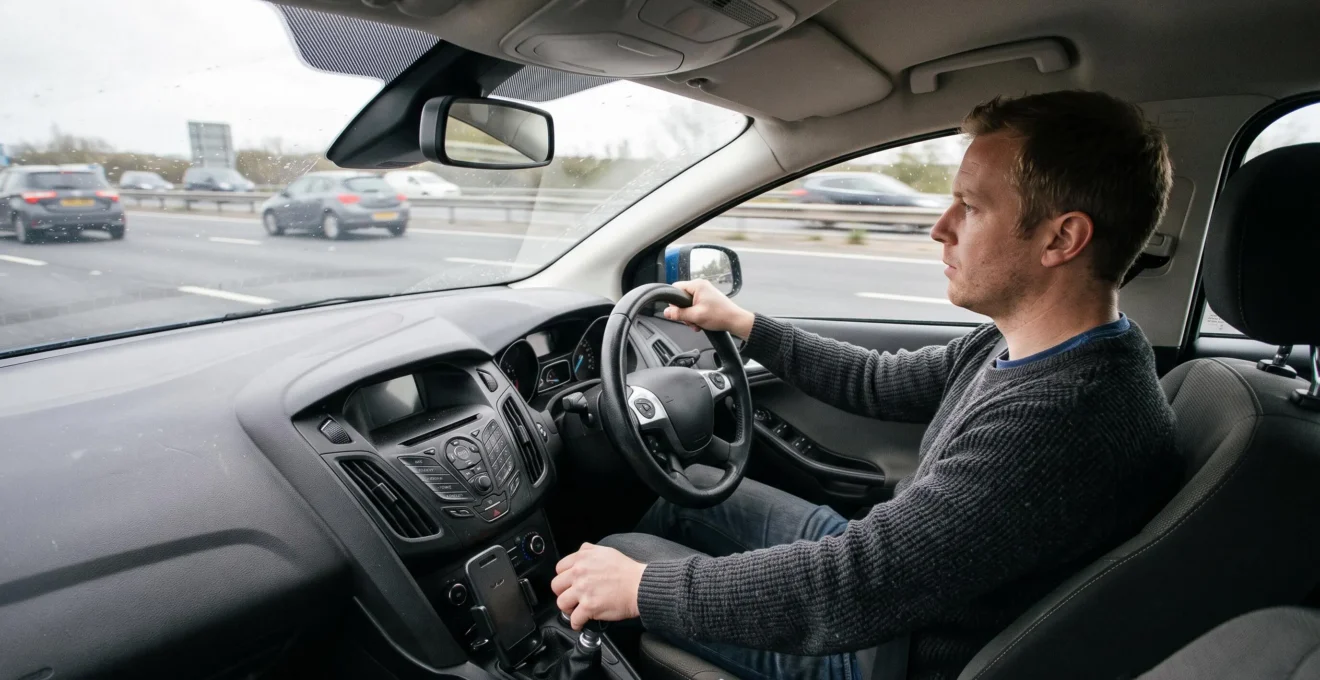
A daily driver can feel noticeably quicker without producing more peak horsepower. The most effective performance optimisations often improve how promptly the car responds, how confidently it handles imperfect roads and how consistently it delivers usable acceleration.
Better tyres, correctly functioning brakes, appropriate transmission behaviour and targeted maintenance can improve everyday drivability without deliberately increasing engine output. A carefully calibrated ECU remap may also help, but additional torque and boost introduce mechanical demands that must be assessed rather than ignored.
The distinction matters because maximum power is measured under conditions that rarely resemble commuting. An engine producing impressive figures at high rpm can feel unresponsive when the driver needs acceleration in a tall gear at modest engine speed.
The engineering objective is therefore not to maximise the dyno result. It is to improve usable performance, predictable response and mechanical consistency while respecting the engine, transmission, tyres and braking system as a complete vehicle.
Daily driver performance: the essentials
- Improve the existing vehicle first: tyre condition, maintenance, braking performance and transmission behaviour can address problems that extra horsepower will not solve.
- Prioritise usable torque and response over peak power. A car that accelerates predictably in its normal operating range often feels more capable than one with a higher headline output.
- Complete a baseline mechanical assessment before tuning. Conservative calibration, suitable fuel and monitored operating conditions are essential, although no modification can guarantee unchanged engine life.
- Why Does More Power Sometimes Feel Slower in Real Traffic?
- How to Prioritise Performance Upgrades in 5 Steps Without Wasting Money?
- ECU Remap or Suspension Upgrade: Which Improves Daily Driving More After 2 Weeks?
- The Dyno-Number Obsession That Leads to Engine Knock Under Load
- When Should You Do a Baseline Health Check Before Tuning to Avoid Hidden Failures?
- Why Does a Turbo Car Feel Lazy Below 2,000 RPM Even After a Service?
- Why Does a « 200 bhp » Car Still Feel Slow When You Overtake at 60 mph?
- Why Your Car Feels Fast on Paper but Slow Overtaking From 40–70 mph
Why Does More Power Sometimes Feel Slower in Real Traffic?
More power can feel slower in traffic when it arrives outside the engine speeds the driver normally uses. A higher peak horsepower figure may coexist with weak low-speed torque, delayed throttle response or unsuitable gearing. In stop-start driving, these characteristics can matter more than the maximum power available near the top of the rev range.
Horsepower describes the rate at which an engine performs work. Torque describes its rotational output, while the transmission determines how that output reaches the wheels. Because power depends on both torque and rotational speed, an engine can achieve high peak power without delivering especially strong acceleration at low rpm.
Consider two hypothetical hatchbacks. One has greater peak power but needs substantial engine speed before delivering strong torque. The other produces less maximum power but offers more immediate response at the rpm used during commuting. Without comparing their weight, gearing and actual wheel torque, the published power figures alone cannot establish which will feel quicker.
Throttle response is another independent factor. The interval between pressing the accelerator and obtaining additional wheel torque can include electronic pedal calibration, engine airflow changes, turbocharger response and transmission decisions.
Vehicle mass also matters. Added weight increases the force needed to achieve a given acceleration, while long gear ratios may keep the engine outside its strongest operating range. Wheel torque relative to vehicle mass, rather than engine torque alone, helps explain the acceleration available in a particular gear.
A useful diagnosis requires no performance modifications. On an ordinary journey, observe the engine speeds and gears used during routine acceleration, without diverting attention from driving. Record the observations afterwards, or use a securely mounted logger where lawful and safe.
If most acceleration requests occur well below the engine’s peak-power range, spending money to increase output only at high rpm may produce little noticeable improvement.
Before modifying the engine, determine whether the real limitation is power delivery, gearing, vehicle condition or the delay between driver input and acceleration. That diagnosis should determine the upgrade budget.
How to Prioritise Performance Upgrades in 5 Steps Without Wasting Money?
Prioritise performance upgrades by identifying the weakest aspect of everyday driving, verifying that the car is mechanically healthy and ranking potential changes by their actual usefulness. Tyres, maintenance and appropriate chassis setup often deserve consideration before engine tuning. The best upgrade is the one that addresses a repeatable limitation without creating disproportionate reliability or ownership costs.
An effective upgrade strategy starts with a specific complaint rather than a catalogue of parts. A car that feels unstable during braking needs a different intervention from one that hesitates when accelerating in a high gear.
The decision should also account for interactions between systems. Increasing engine torque may expose a worn clutch or transmission weakness. Installing excessively stiff suspension can reduce tyre contact over rough surfaces, despite making the vehicle feel firmer.
Tyres are a particularly useful starting point. Correct inflation, suitable specification and adequate condition influence braking, handling, durability and energy consumption. NHTSA‘s TireWise tyre-safety information recommends checking pressures at least monthly when tyres are cold and using the vehicle manufacturer’s specified pressures.
Moving from neglected tyres to correctly maintained, suitable tyres may improve confidence without altering engine load. However, higher-performance tyre choices can involve compromises in noise, rolling resistance, wear and cold-weather suitability.
A five-step performance upgrade checklist
- Define the main weakness: Record three repeatable driving observations, such as delayed acceleration, poor ride control or inconsistent braking. Deliverable: a written problem statement.
- Establish the baseline: Check maintenance records, tyre condition, fluid levels, relevant diagnostic codes and any existing symptoms. Deliverable: a dated vehicle-condition report.
- Identify the limiting system: Determine whether the complaint originates from engine response, gearing, tyres, brakes or suspension. Seek professional diagnosis where necessary. Deliverable: a ranked list of suspected causes.
- Compare complete ownership costs: Include installation, maintenance, possible additional wear, insurance implications, emissions compliance and warranty considerations. Deliverable: a comparison of the shortlisted upgrades.
- Validate one change at a time: Compare the original complaint against observations made after the upgrade, using similar conditions and lawful driving. Deliverable: a before-and-after assessment with a keep, revise or reverse decision.
Cost-effectiveness should be judged over the ownership period, not just at purchase. A modification may have a modest installation price yet create substantial downstream expense through premature component wear or additional servicing.
For an everyday car, assess how frequently an improvement will be experienced. Better steering confidence or more consistent braking may deliver value on every journey; extra horsepower available only at high rpm may not.
Once the vehicle is healthy and its main limitation is clear, the next decision is whether the desired improvement requires changing the engine’s response or the chassis.
ECU Remap or Suspension Upgrade: Which Improves Daily Driving More After 2 Weeks?
An ECU remap may feel more immediately noticeable when daily journeys involve frequent acceleration, while a suitable suspension upgrade may provide greater satisfaction on uneven or winding roads. After two weeks, the better choice depends on the driver’s route and the car’s original weaknesses. Neither modification is inherently superior, and neither guarantees a reliability-neutral result.
An ECU remap modifies engine-control parameters, potentially affecting requested torque, ignition timing, fuelling or turbocharger boost, depending on the vehicle. A well-designed calibration can change how readily the engine responds within its usable operating range.
That immediate change can be appealing in traffic. However, added torque may increase demands on the clutch, transmission and engine, especially when substantial load is requested at relatively low rpm.
A suspension upgrade addresses a different problem. Appropriate dampers, springs or replacement worn suspension components can improve body control and steering confidence. The result depends on component matching, tyre characteristics, alignment and road conditions.
Stiffer does not automatically mean better. Excessive spring or damping stiffness can reduce comfort and compromise tyre contact on damaged roads. A setup that feels controlled on smooth pavement may become unsettled during an ordinary commute.
The following comparison is a decision framework, not the result of a controlled two-week study.
| Decision factor | ECU remap | Suspension upgrade |
|---|---|---|
| Primary benefit | Potentially stronger or quicker engine response | Potentially better body control and road confidence |
| Most noticeable during | Acceleration and overtaking | Cornering, braking transitions and uneven surfaces |
| Main trade-off | Additional engine and drivetrain demands | Possible ride-comfort and traction compromises |
| Critical prerequisite | Engine health and calibration suitability | Correct component selection and alignment |
| Long-term consideration | Fuel, thermal margins, wear and regulatory compliance | Component durability, tyre wear and ride quality |
A practical two-week evaluation should consider the frequency of the original problem, not simply initial excitement. Assess commuting comfort, consistency, fuel consumption and any new noises or warning signs.
For a car that already handles confidently but responds poorly during acceleration, investigating transmission behaviour and engine calibration may make sense. For one that feels unsettled through corners or over bumps, suspension condition and setup deserve priority.
Regulatory compliance also matters. The EPA‘s information on vehicle emissions tampering explains how modifications to engine-control software can affect regulated emissions systems in the United States. It does not establish that every remap is illegal. Requirements vary across jurisdictions, including the UK, Canada and Australia, and insurers may require modifications to be declared.
When additional engine output is genuinely justified, its calibration should be evaluated for repeatability and mechanical safety rather than headline power alone.
The Dyno-Number Obsession That Leads to Engine Knock Under Load
Chasing the highest dynamometer horsepower figure can encourage calibration choices that reduce combustion safety margins. In petrol engines, excessive cylinder pressure and temperature can increase knock susceptibility, particularly under demanding conditions. A calibration that produces an impressive short dyno run is not necessarily appropriate for sustained everyday operation, repeated acceleration or variable fuel quality.
Engine knock occurs when part of the unburned fuel-air mixture autoignites instead of burning in the intended controlled manner. The resulting pressure disturbances can place damaging stresses on engine components, especially when knock is severe or persistent.
The U.S. Department of Energy’s Co-Optima FY18 research report identifies cylinder pressure, temperature and combustion conditions as important contributors to knock in boosted spark-ignition engines.
Increasing boost or advancing ignition timing may improve output under suitable conditions, but those changes need appropriate fuel, air-fuel control, thermal management and knock resistance. There is no universal safe increase that applies across engine designs or mechanical conditions.
Dyno figures themselves also depend on testing conditions. Fuel grade, intake temperature, atmospheric correction, transmission losses, dyno configuration and testing procedure can affect the reported result.
A short run with effective workshop cooling may not reproduce repeated summer accelerations, heat soak or sustained high-load motorway operation. That is why repeatable performance under realistic conditions matters more than an isolated peak number.
A responsible calibration assessment should examine more than peak output. Relevant logs may include requested and actual boost, intake-air temperature, fuel pressure, air-fuel measurements, ignition correction and knock-control activity, where supported by the vehicle’s systems.
These readings require interpretation by a competent technician. A generic OBD application may not expose the necessary parameters, and the absence of audible knock does not prove that combustion is safe.
After tuning, investigate unusual transmission behaviour, new misfires, excessive oil consumption, abnormal temperatures or metallic knocking sounds. Do not deliberately reproduce suspected knock under load. Reduce engine demand and seek professional diagnosis.
A conservative tune does not eliminate risk, but preserving appropriate thermal and combustion margins is more consistent with long-term daily use than pursuing the maximum achievable output.
Before those margins can be evaluated meaningfully, the engine’s existing mechanical and diagnostic condition must be established.
When Should You Do a Baseline Health Check Before Tuning to Avoid Hidden Failures?
A baseline health check should be completed before ordering tuning parts or changing ECU calibration, particularly on high-mileage vehicles, cars with uncertain maintenance histories or engines already showing symptoms. The objective is to identify weaknesses that extra load could aggravate. A healthy baseline reduces avoidable uncertainty, although it cannot guarantee that subsequent modifications will be harmless.
Start with the original maintenance requirements and any known faults. Existing misfires, coolant loss, unusual oil consumption, overheating or inconsistent boost response should be investigated before considering increased output.
A sensible assessment progresses from routine checks to more specialised testing:
- Maintenance condition: Verify service history, correct fluid specifications, spark plug condition and relevant ignition components.
- Electronic diagnostics: Read stored, pending and relevant historical fault information. Review operating logs where supported, rather than relying solely on the absence of a warning light.
- Cooling and lubrication: Inspect for leaks, abnormal temperatures and signs of inadequate cooling or lubrication.
- Airflow and fuelling: Check for intake or boost leaks and investigate fuel-system concerns when symptoms or diagnostic data justify doing so.
- Mechanical integrity: Consider compression or cylinder leak-down testing when symptoms suggest internal wear or sealing problems.
Not every engine requires every specialised test. The depth of investigation should match its age, symptoms, maintenance history and intended calibration.
The inspection should produce a dated record of observations, diagnostic findings, completed repairs and any unresolved concerns. This creates a useful reference if problems develop after modification.
However, a baseline report cannot automatically establish whether a later failure was caused by tuning. Mechanical causation may require further inspection, and warranty decisions depend on the applicable terms and legal framework.
Inspection results can also change the investment decision. If a turbocharger is deteriorating, the cooling system is unreliable or fuel delivery is already inadequate, repairing those problems takes priority over purchasing additional power.
This is especially important on older engines. Increasing torque does not restore lost mechanical integrity; it can instead expose weaknesses that were less apparent under the original operating conditions.
Once mechanical faults have been excluded, the next task is to distinguish genuinely abnormal response from the operating characteristics designed into the engine and its turbocharger.
Why Does a Turbo Car Feel Lazy Below 2,000 RPM Even After a Service?
A turbocharged car may feel lazy below 2,000 rpm because exhaust-gas energy, turbocharger sizing and engine calibration limit available boost at low engine speed. Routine servicing does not change these fundamental design characteristics. However, persistent hesitation can also indicate a fault, so normal low-rpm behaviour must be distinguished from abnormal boost, airflow or fuelling performance.
A turbocharger uses exhaust energy to drive a turbine connected to a compressor. At low engine speeds and loads, exhaust flow may be insufficient to produce the boost response the driver expects.
Two concepts are important. Boost threshold describes the operating region where meaningful boost becomes available, while transient turbo lag describes the delay in boost response following a change in engine demand. They are related but not interchangeable.
Turbocharger size, turbine inertia, exhaust flow, wastegate control and engine management influence both characteristics. A larger turbocharger may support greater high-speed airflow while responding less readily at low engine speed, although the outcome depends on the complete system design.
There is no universal 2,000 rpm threshold. Some modern turbocharged engines produce substantial low-speed torque, while others require more engine speed or time before delivering strong acceleration.
Factory calibration can also shape the response. Manufacturers balance drivability against emissions, fuel consumption, traction, component protection and transmission torque limits. A recently serviced vehicle may therefore retain exactly the same response because nothing is malfunctioning.
By contrast, abnormal behaviour may include persistent underboost faults, irregular acceleration, unusual airflow noises, warning lights or an observable deterioration from previously normal performance.
Potential causes include intake leaks, boost-control faults, sensor problems or model-specific exhaust and emissions-system restrictions. Diesel particulate filters and EGR systems are relevant only where fitted; their presence or failure should never be assumed from sluggishness alone.
A useful diagnostic comparison involves recording engine speed, gear, requested boost and actual boost under safe, repeatable conditions. A technician can evaluate the measurements against manufacturer specifications, including appropriate load and temperature conditions. Generic boost readings without reference values are not sufficient to diagnose a fault.
A smooth, consistent increase in torque as rpm rises may indicate normal engine behaviour. An unexplained loss of response, fault code or sustained mismatch between requested and measured boost warrants investigation.
That distinction becomes particularly important during motorway driving, when a high gear can make a capable engine feel unexpectedly unresponsive.
Why Does a « 200 bhp » Car Still Feel Slow When You Overtake at 60 mph?
A 200 bhp car can feel slow during a 60 mph overtake because maximum rated power is not necessarily available in the selected gear at the current engine speed. Tall gearing, delayed downshifts, throttle calibration and turbo response can all postpone useful acceleration. The problem may therefore involve access to existing performance rather than insufficient peak horsepower.
Rated engine power is normally established at a specified operating speed under defined test conditions. It does not mean the engine continuously delivers that power whenever the driver presses the accelerator.
At motorway speeds, efficiency-oriented gearing may place the engine at relatively low rpm. If the driver requests strong acceleration while remaining in the highest gear, the resulting wheel torque may be limited.
The transmission then becomes critical. An automatic gearbox may need time to interpret the requested acceleration, select a lower ratio and complete the shift. A manual driver may likewise need to choose a more suitable gear.
For turbocharged engines, the total perceived delay can include several stages:
- Electronic interpretation of the accelerator request.
- Transmission decision-making and gear engagement, where applicable.
- Changes in engine airflow and turbocharger speed.
- Development of sufficient wheel torque to produce noticeable acceleration.
These processes can overlap rather than occurring as a simple fixed sequence. Their relative importance varies by vehicle and driving conditions.
Gearing can change the result without adding horsepower. A lower gear raises engine rpm at the same road speed and changes the torque multiplication between engine and wheels. It may place the engine closer to its stronger power-delivery range.
A useful controlled observation is to compare the car’s response in its normal cruising gear with its response after an appropriate downshift, within manufacturer limits and without exceeding the speed limit. Use a safe, legal setting free from overtaking pressure, or have a qualified professional perform the assessment. Do not use a live overtake as a performance test.
If the car responds promptly in a suitable lower gear, its perceived weakness may be primarily related to transmission strategy or engine operating speed. If acceleration remains poor, mechanical condition and actual engine output require closer examination.
Repeated aggressive low-rpm acceleration in a tall gear is not automatically mechanically kinder than selecting a suitable lower gear. High engine load at low rpm can introduce its own combustion and drivetrain demands, depending on engine design.
Understanding the delay at one road speed makes it easier to diagnose the broader mismatch between published performance figures and everyday acceleration.
Key takeaways before choosing an upgrade
- Separate acceleration delay from insufficient power: gearing, throttle calibration and boost response can produce similar sensations for different reasons.
- Use repeatable observations and relevant diagnostic data to identify the limiting system before paying for parts or software changes.
- Preserve the vehicle’s mechanical, thermal and regulatory margins. Predictable response is more valuable in daily use than performance that is available only under ideal conditions.
Why Your Car Feels Fast on Paper but Slow Overtaking From 40–70 mph
A car can look fast on paper yet feel slow accelerating from 40–70 mph because published maximum horsepower does not describe how quickly useful wheel torque becomes available in real driving. Engine speed, selected gear, throttle response, boost development and vehicle mass all influence the result. Improving these factors can make acceleration more predictable without necessarily increasing peak engine output.
The 40–70 mph range illustrates the difference between theoretical capability and immediately accessible performance. Depending on the vehicle, acceleration may require a downshift, a rise in engine speed or time for boost pressure to develop.
Maximum power remains relevant because it contributes to the acceleration a vehicle can ultimately achieve. But available wheel power at the operating point and the time required to reach it are more informative when diagnosing a delayed response.
A useful performance assessment therefore distinguishes three questions: how much acceleration is available, how quickly it arrives and whether it remains consistent under repeated ordinary operating conditions.
The following diagnostic guide connects common symptoms with sensible first actions.
| Observed symptom | Possible explanation | First action or appropriate optimisation |
|---|---|---|
| Delay after pressing the accelerator | Pedal calibration, transmission strategy or boost response | Check gear behaviour and diagnostic data before considering calibration changes |
| Weak acceleration in a high gear | Low engine rpm and limited available wheel torque | Assess appropriate gear selection and normal engine response |
| Unusually poor response across several gears | Potential ignition, airflow, boost or fuel-delivery issue | Perform targeted mechanical and electronic diagnosis |
| Unsettled handling during acceleration or cornering | Tyre condition, alignment or suspension-control limitations | Inspect tyres, wheel alignment and suspension components |
| Performance deteriorates after repeated acceleration | Possible heat-related limitation or component-protection intervention | Inspect relevant temperature and operating logs professionally |
| Improved engine response accompanied by drivetrain slip | Insufficient clutch or transmission torque capacity, or existing wear | Stop demanding acceleration and investigate the drivetrain |
These are diagnostic possibilities rather than definitive fault identifications. Similar symptoms can have different causes, and vehicle-specific data is necessary before selecting a repair or modification.
The safest optimisation sequence begins with maintenance and tyre condition, continues with identifying the actual response limitation and only then considers hardware or ECU changes. Any tuning proposal should specify its intended effect on the normal operating range, necessary fuel, compatibility with the drivetrain and the measurements used to validate it.
Emissions compliance, appropriate insurance disclosure and manufacturer requirements must also be considered in the country where the car operates. A modification that improves throttle response but creates legal or mechanical problems is not a successful daily-driver upgrade.
No aftermarket performance change can guarantee that engine life will remain unchanged. Preserving the original engine calibration is generally the lower-risk approach when longevity is the overriding priority. Where tuning is chosen, conservative torque delivery, healthy components and professional validation can help manage—but not remove—the additional uncertainty.
On the next ordinary journey, identify one repeatable source of frustration: delayed throttle response, an unnecessary downshift, poor ride control or inconsistent acceleration. Record it, check the vehicle’s baseline condition and investigate that limitation before purchasing an upgrade. A daily driver should become easier to control and more dependable in the situations that matter, not merely more impressive on a specification sheet.
Can a throttle controller make a car faster without increasing horsepower?
An aftermarket throttle controller can change the relationship between pedal movement and requested throttle or torque, potentially making the car feel more responsive. It does not inherently increase maximum engine power. Aggressive settings may make low-speed control more abrupt, and compatibility with the vehicle’s electronic control systems should be verified before installation.
Is a mild Stage 1 ECU remap automatically safe for a standard engine?
No. Stage 1 is a commercial description rather than a universally defined engineering safety standard. Risk depends on the actual calibration, engine design, fuel, mechanical condition and transmission limits. A modest advertised increase may still create undesirable operating conditions, so calibration quality and measured safeguards matter more than the label.
Can better tyres improve acceleration without increasing engine wear?
Suitable tyres can improve acceleration when available grip is the limiting factor, particularly during traction-limited launches or on slippery surfaces. They do not increase engine output and may provide little acceleration benefit when the vehicle is already traction-sufficient. Correct sizing, load and speed ratings, condition and inflation remain essential. Greater available grip can also change drivetrain loads under demanding use.
Does using higher-octane petrol improve a standard car’s performance?
Higher-octane petrol provides greater resistance to knock, but it does not automatically produce more energy or horsepower. Performance benefits depend on whether the engine’s control system can use that knock resistance through suitable ignition or boost strategies. Use fuel meeting the manufacturer’s requirements, and follow any additional requirements established for a properly validated modified calibration.
How can a driver tell whether a performance upgrade was worthwhile?
Evaluate the original complaint against comparable everyday conditions after the change. Consider response consistency, ride quality, braking confidence, fuel use, new mechanical symptoms and total costs. A modification is worthwhile when it solves a meaningful problem without introducing unacceptable compromises. Subjective improvement is useful evidence of driver satisfaction, but it should not be mistaken for proof of mechanical reliability.